


Bronze Table Centrepiece
A bronze table centrepiece anchors a dining room or salon table with sculptural weight and decorative refinement.
Bronze Table Centrepiece
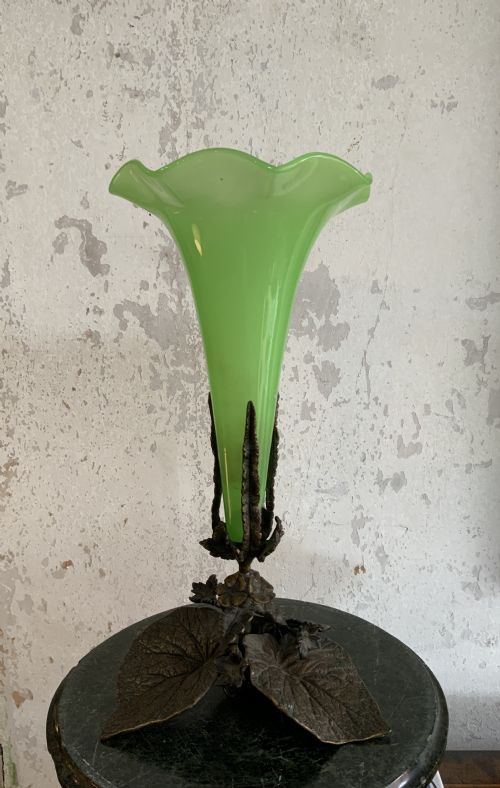
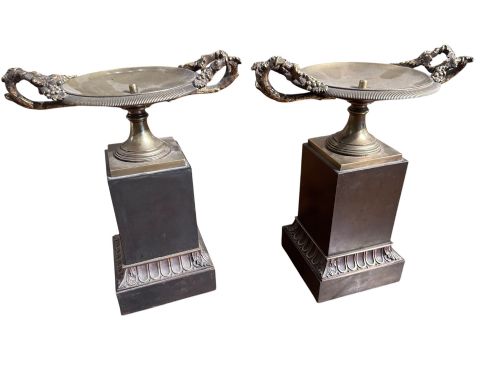
A bronze table centrepiece serves as the main decorative focal point for a dining table or sideboard, often taking the form of a low bowl, tazza, or epergne. These objects originate predominantly from nineteenth-century France, spanning periods from the Regency era through to the turn of the twentieth century.
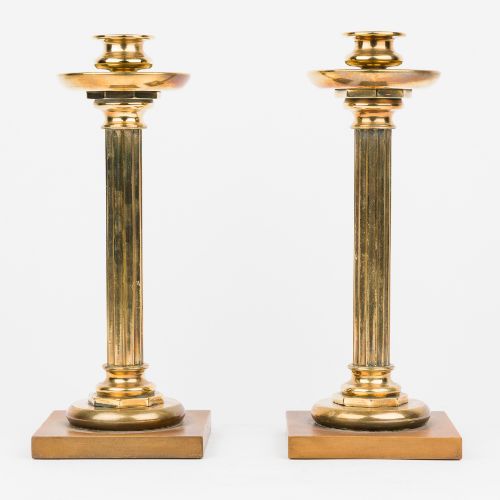
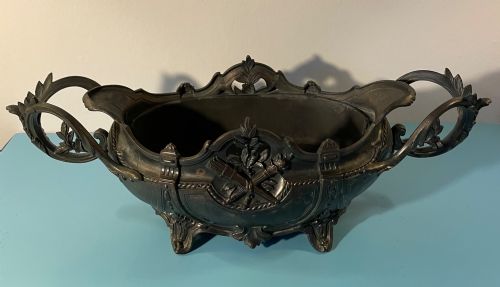
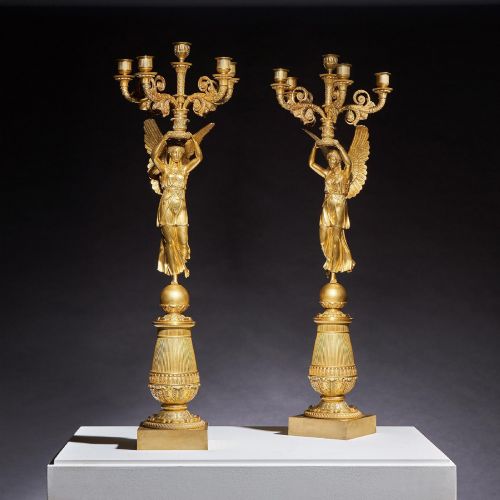
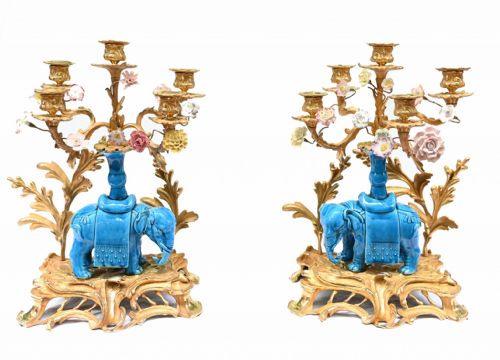
The inventory on this page includes related forms such as jardinieres, candelabra, and candlesticks that share the same metalwork vocabulary. Makers combined cast bronze with glass inserts, porcelain vessels, and marble bases to create functional ornaments for formal interiors.
Materials and technique
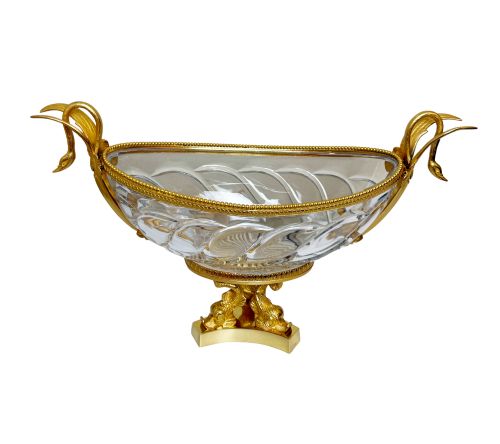
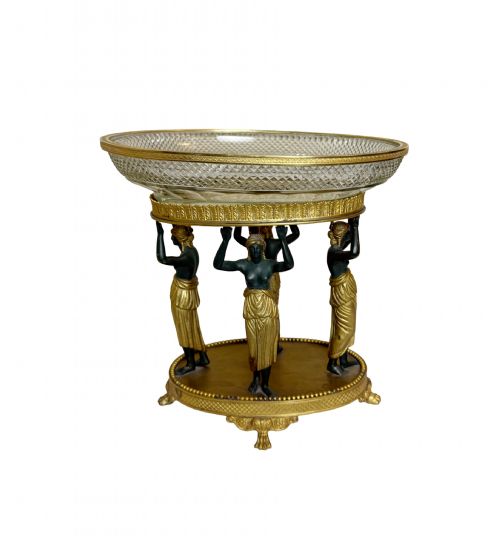
Foundry workers cast bronze and ormolu into intricate figural and foliage motifs, employing mercury gilding or modern electroplating to achieve a brilliant gold finish. Patinated bronze surfaces contrast with bright gilt highlights, accentuating details like winged cherubs, mermen, and classical drapery.
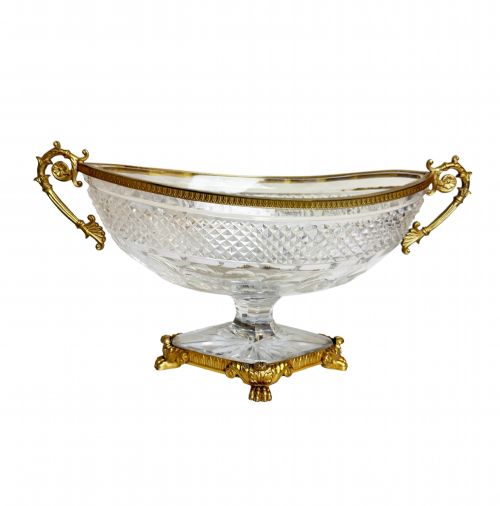
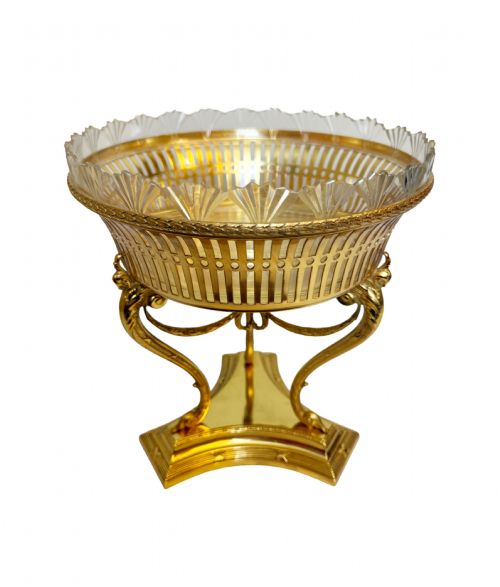
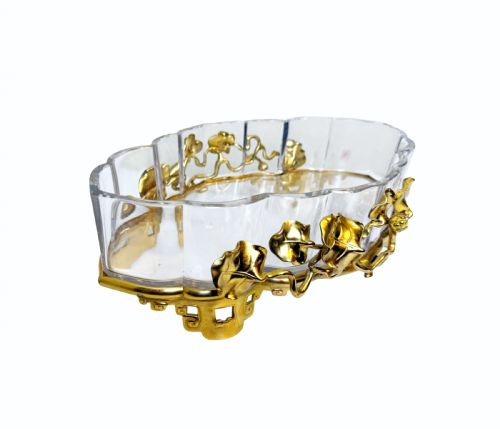
Artisans integrated delicate materials into the metal frames, mounting cut crystal bowls, porcelain inserts from factories like Sèvres, and carved marble or onyx bases. Champlevé enamel and Limoges plaques frequently provide colourful accents within the gilt bronze mounts.
Listings feature items from the 19th Century, Regency, and Art Deco periods, utilising gilt bronze, marble, crystal, and porcelain.
What varies in quality
Quality also depends on the harmony and integrity of the assembled materials, such as heavy hand-cut crystal inserts matching the exact contours of the ormolu frame without gaps or replacement parts.
Pierre Philippe Thomire·Christofle Paris
The Bronze Table Centrepiece Glossary
- Ormolu
- Gilded bronze, produced by applying a finely ground gold-mercury amalgam to a bronze base and heating it to drive off the mercury. This technique creates a durable, warm golden finish characteristic of French decorative arts.
- Tazza
- A shallow saucer-shaped ornamental vessel raised on a stem and foot, designed for display on a table. These pieces often feature glass or enamel plaques held within metal mounts.
- Epergne
- A large multi-tiered centrepiece featuring a central basket surrounded by smaller hanging dishes or arms. They were traditionally used for serving fruit, sweetmeats, or flowers at formal banquets.
- Jardiniere
- An ornamental stand or container designed to hold plants or floral arrangements. In these listings, they appear as bronze, brass, or ceramic vessels with decorative metal frames.
- Champlevé
- An enamelling technique where troughs or cells are carved into the surface of the metal and filled with vitreous enamel powder before firing. The resulting surface displays colourful geometric or floral patterns flush with the metal dividers.
Bronze Table Centrepiece: Frequently Asked Questions
What is a bronze table centrepiece used for?
These decorative objects were placed in the middle of dining tables or sideboards to elevate the visual appeal of a room. They held seasonal fruit, floral displays, or simply served as sculptural showpieces.
Over time, their roles shifted from formal banquet service to permanent fixtures in nineteenth-century drawing rooms and parlours.
How do you clean gilt bronze safely?
Dusting gently with a soft, dry brush prevents dirt accumulation in the recessed chasings of the metalwork. Avoid using abrasive commercial metal polishes, which can strip away the delicate layer of mercury gilding or ormolu.
Professional conservation methods focus entirely on preserving the original surface patina without harsh chemical intervention.
How do I identify French Empire style?
French Empire style draws heavily on classical antiquity, incorporating motifs like military trophies, sphinxes, winged figures, and strict symmetrical geometry. The heavy use of gilt bronze combined with dark patinated bronze creates a striking visual contrast.
These pieces often feature classical architectural elements such as columns, plinths, and laurel wreaths.
What are epergnes and tazzas?
An epergne is a tiered centrepiece with multiple hanging baskets or arms designed for elaborate table presentation. A tazza is a simpler, single-vessel form raised on a central stem and foot.
Both items showcase the versatility of nineteenth-century metalworkers in combining glass, porcelain, and bronze.