
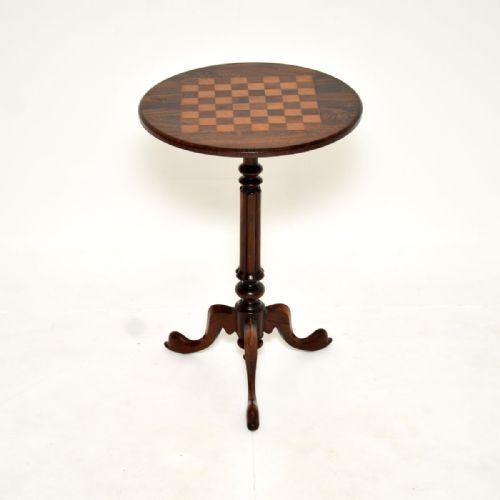
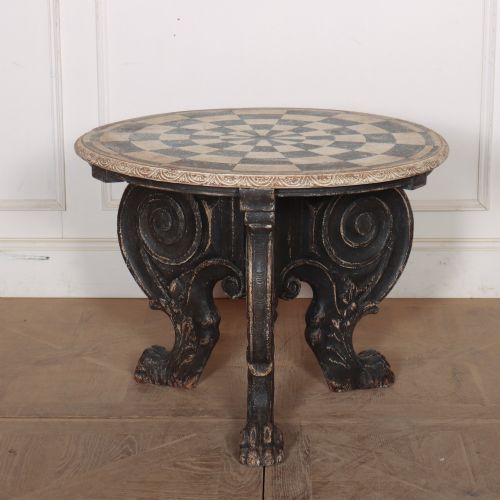


Chequerboard Side Table
These chequerboard side tables combine utility with integrated gaming surfaces, offering tactile wood marquetry and tiled tops that anchor a room.
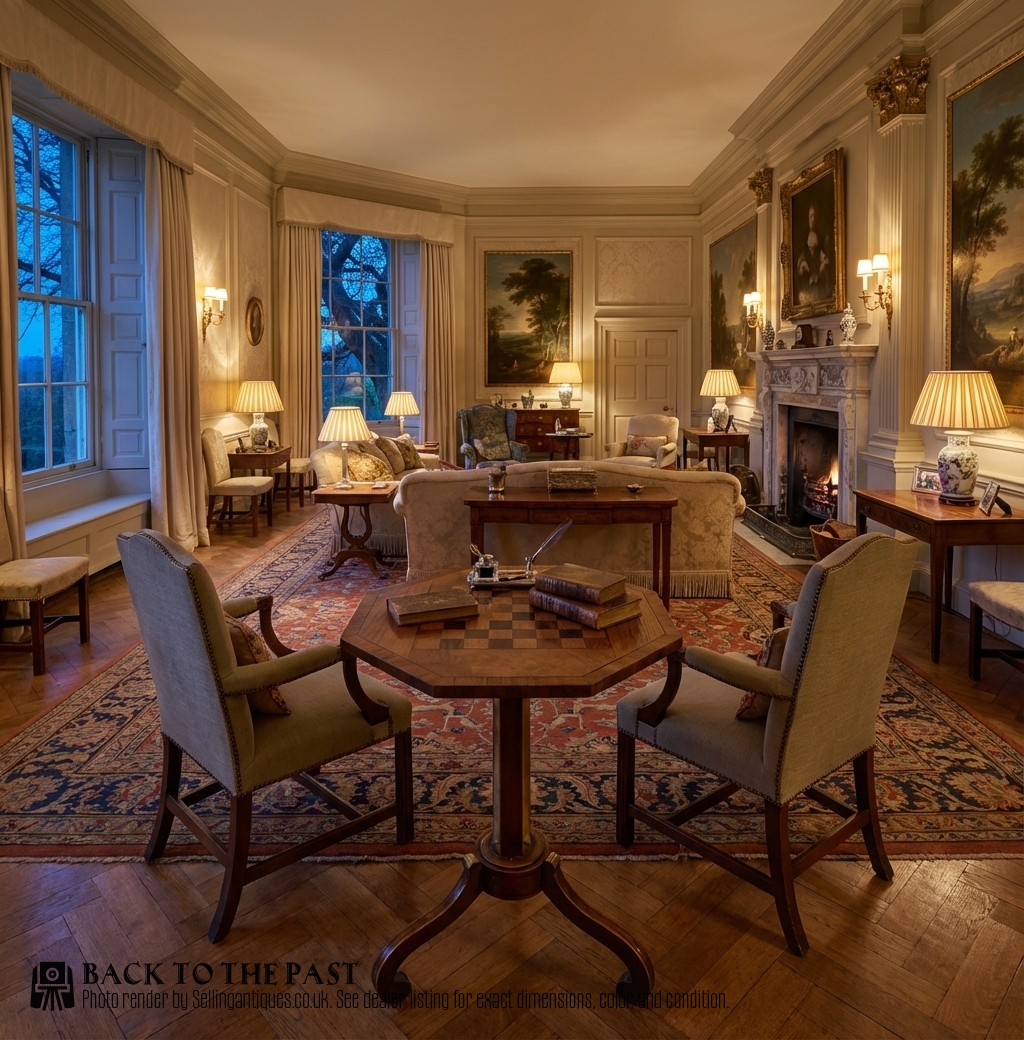
Chequerboard Side Table
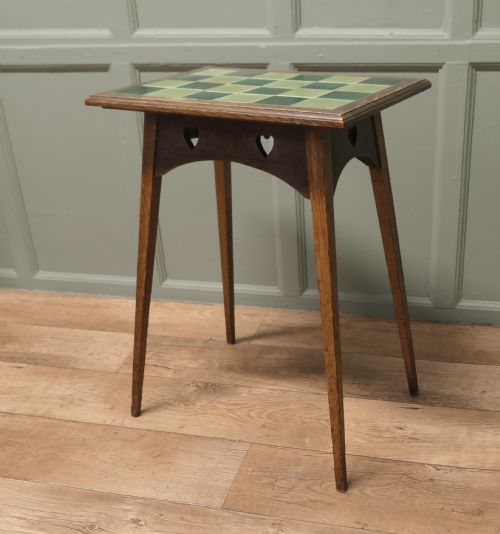
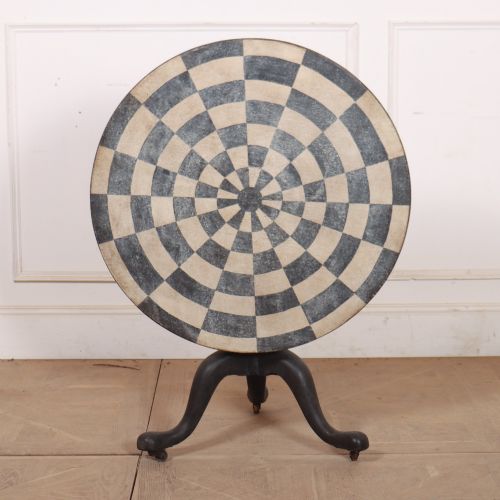
A chequerboard side table functions as standard furniture while incorporating a distinct inlaid or painted grid for board games. The pieces seen here span centuries of British and continental cabinetmaking, ranging from compact occasional tables to tripod stands.
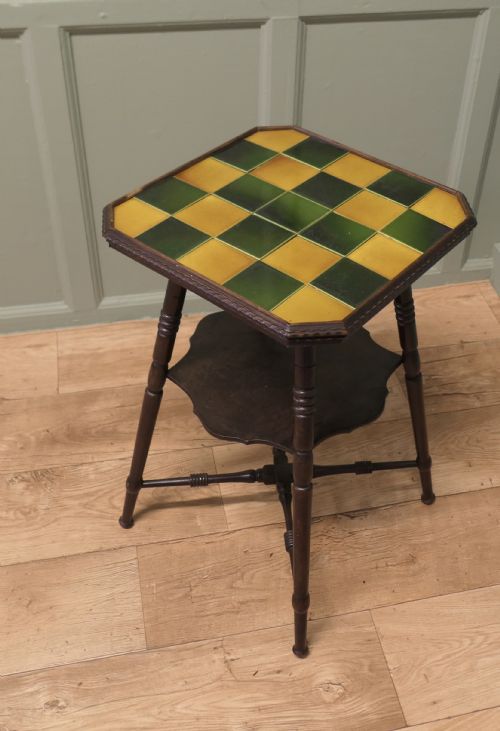
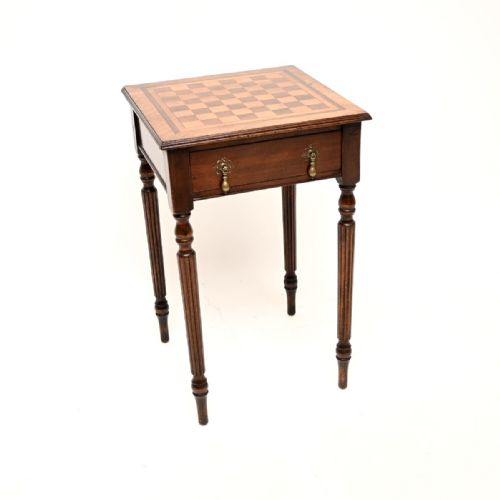
You will encounter various interpretations of the chequerboard side table across different eras, from Regency rosewood specimens with brass mounts to Victorian marquetry designs and Arts and Crafts tiled surfaces. These tables suit living spaces where dual-purpose furniture provides both surface area and leisure utility.
How they were made
Cabinetmakers constructed these tables using solid timbers and decorative veneers such as mahogany, walnut, rosewood, and satinwood. Parquetry and marquetry techniques formed the precise geometric squares required for the gaming surfaces.
Some examples incorporate ceramic tiles set directly into the wooden framework, alongside hand-painted details, penwork, and brass mounts. Carved elements appear on oak lamp tables and heart-carved occasional pieces.
What varies in quality
The sophistication of the timber veneers and the precision of the wood inlay define the upper tier of these tables. Finely contrasted woods like walnut and kingwood create crisp grid lines that distinguish superior cabinetwork from simpler painted versions.
Structural harmony also dictates value, seen in the balance of tripod bases, the execution of turned or carved supports, and the integration of drawers within the table skirt.
Liberty London·Shapland & Petter
The Chequerboard Side Table Glossary
- Marquetry
- Decorative veneer work forming pictures or geometric patterns by fitting together small pieces of wood. This technique creates the contrasting squares of the game top.
- Parquetry
- Geometric mosaic woodwork used for floors and tabletops. It frequently forms the repeating patterns seen on the surface of these tables.
- Penwork
- Decorative technique using ink on wood to draw fine details and borders. It appears on specific Regency period gaming surfaces.
- Tripod table
- A small table supported by a central pillar resting on three feet. This form allows stable placement on uneven floors.
- Occasional table
- A small, movable table used for various subsidiary purposes in a room. These pieces provide surface space without dominating the floor plan.
Chequerboard Side Table: Frequently Asked Questions
What periods do these tables come from?
The selection includes pieces spanning the eighteenth century through to the early twentieth century. Styles range from Regency and Georgian to Victorian and Arts and Crafts.
Cabinetmakers of each era applied their characteristic timber choices and decorative techniques to the form, resulting in distinct aesthetic variations.
How were gaming tables used originally?
These tables served a dual function in domestic interiors, operating as standard side or occasional tables for lamps and decorative objects. When needed for recreation, the integrated board provided an immediate surface for chess, checkers, or other board games.
Their compact size allowed them to be moved easily near seating areas during evening gatherings.
What materials appear most frequently?
Timbers such as mahogany, walnut, rosewood, and oak form the primary structures of these tables. Decorative surfaces often feature contrasting wood veneers, parquetry, or inlaid ceramic tiles.
Brass mounts and painted finishes also appear on specific Regency and nineteenth-century examples.
How do I care for a wood inlaid top?
Protect the wooden surface from direct sunlight and excessive moisture to prevent veneer lifting and fading. Regular dusting with a soft cloth maintains the finish without harming the delicate marquetry.
Applying a traditional beeswax polish periodically helps nourish the timber and preserve the contrast of the inlaid squares.