




Octagonal Games Table
An octagonal games table brings versatile eight-sided form and dual-purpose utility into a room, offering both surface space and integrated play.
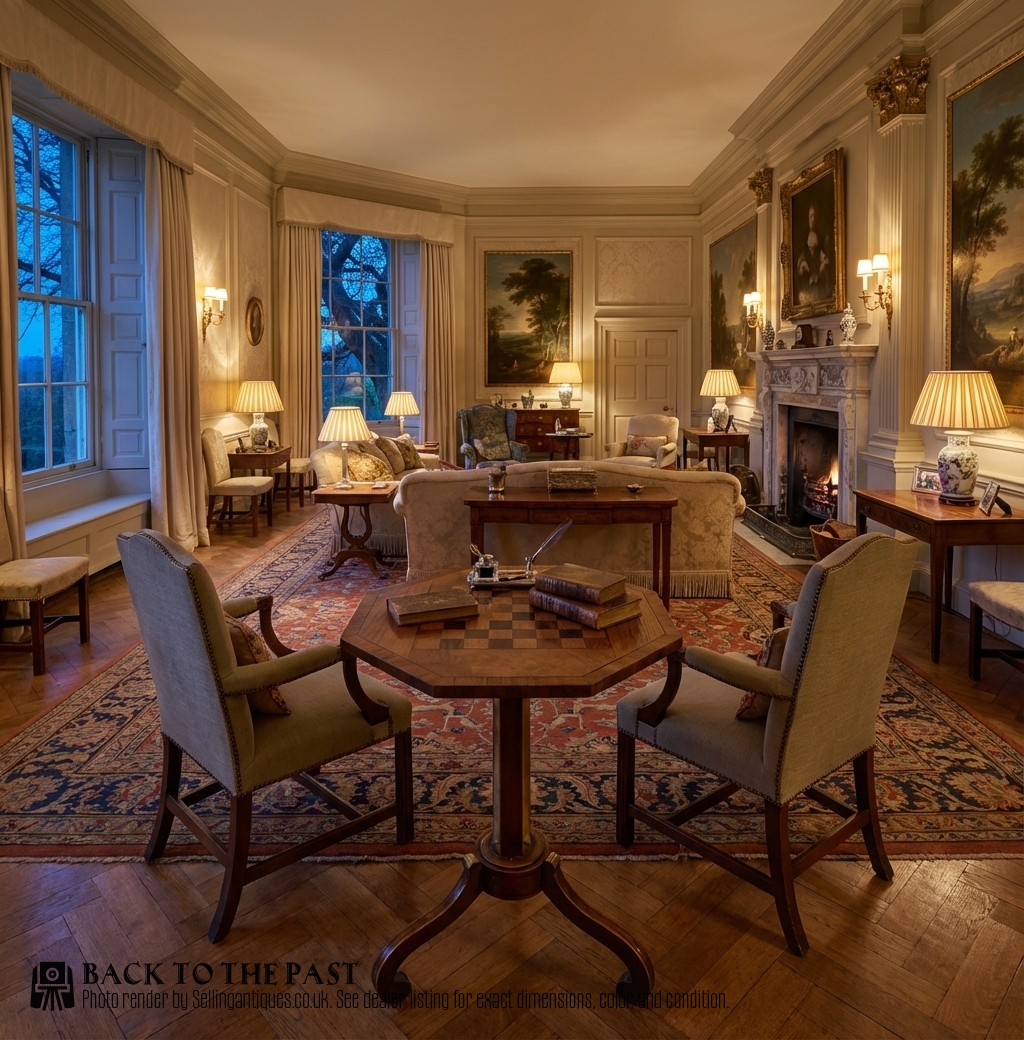
Octagonal Games Table
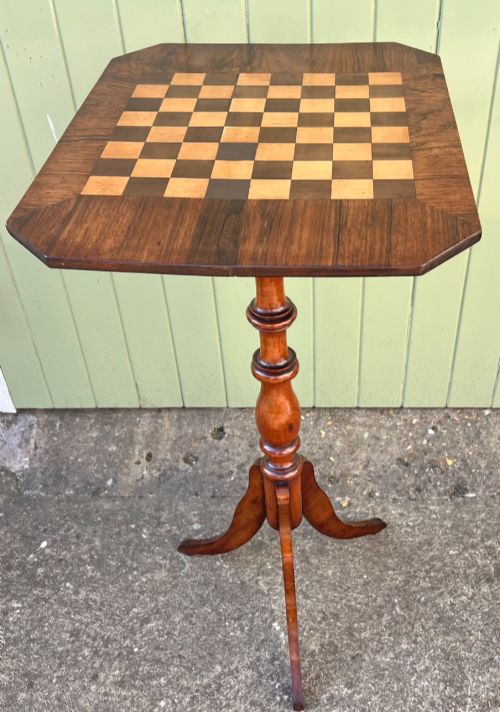
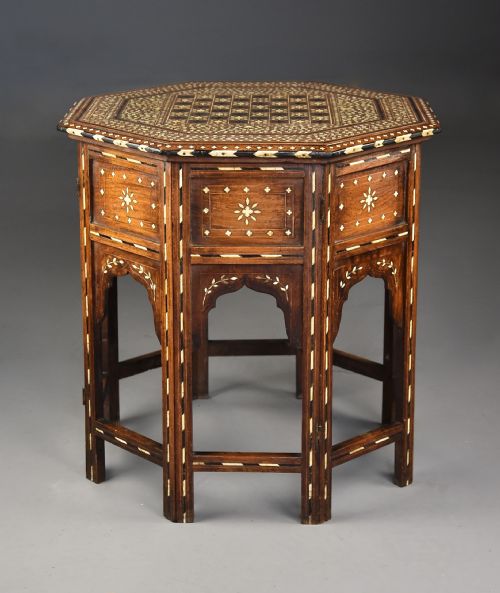
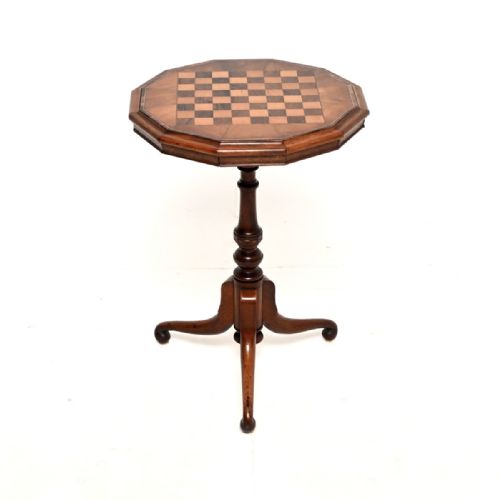
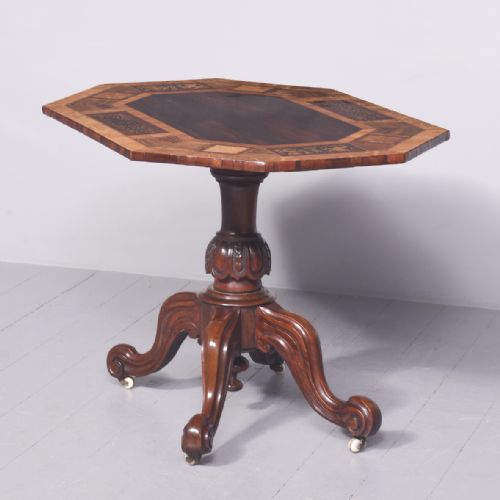
An octagonal games table provides a distinctive eight-sided silhouette that functions as an occasional piece while concealing or displaying boards for chess, poker, or general play. These tables emerge primarily from the Regency and Victorian eras, alongside later Anglo-Indian and Art Deco interpretations, reflecting changing domestic entertainments across the nineteenth and early twentieth centuries.
The version most commonly encountered on this page combines rich hardwoods such as rosewood and walnut with intricate marquetry or boxwood inlay to delineate the chequer-board top. Alongside dedicated chess and card variants, collectors find occasional tables, sewing boxes with game facilities, and tripod designs featuring brass mounts or specimen marble tops.
Such pieces serve dual roles in domestic interiors, operating as a centre table or side table during daily use before converting for evening recreation. The inclusion of storage compartments, shelves, or drop leaves within the eight-sided frame further enhances their practical domestic heritage.
Materials and Construction
Cabinetmakers utilised dense timbers like rosewood, walnut, and mahogany to form the structural carcass and stable pedestal or tripod bases of these eight-sided tables. These substantial woods provided the durability required for furniture subject to regular manipulation and active play.
Decorative surface work relied on contrasting veneers, including boxwood, ebony, satinwood, and sycamore, alongside mixed wood inlay to construct precise geometric playing boards. More elaborate examples incorporated bone inlay or specimen marble inserts set directly into the tabletop.
Object forms recorded here include dedicated chess tables, library tables, occasional tables, trumpet workboxes, and eight-sided poker tables.
Distinctions in Quality
Excellence in these pieces rests upon the precision of the inlay work and the harmonious integration of the playing surface with the broader cabinet design. Superior examples display tight, seamless geometric alignment in the wood or bone marquetry without visible gaps or lifting veneer.
The choice of primary timber and secondary materials also dictates the grade of the piece, with richly figured rosewood, walnut, and specialist marble tops marking out the upper tier of production. Furthermore, the stability of the pedestal base and the crispness of brass mounts or turned supports separate standard utility items from finer parlour furniture.
The Octagonal Games Table Glossary
- Marquetry
- Decorative veneer work forming pictures or geometric patterns by fitting together small pieces of different woods, metals, or bone. This technique defines the inlaid chequer-boards found on many gaming surfaces.
- Tripod base
- A three-legged support structure commonly utilised on pedestal tables to ensure stability on uneven floors. It allows the octagonal top to stand firmly without bulky four-cornered legs.
- Specimen marble
- A tabletop composed of various types of small, polished marble pieces arranged in geometric or mosaic patterns. This material appears on select Regency and Victorian tables for a decorative finish.
- Workbox
- A small cabinet or table fitted with compartments for sewing implements, often combined with a sliding bag or storage well. Several Victorian examples integrate this storage with games facilities.
- Anglo-Indian
- Furniture produced in the Indian subcontinent under British rule, frequently characterised by dense and intricate surface carving or elaborate bone and wood inlay. These pieces often adopt the octagonal occasional form.
Octagonal Games Table: Frequently Asked Questions
What games were played on these tables?
These pieces were primarily designed for chess, draughts, and card games such as poker or whist, depending on the integrated board or surface layout.
Many incorporate reversible or folding tops that reveal a baize-lined surface for card playing alongside the inlaid wood chequer-board.
How do I identify a Regency period table?
Regency examples typically feature classical proportions, rosewood timbers, and polished brass mounts or tripod pedestal bases.
The inlay work on these earlier pieces tends to focus on crisp geometric chequer-boards and restrained classical detailing rather than heavy carving.
Where should I place an octagonal table?
The eight-sided form makes these tables well-suited as centre tables in a reception room or as side tables beside a seating area.
Their multifaceted shape allows them to sit comfortably away from walls, offering accessible surface space from multiple angles.
Are these tables sturdy enough for daily use?
Constructed from durable hardwoods like walnut, oak, and rosewood, these tables were built to withstand regular domestic activity and parlour games.
Care should be taken to protect polished wooden surfaces and delicate inlaid veneers from excessive moisture and direct heat.
What is the difference between Victorian and Edwardian examples?
Victorian models frequently utilise dark rosewood or walnut with elaborate marquetry, brass mounts, and multi-functional sewing or game interiors.
Edwardian pieces often embrace lighter oak or walnut frames, sometimes expanding the player capacity for larger card games with built-in shelves.