


Edwardian Tiled Side Table
An Edwardian tiled side table brings durable ceramic and rich timber into domestic rooms, offering a sturdy surface that defies daily wear with effortless style.
Edwardian Tiled Side Table
An edwardian tiled side table combines practical wooden frames with glazed ceramic surfaces, frequently taking the form of occasional tables or modified washstands. These pieces reflect the utility and decorative spirit of turn-of-the-century interiors, utilising robust oak or mahogany frameworks.
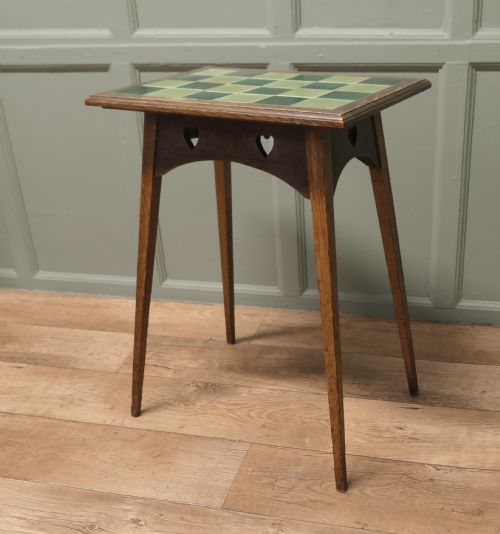
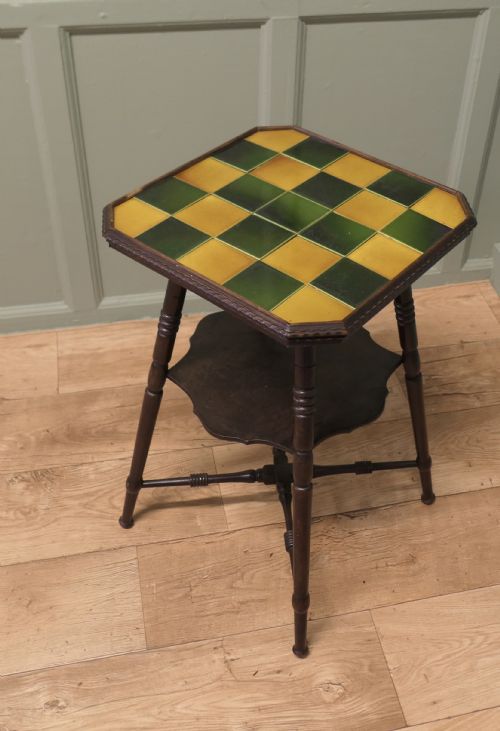
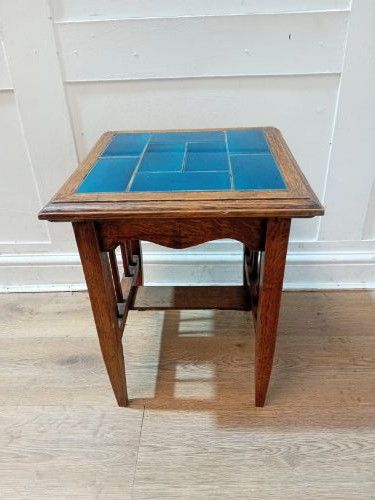
The version most commonly met on this page is the oak-framed occasional or side table featuring inset ceramic tiles, often aligning with the Arts and Crafts movement. Alongside these, related forms such as washstands and cabinets with tile gallery backs appear within the Edwardian, Victorian, and late nineteenth-century periods.
How they were made
Makers constructed the primary frames using solid timber such as oak, mahogany, or pine, joined to support heavy inset materials. These wooden structures frequently show the influence of Arts and Crafts carpentry, with attention given to visible grain and structural honesty.
Surfaces incorporated glazed ceramic tiles or marble slabs, sometimes secured within wooden rebates or tile gallery backs. The tiles themselves display decorative motifs typical of the period, including art nouveau patterns and heart-carved details.
Some tables feature heart-carved woodwork, proving that turn-of-the-century cabinetmakers enjoyed adding a touch of romance to practical furniture.
What varies in quality
The distinction between standard domestic furniture and finer examples rests in the integration of materials and the execution of carved details. Superior pieces display harmonious timber selection alongside well-fired, visually engaging tiles that complement the overarching design rather than appearing as an afterthought.
Structural integrity of the wooden framework and the preservation of the inset ceramic or marble surfaces dictate the desirability of each piece. Careful attention to joinery and the original condition of the glazed tiles separates everyday utility items from more distinguished workshop productions.
Liberty London·Shapland & Petter·Baillie Scott
The Edwardian Tiled Side Table Glossary
- Arts and Crafts
- A design movement advocating for traditional craftsmanship and simple forms. This style heavily influences the structural design and decorative details found on many period tables.
- Art Nouveau
- An international style characterised by organic, flowing lines and natural motifs. Tiles featuring this aesthetic bring dynamic visual movement to the geometric wooden frames.
- Occasional table
- A small, movable table designed for specific, intermittent use within a room. These versatile pieces form a core category among surviving domestic furnishings.
- Washstand
- A piece of bedroom furniture originally intended for personal washing, often featuring a marble top or a tile gallery back. Many surviving examples are repurposed as side or occasional tables.
- Tile gallery back
- A raised wooden superstructure at the rear of a piece, inset with decorative tiles to protect the wall. This feature appears frequently on washstands and related cabinetry.
Edwardian Tiled Side Table: Frequently Asked Questions
What is an edwardian tiled side table?
An edwardian tiled side table is a small wooden furnishing inset with glazed ceramic tiles or marble, designed for domestic utility and display.
These pieces typically date from the late nineteenth or early twentieth century and frequently exhibit Arts and Crafts or art nouveau design characteristics.
How were these tables used?
Households utilised these tables in reception rooms, halls, and bedrooms as stable surfaces for lamps, books, or decorative objects.
The heat-resistant ceramic or marble inserts made them particularly practical for holding everyday items without damaging the underlying timber.
How do I care for the tiles?
Maintenance requires gentle cleaning with a soft cloth and mild soap to preserve the original glaze without scratching the ceramic surface.
Avoid harsh chemical solvents that might degrade the historic grout or damage the surrounding wooden framework.
How can I tell the period?
Dating relies on examining the timber construction methods, the stylistic motifs of the ceramic tiles, and the overall design language.
Pieces associated with specific movements like Arts and Crafts or art nouveau usually display characteristic hand-carved details and distinct material combinations.