

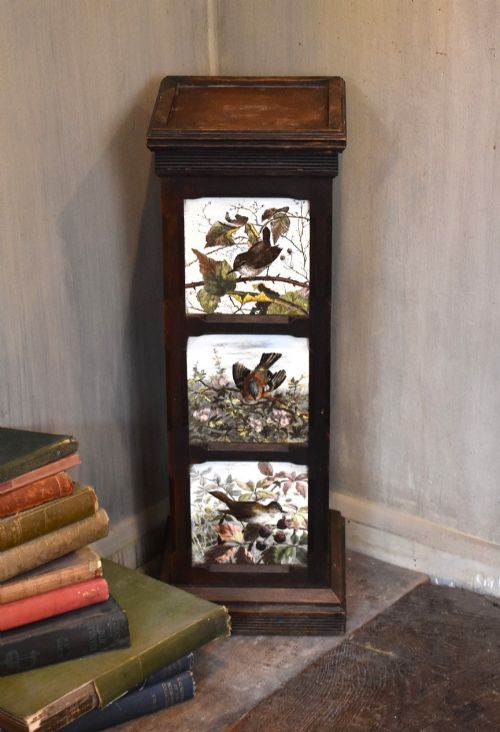


Tiled Plant Stand
These tiled plant stand pieces bring colour and utility into a room, offering a sturdy surface for greenery.
Tiled Plant Stand
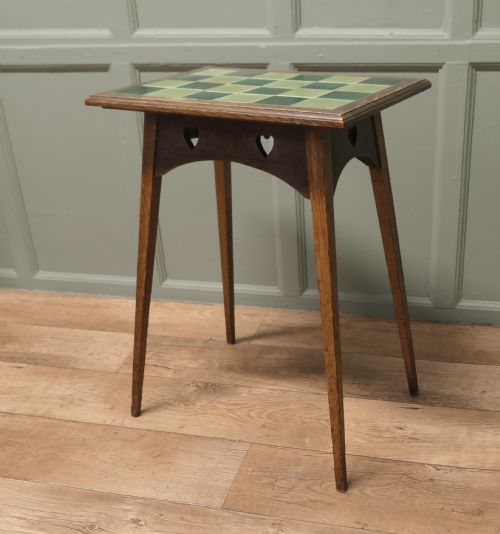
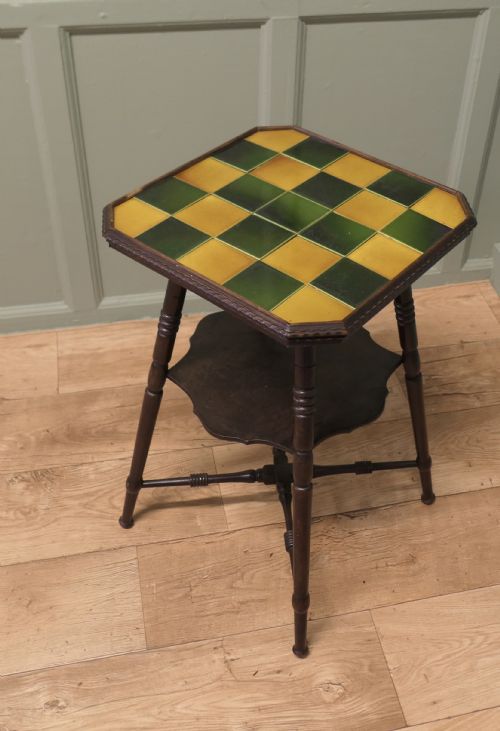
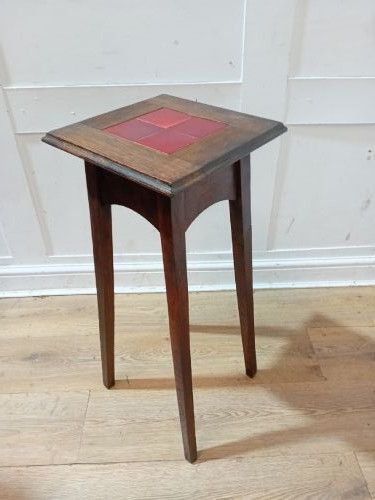
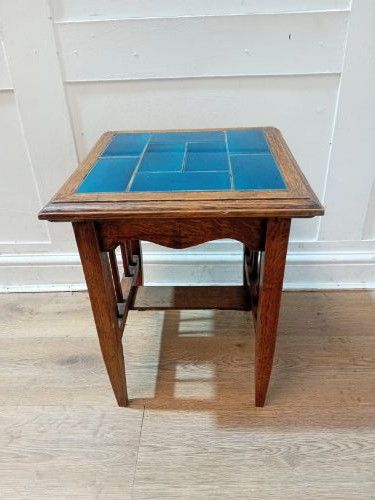
A tiled plant stand serves as a dedicated support for indoor greenery, combining timber frames with glazed ceramic surfaces that protect the wood from moisture. When you search for a tiled plant stand, you encounter occasional tables, jardiniere stands, and pedestals designed to elevate pots in the home.
The pieces on this page span from the late nineteenth century into the early twentieth century, showing strong ties to the Arts and Crafts movement and the Aesthetic Movement. Oak forms the primary timber structure, carrying patterned ceramic tiles or inset porcelain panels.
Most examples take the form of small side tables or tall pedestals, often associated with makers such as Liberty London or Shapland and Petter. Alongside British craftsmanship, the selection includes Chinese stands featuring porcelain panels and ebonised finishes.
How they were made
Potters supplied the glazed ceramic tiles and porcelain panels that fit flush into the wooden tops. These tiles display Art Nouveau floral designs or geometric patterns, fixed firmly into position to create a durable, waterproof surface.
Listings feature oak and hardwood frames paired with glazed ceramic tiles, porcelain panels, and ebonised finishes across the nineteenth and early twentieth centuries.
What varies in quality
Quality rests upon the harmony between the woodwork and the ceramic inserts, where master cabinetmakers paired selected oak with specially commissioned tiles. Plain commercial frames fitted with standard factory tiles sit at one end of the scale, while pieces bearing specific workshop attribution command greater attention.
The artistic merit of the tiles and the precision of the timber carving dictate the standing of an individual piece. Fine carving and hand-painted or lustrous glazes elevate a simple stand into a notable example of its period.
Liberty London·Shapland and Petter·Baillie Scott
The Tiled Plant Stand Glossary
- Jardiniere stand
- A tall piece of furniture designed specifically to hold a large plant pot or flower bowl.
- Occasional table
- A small, light table that can be moved around a room as needed for display or utility.
- Pedestal
- A tall base or column used to elevate a plant, sculpture, or lamp above floor level.
- Art Nouveau
- A style of design characterised by flowing, organic lines and floral motifs, prominent around the turn of the twentieth century.
- Aesthetic Movement
- A late nineteenth-century movement that emphasised decorative art and visual beauty over narrative or moral function.
Tiled Plant Stand: Frequently Asked Questions
What is a tiled plant stand used for?
These stands provide a dedicated raised platform for heavy plant pots, protecting carpets and floorboards from damp soil and water runoff.
Beyond holding greenery, they function as convenient side tables in hallways or living rooms for lamps and decorative objects.
How do I care for the wooden frame?
Keep the timber clean using a soft, dry cloth and apply occasional wax polish to nourish the grain of the oak or hardwood.
Avoid placing the stand in direct sunlight or near heat sources to prevent the wood from drying out or splitting.
How do I clean the ceramic tiles?
Wipe the glazed tiles gently with a damp cloth and mild soap, ensuring moisture does not seep into the surrounding wooden frame.
Dry the surface thoroughly afterwards to protect the grout and prevent water marks on the glaze.