

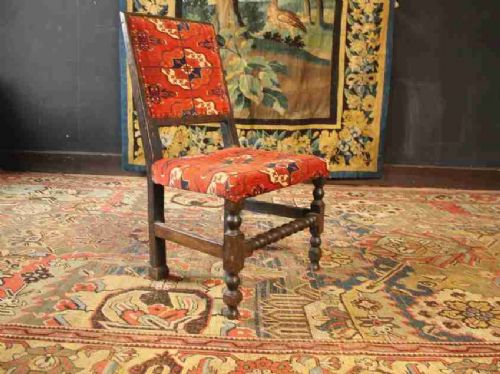


Charles II Dining Chairs
Charles ii dining chairs are robust seventeenth-century seating forms built from oak and walnut, offering sturdy structure and historic carved detail for daily use.

Charles II Dining Chairs
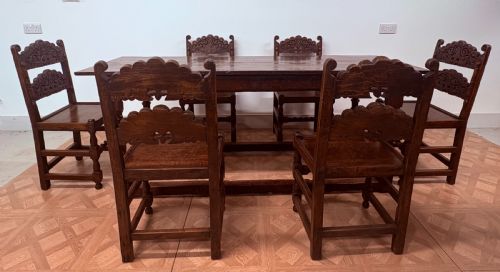
Buyers seeking charles ii dining chairs encounter a mix of genuine seventeenth-century pieces and later revival interpretations from the nineteenth and twentieth centuries. The selection spans single items, pairs, and larger dining sets designed around sturdy wooden frames.
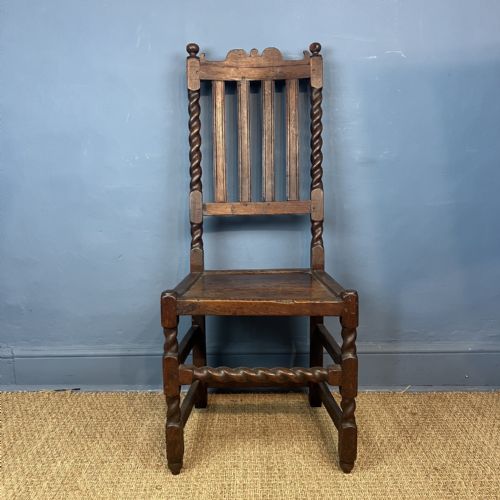
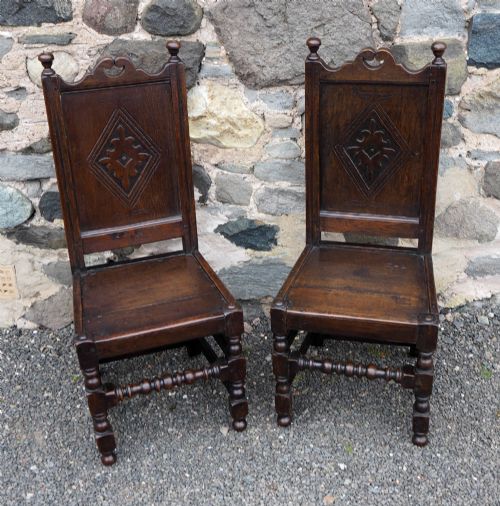
Regional variations appear frequently, including backstools and side chairs originating from Yorkshire, Derbyshire, Lancashire, and Wales. These forms often feature upright backs, carved crest rails, and turned wooden supports.
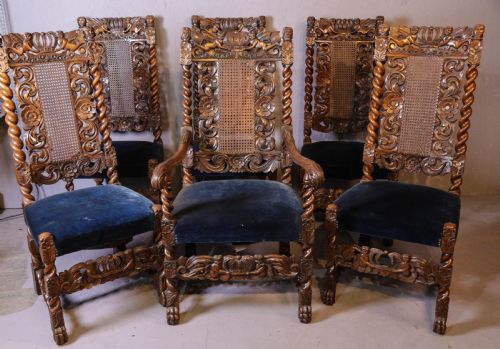
Alongside seventeenth-century originals, the evidence includes sets produced during the Victorian, Georgian, and later revival periods. These later iterations adopt the heavily carved walnut and oak aesthetics of the Restoration era.
Materials and construction methods
Makers constructed these chairs primarily from solid oak and walnut, utilising dense native timbers capable of supporting elaborate hand-carved decoration. Joinery relied on pegged mortise and tenon joints to secure the upright posts and rails.
Seating surfaces incorporate cane work, wooden boards, or upholstered pads covered in textile, fabric, tapestry, and velvet. Brass elements and tacks occasionally secure the upholstery fabrics to the wooden framework.
Early regional makers carved spirited faces into chair crest rails, watching silently over centuries of dining tables.
Factors determining quality
The crispness and depth of the hand-carving define the visual merit of the piece, separating master workshops from simpler vernacular production. Well-preserved crest rails and detailed central splats retain sharp edges and balanced proportions.
Originality of surface and timber integrity dictate the standing of an individual chair. Surviving seventeenth-century frames that retain their early cane, original joinery, and patinated oak or walnut command greater interest than heavily altered examples.
The Charles II Dining Chairs Glossary
- Backstool
- An early form of upholstered or wooden chair without arms, serving as a precursor to the standard dining chair. These pieces typically feature a tall, narrow upholstered back.
- Joint stool
- A sturdy wooden seat constructed with mortise and tenon joints held together by wooden pegs. They provide a stable platform and share construction methods with early chairs.
- Cane
- Woven rattan material utilised for seat panels and back inserts during the late seventeenth century. This technique allowed for lighter chair construction.
- Splat
- The vertical central wooden element situated within the backrest of a chair. Carved central splats often display regional decorative motifs.
Charles II Dining Chairs: Frequently Asked Questions
How do I spot a revival chair?
Revival chairs, often produced during the nineteenth and twentieth centuries, display machine-cut elements, lighter timber weights, and standardised carving styles compared to seventeenth-century originals.
Examining the underside, peg construction, and wear patterns helps differentiate period construction from later interpretations.
Are these chairs comfortable for daily dining?
Seventeenth-century dining chairs were built with upright wooden or caned backs intended for formal posture rather than lounging. Adding appropriate seat cushions can improve comfort during extended dining use.
Upholstered backstools offer a slightly softer seat when paired with appropriate textiles and padding.
How should I care for antique oak?
Maintain oak and walnut surfaces by applying microcrystalline wax sparingly to nourish the wood and protect the aged patina from drying out. Avoid placing chairs near direct heat sources.
Keep cane panels clean with a soft brush and avoid excessive moisture to prevent the natural fibres from snapping.
What defines a Yorkshire or Derbyshire chair?
These regional chairs feature distinctive carved ladder backs or arched crest rails supported by turned upright posts. They showcase local vernacular woodworking traditions from the north of England.
Such pieces often omit upholstery in favour of solid carved wooden seats and backs.