






Carolean Revival Side Chairs
These carolean revival side chairs bring substantial carved presence to a room, offering the high backs and scrolled details that collectors seek.
Carolean Revival Side Chairs
Carolean revival side chairs draw on seventeenth-century aesthetics, bringing ornate carving and tall proportions into later interiors. The listings here contain items grouped under styles such as Jacobean Revival and Queen Anne Revival, alongside pieces specifically identified as Carolean Revival.
Most examples found on this page date from the Victorian period and the early twentieth century, spanning dates from eighteen hundred through to nineteen twenty, plus a singular seventeenth-century style item. These seating forms generally serve as dining chairs or hall chairs rather than lounging seats.
Buyers encounter single chairs, pairs, and larger sets up to eight pieces. Materials lean heavily toward oak and walnut, often paired with cane, rattan, or upholstered textile seats and backs.
How they were made
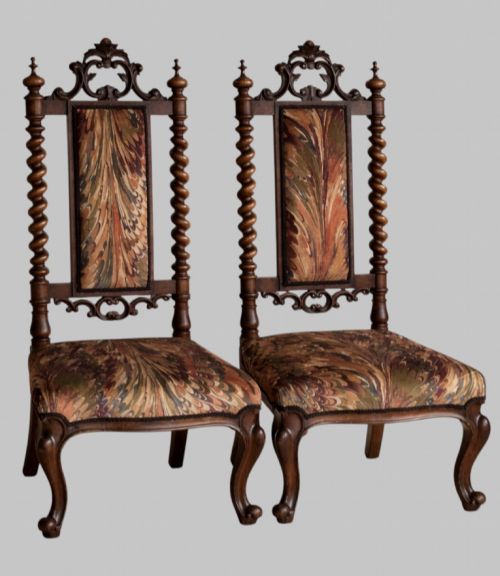
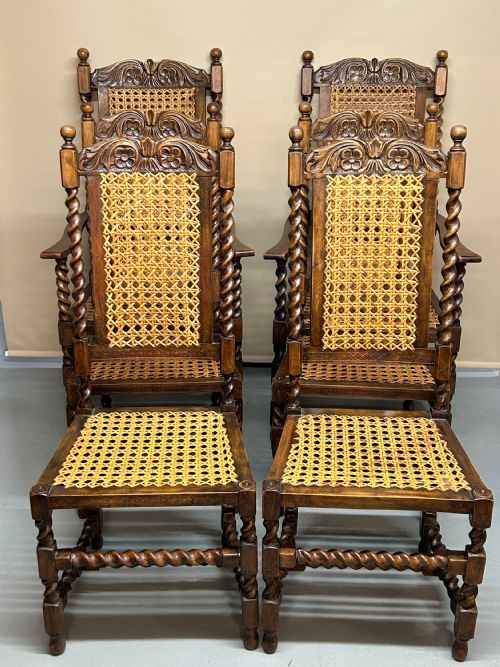
Makers utilised solid timbers such as oak and walnut to construct the rigid frames required for these tall seating designs. Carving forms a central part of the construction, yielding ornamented crest rails and splats.
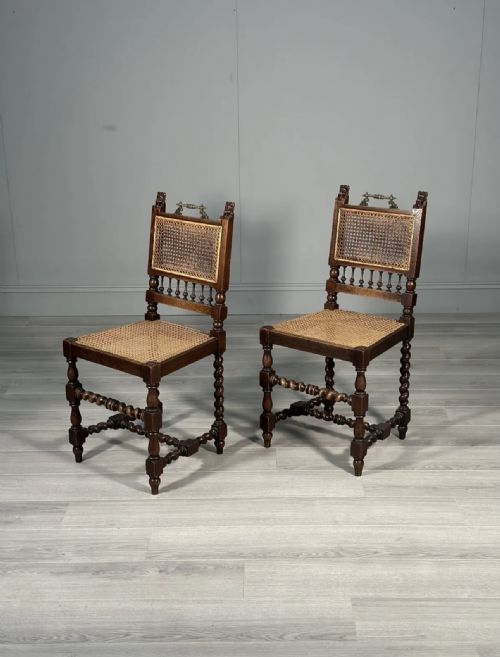
Turned components appear frequently, including barley twist supports that add structural definition to the legs and stretchers. Ebonised finishes also occur alongside natural wood surfaces.
Seating areas incorporate woven cane, rattan, or fabric and velvet textiles secured to the frames. Brass elements sometimes supplement the timber construction.
Carolean Revival Side Chairs Retail Price Guide 2026
Typical asking prices for carolean revival side chairs among the pieces listed under this phrase on Sellingantiques today, from the lower quarter to the upper quarter. They describe what is for sale here now, not the wider market.
Listings feature oak and walnut timbers, alongside cane, rattan, and textile upholstery across Victorian and Edwardian periods.
What varies in quality
The crispness and depth of the carved ornament dictate visual success across the range. Finer examples display deeply undercut foliage and scrollwork executed with precision in the walnut or oak.
The integrity of the timber frame and the quality of the turned supports determine durability. Pieces retaining their original cane work or high-grade textile upholstery demonstrate superior preservation.
The Carolean Revival Side Chairs Glossary
- Carolean revival
- A nineteenth and early twentieth-century design movement recreating the ornate style of the mid to late seventeenth century. It is characterised by high backs, elaborate carving, and scrolled timber work.
- Barley twist
- A decorative turning technique resembling a spiralling rope. This detail frequently appears on the vertical supports and stretchers of revival seating.
- Bergere
- A closed-upholstered armchair or side chair featuring woven cane panels on the back and seat. The style provides lightweight structural support.
- High-back
- A chair style featuring an elongated vertical backrest designed to command visual attention in a dining room or hallway. These proportions typify seventeenth-century inspired seating.
Carolean Revival Side Chairs: Frequently Asked Questions
Where were these chairs used?
These pieces function primarily as dining chairs or hall chairs within domestic interiors. Their tall profiles and carved frames suit formal rooms.
They appear singly, in pairs, or in larger sets suited around a dining table.
How old are these chairs?
The listings on this page span from the nineteenth century through to the early twentieth century, specifically covering periods such as the Victorian era and the Edwardian period.
While inspired by seventeenth-century aesthetics, the physical objects date to these later revival periods.
What woods were used?
Construction relies heavily on oak and walnut timber frames. Ebonised finishes also appear on certain items.
Secondary materials include cane, rattan, and various textile or velvet upholstery fabrics.
How do I care for the wood?
Maintain the timber surfaces by keeping them away from direct heat sources and strong sunlight. Regular dusting preserves the carved details.
Treat cane and upholstery gently according to the specific material requirements.