

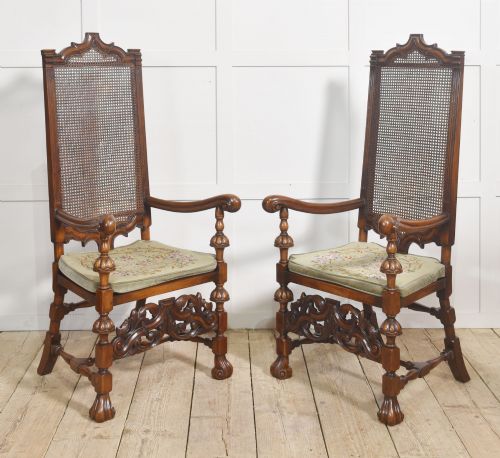


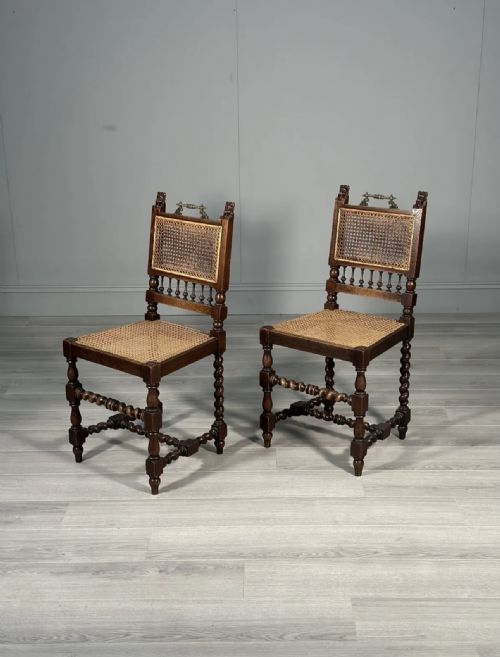
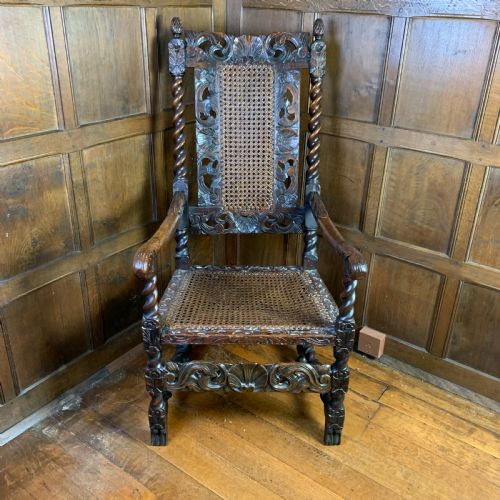
Carolean Cane Hall Chairs
Carolean cane hall chairs bring bold seventeenth-century carved walnut and oak craftsmanship directly into modern hallways and living spaces.

Carolean Cane Hall Chairs
Carolean cane hall chairs comprise seating forms created in the seventeenth century alongside revival interpretations produced during the nineteenth century. The listings on this page include examples spanning from the seventeenth century through to Victorian revivals, encompassing armchairs, side chairs, dining chairs, and settees.
The primary forms found here range from robust oak throne chairs to walnut open armchairs and side chairs. Makers utilised both original seventeenth-century construction methods and later revival techniques to achieve the characteristic high backs and open woodwork.
Buyers encountering this search phrase will find pieces exhibiting distinct periods such as the Restoration and Victorian eras. The selection demonstrates how classic seventeenth-century forms continued to influence furniture design across subsequent centuries.
How they were made
The construction of these chairs relies heavily on solid hardwoods like walnut, oak, and beech, which provided the structural integrity required for intricate carving. Craftsmen shaped these timbers into heavy frames adorned with detailed ornamentation characteristic of the period.
Caning and rattan form the traditional backing and seating panels, woven intricately into the wooden framework. Additional elements such as brass fittings and tapestry inserts appear across the listed examples, adding texture and variation to the core timber structures.
Carolean Cane Hall Chairs Retail Price Guide 2026
Typical asking prices for carolean cane hall chairs among the pieces listed under this phrase on Sellingantiques today, from the lower quarter to the upper quarter. They describe what is for sale here now, not the wider market.
Listings feature items spanning from the seventeenth century through to the Victorian era, utilising oak, walnut, beech, cane, and rattan.
What varies in quality
Quality in these chairs rests upon the depth and precision of the carving across the wooden frame. Heavily carved examples display a level of detail and sculptural execution that sets them apart from simpler pieces.
The choice of primary wood also dictates the standing of a piece, with walnut and fine oak framing commanding particular attention. Furthermore, the integrity of the original or period cane work influences the overall standard of the chair.
The Carolean Cane Hall Chairs Glossary
- Carolean
- The art and furniture style associated with the reign of King Charles II, spanning the mid to late seventeenth century. This period is marked by lavish carving and the introduction of cane seating.
- Cane
- Material derived from the rattan plant, stripped and woven into openwork panels for chair backs and seats. It offers both flexibility and structural support.
- Restoration
- An alternative historical term for the Carolean era, referring to the restoration of the monarchy in sixteen sixty six. Furniture from this time reflects newfound exuberance after Puritan austerity.
- Jacobean Revival
- A nineteenth-century movement that reinterpreted seventeenth-century styles, producing heavily carved oak and walnut furniture with antique proportions. It captures the dark, solid aesthetic of earlier centuries.
- Throne chair
- A high-backed, imposing armchair designed to dominate a room or hall. These pieces often feature extensive carving and commanding vertical proportions.
Carolean Cane Hall Chairs: Frequently Asked Questions
Where should I place a carolean cane hall chair?
These chairs suit grand entryways, hallways, or reception rooms where their upright stature and carved woodwork can be fully appreciated. Their historical presence makes them effective focal points against plain walls.
Because many examples function as armchairs, side chairs, or throne chairs, positioning them requires enough floor space to showcase the carved backs and open frames without obstruction.
How do I care for antique cane seating?
Cane requires moderate humidity to prevent the natural fibres from becoming brittle and snapping under pressure. Regular dusting with a soft brush keeps the weave clean without introducing excess moisture.
Avoid placing these chairs directly next to intense heat sources or in harsh sunlight, as timber and rattan both react poorly to extreme environmental changes.
What is the difference between original and revival pieces?
Original pieces date from the seventeenth century, carrying the genuine wear and construction techniques of the period. Revival pieces originate from the nineteenth century, mimicking those earlier styles with Victorian craftsmanship.
Both categories utilise similar materials like walnut, oak, and cane, but their dating reflects different eras of production found within the current listings.
Are these chairs comfortable for daily seating?
Carolean hall chairs and throne chairs were designed primarily for formal posture rather than lounging. The rigid wooden frames and woven cane backs encourage an upright sitting position.
Adding a loose cushion can soften the seat, though many collectors prefer to leave them in their original structural configuration.