





Oak Cane Side Chairs
Oak cane side chairs bring robust timber frames and woven seating together for sturdy dining and occasional use.
Oak Cane Side Chairs
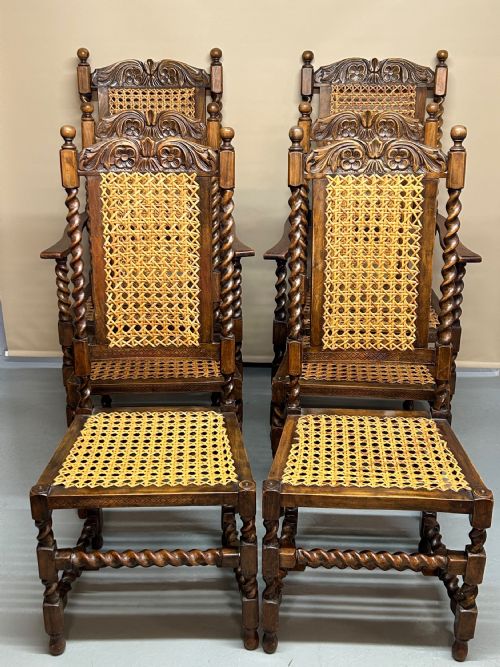
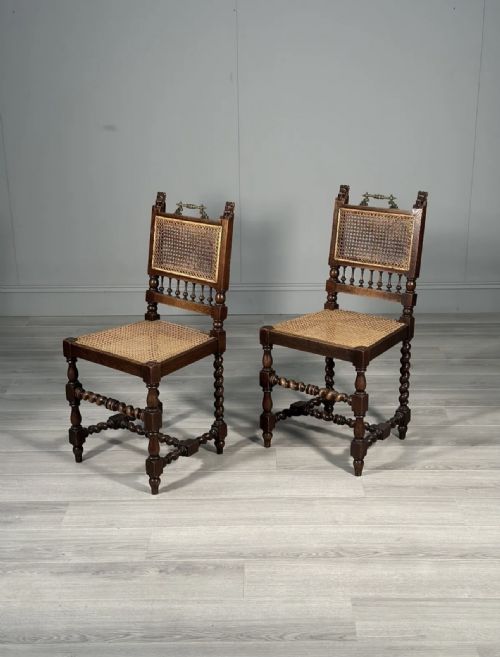
These oak cane side chairs combine sturdy timber frames with woven seating surfaces, offering practical seating for dining rooms and studies. Most examples on this page date from the Victorian period through to the early twentieth century, spanning revivals of Carolean, Jacobean, and William and Mary styles.
The form relies on an upright wooden frame without arms, designed to tuck neatly beneath tables or stand against walls. Buyers encounter sets alongside pairs and single chairs, featuring high or low backs shaped by historic revival movements.
How they were made
Frames are constructed from solid oak, sometimes shaped with barley twist legs, carved details, or dark lacquer finishes known as japanning. Wood is joined using traditional carpentry methods to ensure the structural integrity of the upright posts and stretchers.
Seating surfaces utilise natural cane or rattan, hand-woven through holes drilled in the wooden frame to create a resilient mesh. Additional materials like brass fixings, leather, or supplementary fabric sometimes appear on upholstered elements or decorative trim.
Current listings span from the seventeenth century through to the nineteen-twenties, incorporating oak, cane, rattan, and brass details.
What varies in quality
The crispness of the timber carving and the tightness of the woven cane distinguish finer examples from simpler workshops. Heavier oak stock and well-proportioned revival details indicate superior craftsmanship during production.
The integrity of the woven panel matters greatly, as does the stability of the joined frame beneath it. Better pieces maintain original wood patination and consistent tension across the cane work.
The Oak Cane Side Chairs Glossary
- Cane
- Woven material made from the peeled bark of rattan palms. It provides a flexible yet supportive surface for chair seats and backs.
- Carolean style
- Design aesthetic reflecting the reign of Charles II, characterised by rich carving, scrolling motifs, and high backs. This style saw revivals during the nineteenth and twentieth centuries.
- Barley twist
- A turning technique resembling a spiralling rope, frequently carved into the vertical legs and stretchers of wooden chairs. It adds visual movement to the heavy oak structure.
- Japanning
- A form of European lacquerwork imitating East Asian finishes, often applied to wooden furniture to produce a dark, glossy surface. It appears on select early chairs.
- Jacobean revival
- A nineteenth and twentieth century design movement copying the heavier, rectangular furniture styles of the early seventeenth century. Pieces often display deep carved panels and straight upright posts.
Oak Cane Side Chairs: Frequently Asked Questions
How do I care for cane seats?
Keep woven cane away from direct heat sources and sharp objects to prevent drying and snapping. Occasional damp wiping helps maintain moisture in the natural fibres.
Avoid placing excessive localized weight on the centre of the woven panel. Proper support ensures the mesh retains its natural bounce over decades of daily use.
Can I use these chairs daily?
Solid oak frames provide the structural strength needed for regular dining and occasional seating. Check that all joints remain tight before putting older chairs into heavy service.
Lighter frames benefit from careful handling when being moved across uneven floor surfaces. Routine maintenance keeps historic timbers functioning reliably in modern homes.
What defines the revival styles?
Revival pieces borrow specific decorative vocabulary from earlier centuries, such as the high carved crests of the seventeenth century. Makers in the Victorian and Edwardian eras reinterpreted these historic forms for contemporary buyers.
Details like barley twist legs and deep back panels signal which historical period inspired the maker. These stylistic cues help distinguish between original seventeenth-century construction and later interpretations.
How do I spot replacement cane?
Original hand-woven cane often shows slight irregularities and matches the aged patina of the surrounding wooden frame. Modern machine-woven cane typically appears more uniform and attaches via a groove rather than individual drilled holes.
Examining the underside reveals how the strands were secured during the weaving process. Consistent ageing between the timber and the seat usually indicates undisturbed historical material.