




Woven Cane Dining Chairs
Woven cane dining chairs bring texture and historical character to a room, ranging from early seventeenth-century walnut to twentieth-century bentwood forms.
Woven Cane Dining Chairs
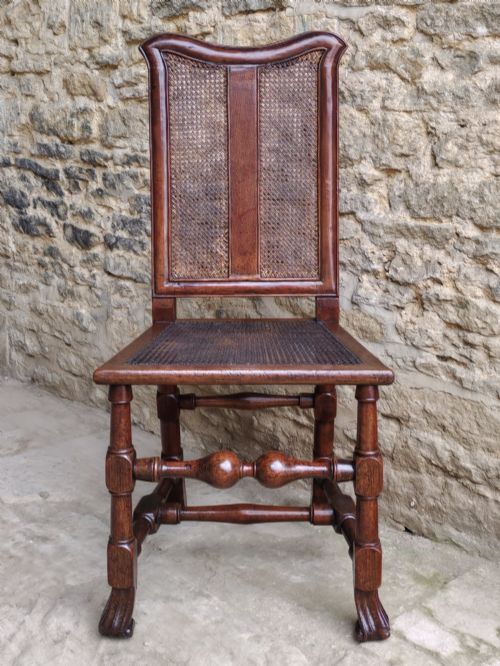
Woven cane dining chairs encompass seating designed for the table across multiple centuries, featuring seats, backs, or panels formed from plant fibres. When you search for woven cane dining chairs, you encounter forms ranging from seventeenth-century walnut chairs to twentieth-century bentwood bistro seating.
The materials and periods vary widely across the selection. Oak, walnut, beech, ebonised wood, painted wood, ebony, and rosewood appear alongside rattan cane, reflecting Carolean, Regency, William and Mary, and Victorian revival styles.
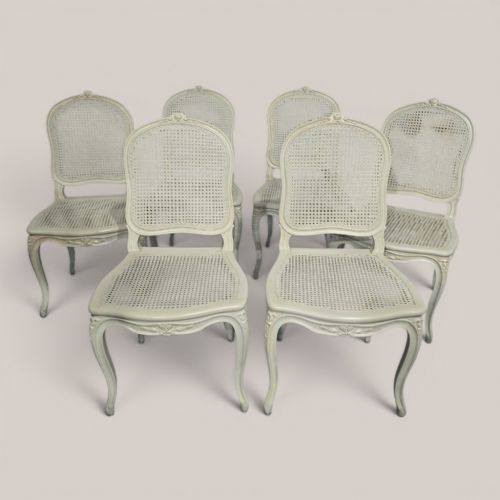
Armchairs, side chairs, and dining chairs populate the listings. Sets of six French bergere dining chairs appear alongside pairs of Regency caned armchairs and matched sets of five bentwood bistro chairs.
How they were made
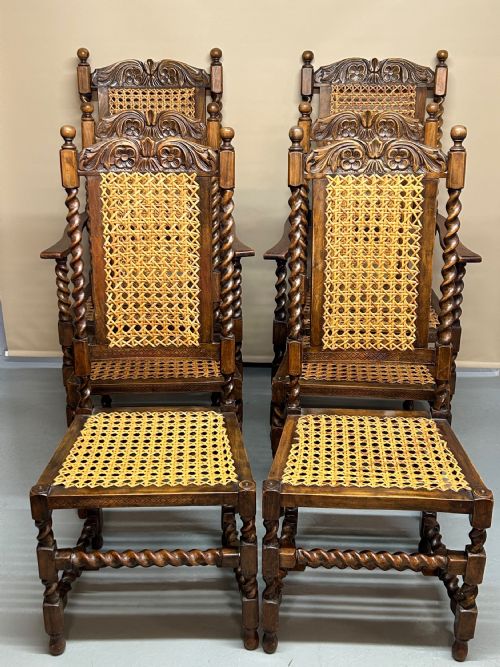
Frames are constructed from hardwoods such as oak, walnut, beech, ebony, and rosewood, sometimes utilising painted, ebonised, or carved finishes. Joinery methods support the structural load while accommodating turned elements like barley twist legs.
Cane and rattan cane are hand-woven through pierced frames to create supportive seats and backs. Intricate carving appears on Anglo-Indian solid ebony pieces from Ceylon and carved Cromwellian farmhouse examples.
Regional origins in the selection include French bergere dining chairs, Anglo-Indian ebony pieces from Ceylon, and English oak examples.
What varies in quality
The calibre of timber selection and the complexity of the frame carving determine the standing of each piece. Finely carved ebony or figured walnut frames represent a higher standard of craftsmanship than simpler turned or painted constructions.
The tightness, regularity, and preservation of the cane weave influence the integrity of the seating. Original seventeenth and eighteenth-century frames demonstrate different joinery traditions compared to nineteenth-century revival or twentieth-century bentwood production.
The Woven Cane Dining Chairs Glossary
- Cane
- Material split from the outer bark of rattan palms, woven to form flexible and resilient panels for seats and backs. It provides a lightweight yet durable surface.
- Bergere
- An upholstered French armchair or dining chair featuring enclosed cane work on the back and sides. This style gained popularity in various periods including nineteen hundred.
- Bentwood
- Wood softened by steam and bent into curved shapes, commonly utilised for bistro chairs. This technique allows for continuous, flowing structural lines without traditional joints.
- Barley Twist
- A turned furniture leg resembling a twisted rope, characteristic of seventeenth-century and later revival pieces. It is carved or turned on a lathe to create a spiral effect.
- Carolean
- A seventeenth-century English furniture style associated with the reign of Charles the Second, known for ornate carvings and cane panels. Pieces in this style often feature rich walnut frames.
Woven Cane Dining Chairs: Frequently Asked Questions
Are cane dining chairs sturdy enough for daily use?
Historic cane chairs were built for regular dining use, utilising resilient woven plant fibres stretched across sturdy hardwood frames. Solid oak, walnut, and ebony structures provide the necessary baseline strength for seating.
Preservation of the original or restored weave determines how comfortably a chair bears weight during everyday meals.
What is the difference between a side chair and an armchair?
Side chairs are built without armrests, designed to tuck neatly beside a dining table to maximise seating capacity. Armchairs incorporate supportive side rests, offering a more commanding presence at the table head or as standalone accent seating.
Both forms utilise woven cane inserts for the backrest and seat across various historical periods.
Can I mix different styles of cane chairs around a table?
Mixing periods and styles, such as pairing French bergere chairs with bentwood bistro designs or Regency armchairs, creates an eclectic interior scheme. Matching sets of four, five, or six also exist for a uniform look.
Coordinating timber tones helps unify disparate chair styles gathered around a single dining table.