
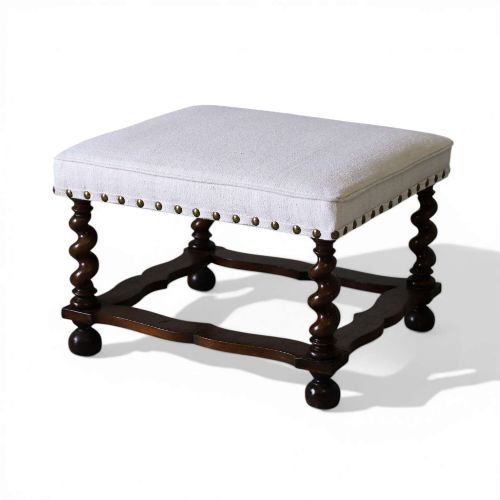
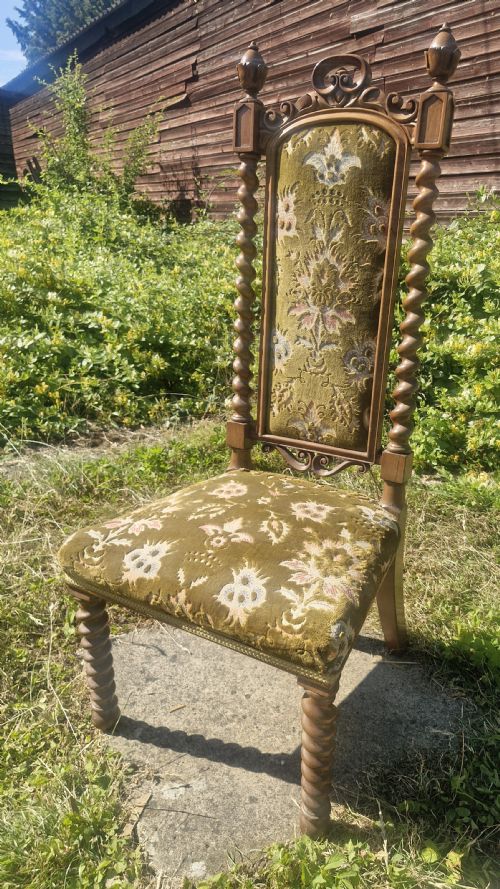
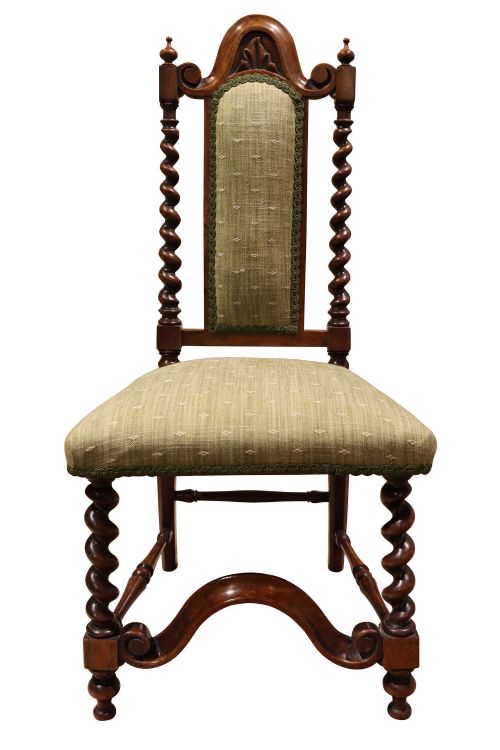
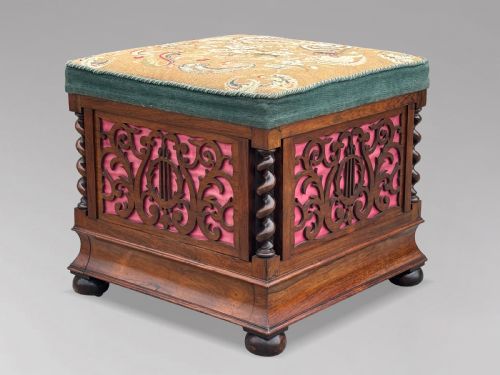
Antique Barley Twist Seating
Antique barley twist seating brings sculptural turned timber into domestic spaces, offering sturdy frames shaped by centuries of revival design.
Antique Barley Twist Seating
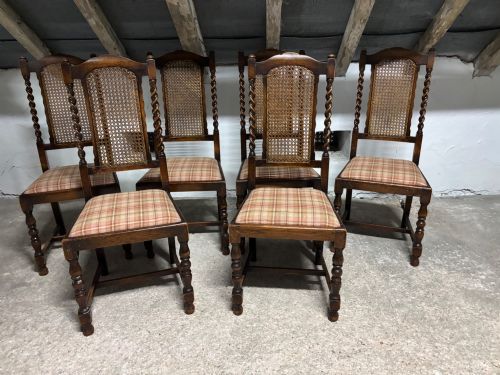
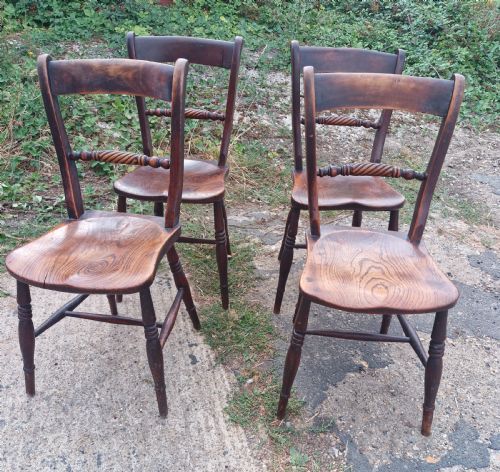
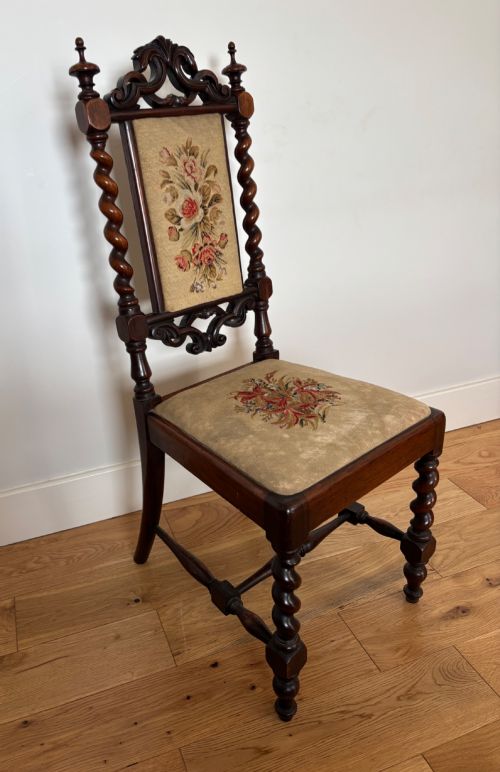
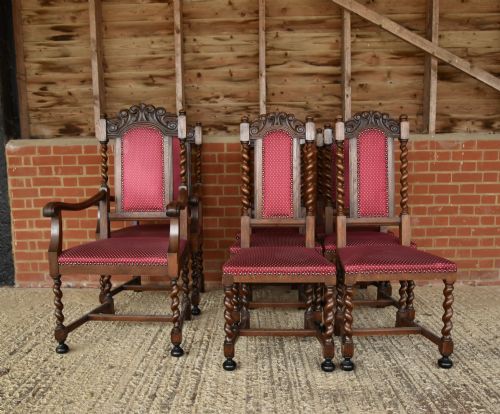
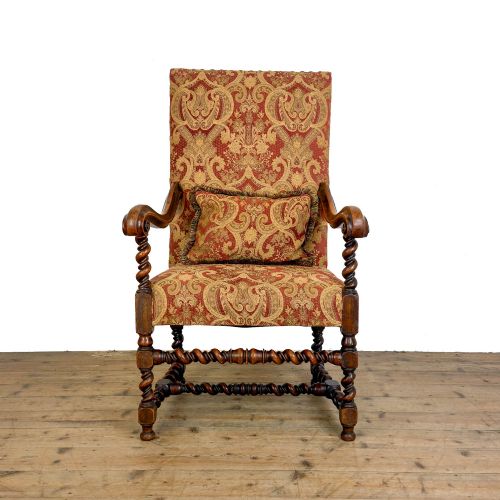
When searching for antique barley twist seating, buyers encounter dining chairs, armchairs, and stools spanning the seventeenth century to the twentieth century. Oak and walnut form the structural core of these pieces, which often draw on Jacobean, Carolean, and Gothic revival styles.
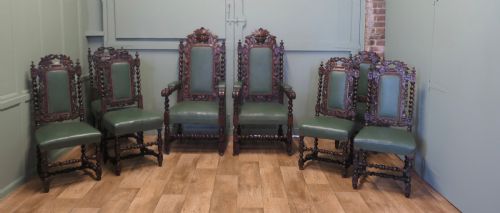
The selection ranges from single hall chairs and child chairs to substantial sets of dining chairs. Many examples incorporate turned supports alongside cane, fabric, or leather elements.
How they were made
Cabinetmakers shaped timber using lathe-turning techniques to produce the characteristic helical twist, pairing solid oak and walnut frames with carved details. Joinery typically relies on traditional pegging and mortise methods to sustain weight along the turned legs and stretchers.
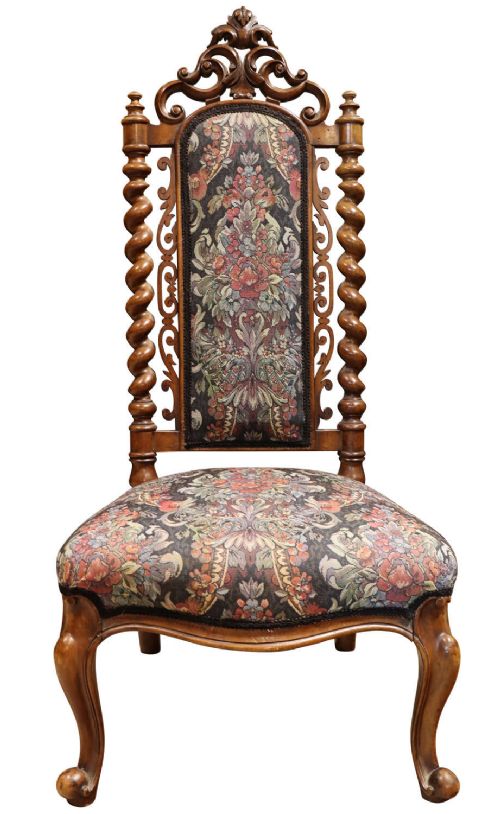
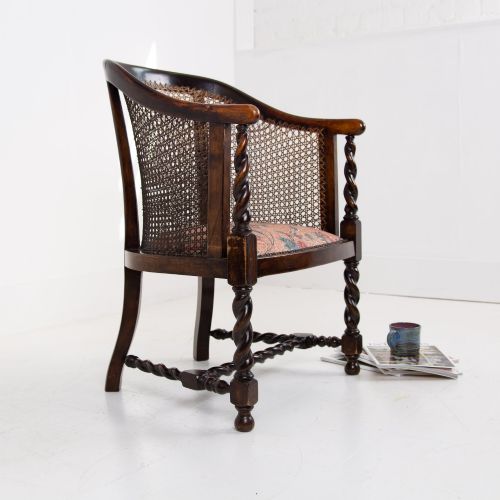
Upholstered variants integrate materials such as leather, tapestry, velvet, and cane inserts secured to the wooden frameworks. Subsequent restorations occasionally introduce modern cushions or replacement woven seats while retaining the historic timber skeleton.
Listings feature oak, walnut, rosewood, and satinwood, spanning seventeenth-century origins through to twentieth-century revivals.
What varies in quality
The distinction between tiers rests upon the depth of hand-carving and the integrity of the timber selection, where dense grain and uniform twist execution signal superior workshop output. Greater age and stylistic ambition, seen in throne chairs and matched dining sets, elevate the standing of a piece.
The fidelity of revival periods influences appreciation, with faithful interpretations of seventeenth-century forms holding distinct character compared to later commercial production. Original surface patination and minimal structural intervention preserve the authentic visual weight of the turned supports.
Liberty & Co
The Antique Barley Twist Seating Glossary
- Barley twist
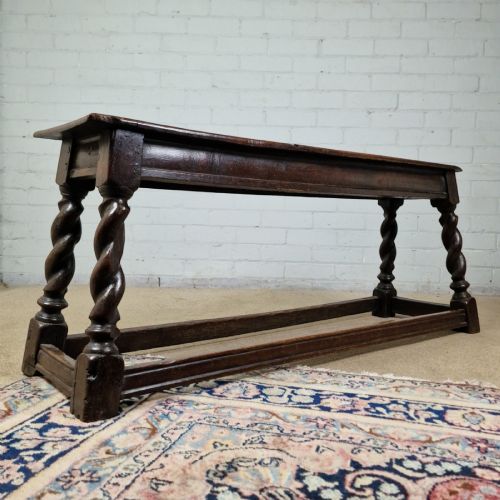
- A turned wooden furniture leg or stretcher shaped in a continuous helical spiral resembling a twisted rope. This decorative turning gained prominence during the seventeenth century and saw widespread revival in Victorian and Edwardian joinery.
- Jacobean Revival
- A nineteenth-century design movement replicating the architectural and furniture styles of the early seventeenth century. Pieces from this period frequently display heavy oak construction and deep relief carving.
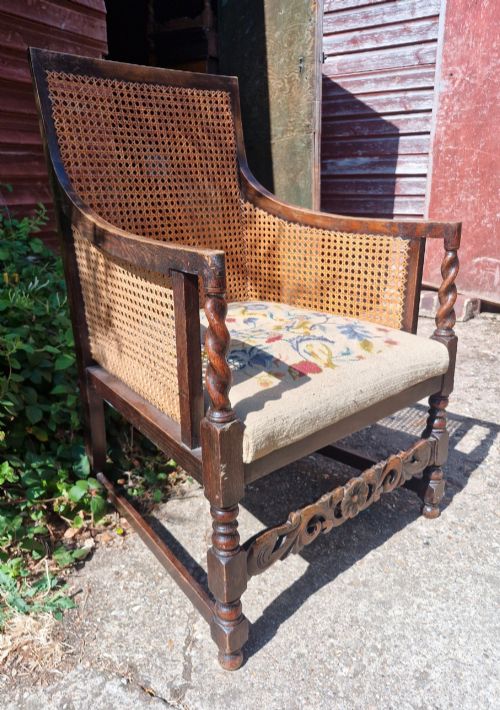
- Bergère
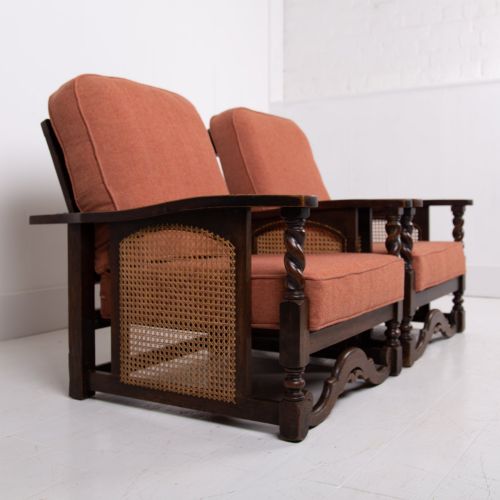
- An enclosed upholstered armchair with wooden framing and woven cane panels forming the back and sides. Originating in France, this form appears in later British variations with twisted supports.
- Stretcher
- A horizontal timber rail connecting the legs of a chair or stool to provide structural rigidity. In barley twist seating, these members often carry the same helical turning as the uprights.
- Carolean
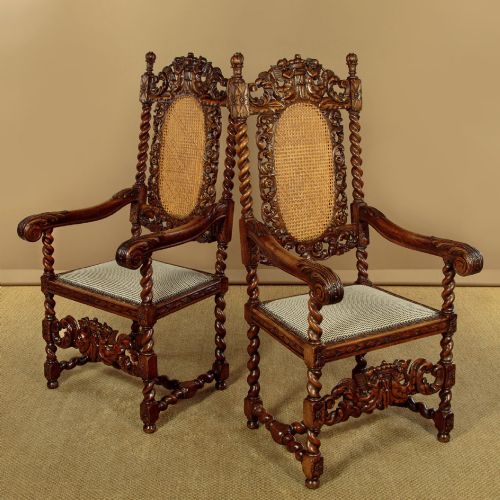
- Pertaining to the reign of King Charles II, characterised by lavishly carved woodwork, cane panels, and dynamic scrollwork. Revival versions of these chairs emulate the rich ornamentation of the restoration era.
Antique Barley Twist Seating: Frequently Asked Questions
How do I date these chairs?
Dating relies on identifying the timber species, joinery methods, and stylistic revival markers present in the frame. Oak dominates seventeenth-century and revival pieces, while rosewood and walnut frequently appear in Victorian examples.
Turned profiles and upholstery styles also offer clues, as nineteenth-century workshops often combined older turning motifs with contemporary buttoned or sprung seats.
Are these chairs comfortable for daily use?
Many dining chairs and armchairs provide sturdy support for regular seating, especially models equipped with padded upholstery or replacement cushions. Tall dining sets and hall chairs are generally firmer and suited for specific seating arrangements.
Buyers often select sturdy oak or walnut frames when intending to use the chairs around a dining table on a daily basis.
What styles accompany barley twist legs?
Barley twist supports most commonly appear alongside Jacobean revival, Carolean revival, and Gothic revival designs. These styles incorporate high backs, carved crest rails, and occasional animal head motifs.
Some pieces also feature in Arts and Crafts contexts, pairing the twisted turned timber with simple upholstered panels or woven cane seats.