
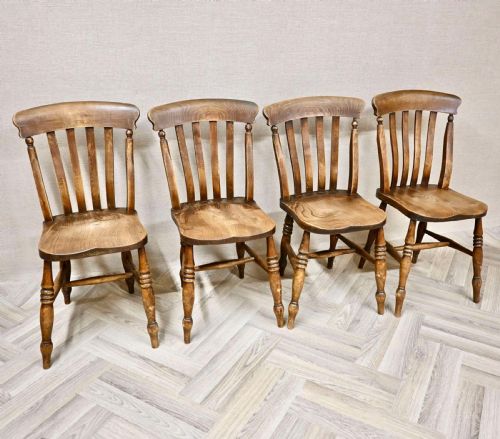
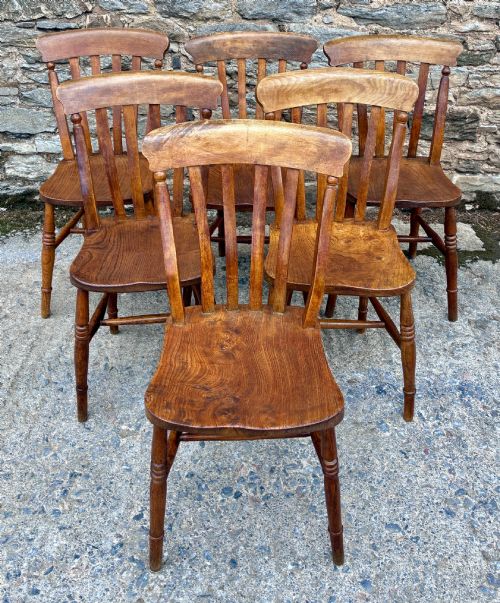
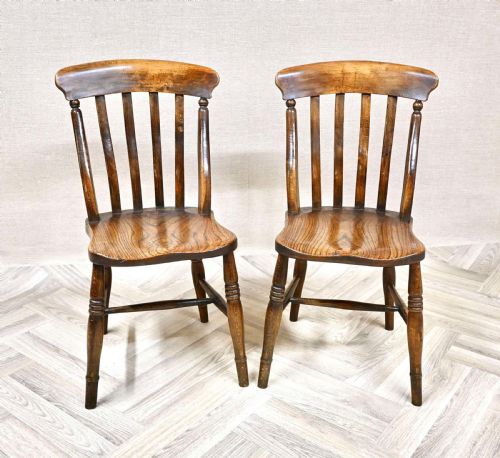
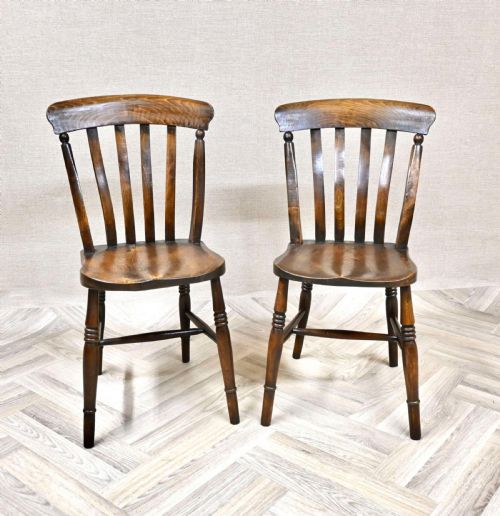


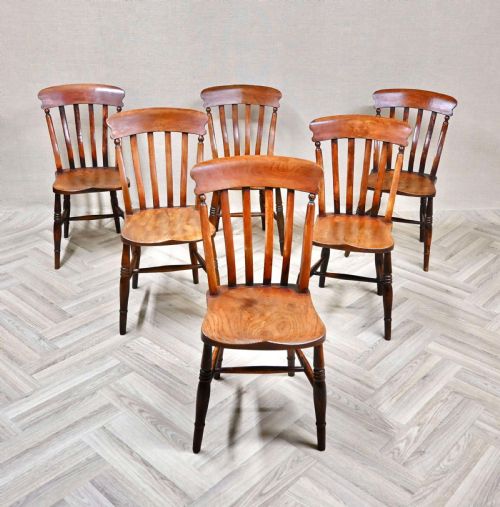

Slat Back Oak Chairs
Slat back oak chairs offer sturdy country character and upright support, bringing enduring traditional craftsmanship into modern dining rooms.
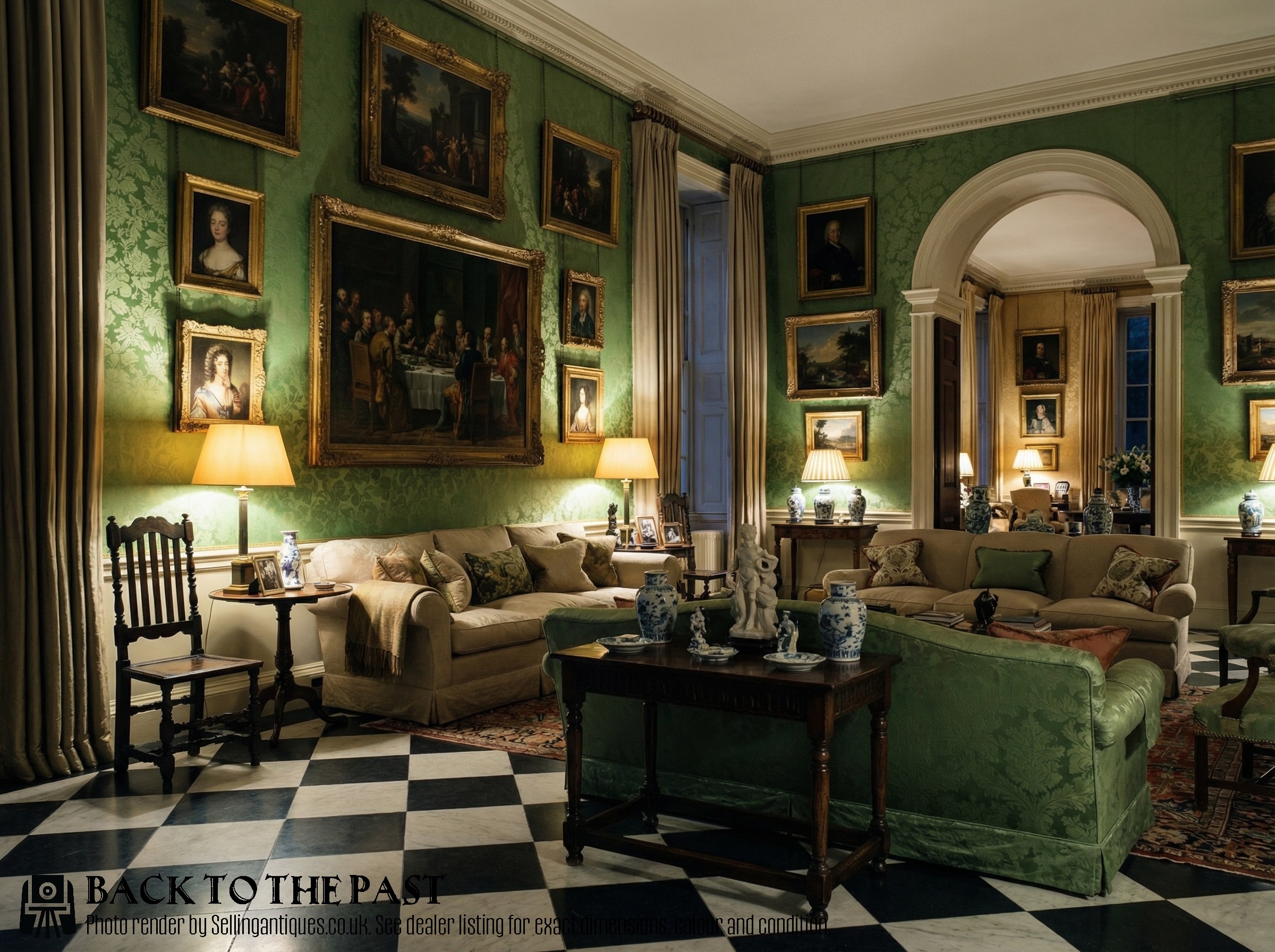
Slat Back Oak Chairs
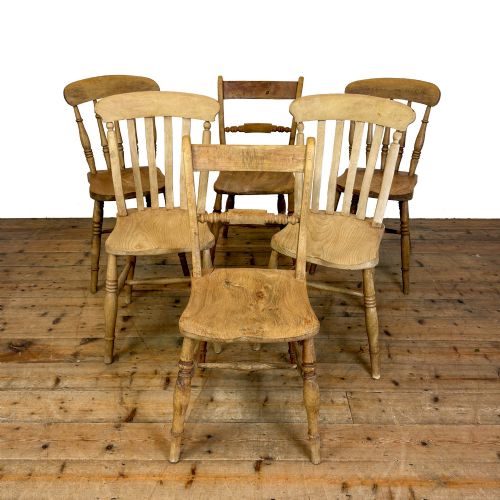
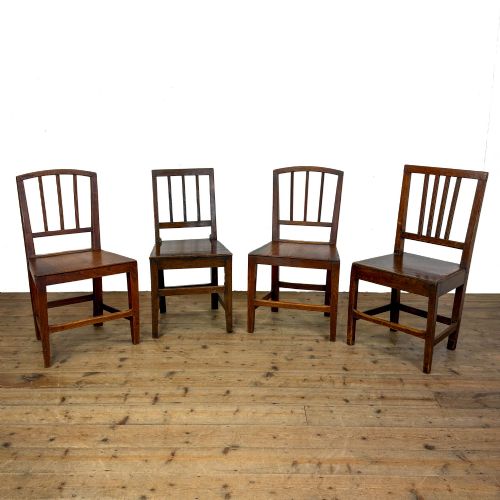
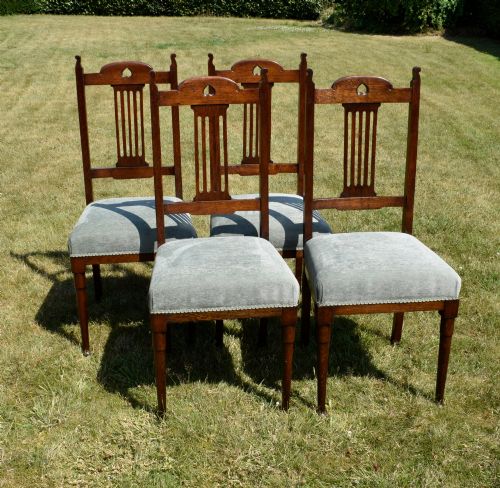
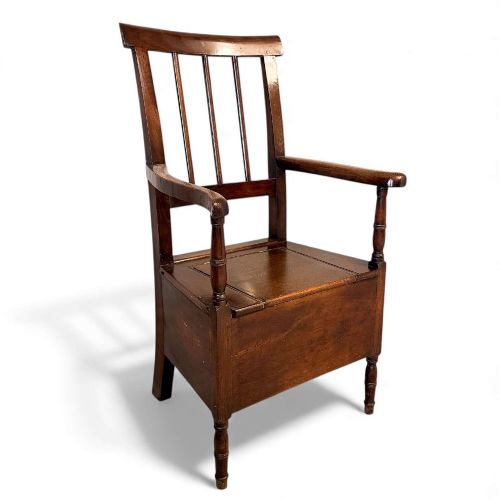
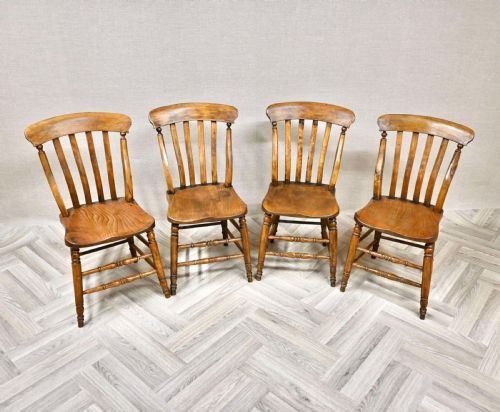
Slat back oak chairs encompass various forms ranging from vernacular kitchen seating to refined Arts and Crafts dining sets. Buyers encounter 18th-century vernacular pieces alongside 19th-century country Windsors and Edwardian revival designs.
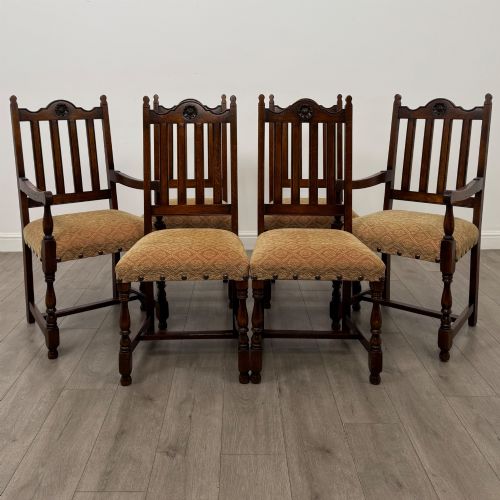
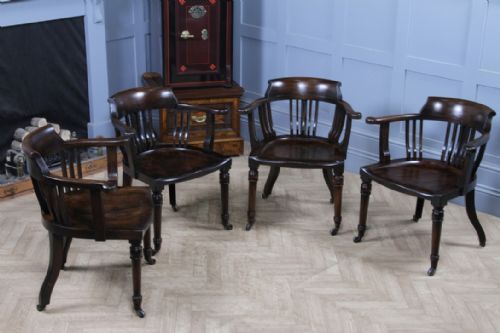
Dining chairs and carver armchairs dominate the selection, frequently appearing in sets of four, six, or eight. Desk chairs and office variants also occur, utilising robust timbers suited to daily utility.
The aesthetic bridges rustic farmhouse traditions and structured modernist movements. Makers employed straightforward vertical slats to provide rigid back support while displaying the natural grain of the wood.
Materials and construction
Oak provides the primary structural framework for these chairs, supplemented by elm, ash, and beech for seats and turned components. Joinery relies on mortise and tenon joints secured with wooden pegs to ensure lasting rigidity.
Rush, cane, fabric, and leather furnish the drop-in or woven seats found across various periods. Turning lathes shaped the barley twist, bobbin, and spindle legs characteristic of Victorian and Edwardian examples.
Listings feature oak alongside elm, ash, and beech, with seating surfaces finished in rush, cane, leather, and fabric.
Distinctions in quality
The integrity of the timber framing and the tightness of the original joinery dictate the durability of each piece. Heavier gauge oak and well-matched grain patterns across matched sets separate workshop productions from standard utility items.
Original surface patination and minimal timber replacement preserve historical authenticity. Maker stamps and documented vernacular origins elevate the standing of individual carvers and matched dining sets.
Edward Barnsley·Shapland and Petter·Heals
The Slat Back Oak Chairs Glossary
- Carver
- An armchair, typically designed for the head of a table, featuring supportive open arms. These often match a larger set of side chairs.
- Barley twist
- A type of furniture leg or stretcher carved in a spiral shape resembling a twisted rope. This technique gained popularity during the late 17th century and saw revivals in the Victorian and Edwardian eras.
- Rush
- Dried marsh grass woven into tight seats for traditional country chairs. It provides a resilient and slightly flexible surface.
- Harlequin set
- A collection of chairs that match in general style and period but vary slightly in minor details or proportions. These sets assembled over time rather than originating together from a single workshop.
- Windsor
- A chair constructed with a solid wooden seat into which the legs and back spindles are directly bored and wedged. They frequently incorporate bentwood bows and vertical slats.
Slat Back Oak Chairs: Frequently Asked Questions
What periods do these chairs cover?
The available selection spans from the late 17th century through the Victorian and Edwardian eras up to the 1930s. Earlier examples showcase vernacular country craftsmanship, while later pieces reflect Arts and Crafts or revivalist ideals.
Matching sets often date to the 19th and early 20th centuries, offering uniform seating for larger dining spaces. Single carvers and pairs frequently represent earlier vernacular traditions.
How do I identify Arts and Crafts examples?
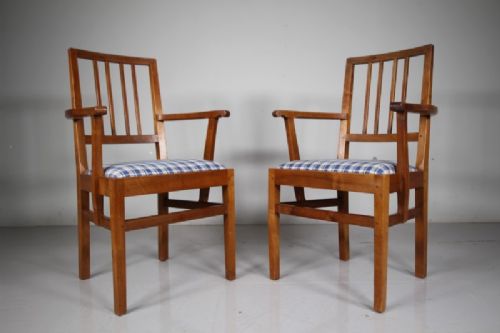
Arts and Crafts pieces emphasise honest construction, visible joinery, and the natural grain of the oak. They often feature high vertical slats, sometimes with subtle wavey profiles or flared uprights.
These designs avoid excessive ornamentation, relying instead on clean structural lines and occasional maker stamps. Stretchers and high backs provide both visual weight and ergonomic support.
Are these chairs suitable for daily dining?
Solid oak construction and pegged mortise joints make these chairs exceptionally durable for everyday use. Their upright slat backs encourage good posture during meals or desk work.
Harlequin sets and matched groups accommodate varying household sizes while maintaining a cohesive traditional aesthetic. Rush and upholstered drop-in seats provide comfortable padding for extended sitting.