


French Cane Dining Chairs
French cane dining chairs bring genuine Continental elegance to a room, offering tactile woven seating combined with historic timber frames.
French Cane Dining Chairs
When you search for french cane dining chairs, you encounter a refined mix of seating designed for formal dining and drawing room use. These pieces span from the late nineteenth century into the early twentieth century, drawing heavily on classical French design vocabulary.
The selections on this page most frequently showcase traditional forms such as Louis XV and Louis XVI styles, alongside French Provincial and Chateau interpretations. You will find single pairs, matched sets of various sizes, and occasional larger suites suitable for a substantial dining table.
Makers and manufacturers during these periods utilised classic silhouettes, incorporating carved wooden frames alongside woven seating panels. The resulting chairs balance decorative presence with functional utility for daily dining.
Materials and construction
The frames are constructed predominantly from solid timbers such as walnut and painted wood, often shaped by hand with decorative carvings. Artisans applied traditional joinery techniques to ensure stability across side chairs, armchairs, and salon chairs alike.
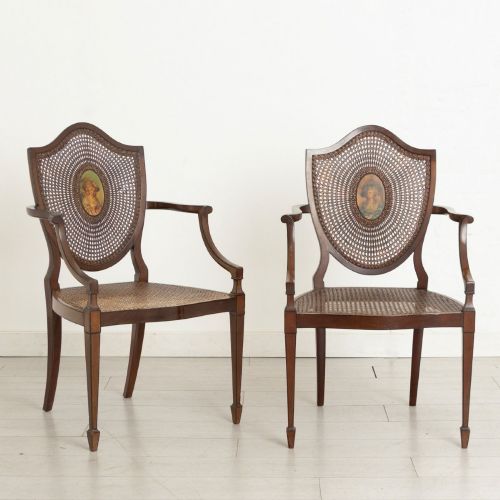
Seating and backrests utilise woven cane and rattan cane materials, threaded meticulously through frame channels to create a supportive yet flexible surface. Additional elements like leather or gilt details occasionally appear to complement the primary woodwork.
Object types recorded across these entries include side chairs, armchairs, salon chairs, and full dining sets.
Assessing quality and craftsmanship
Quality in these chairs rests primarily on the depth and crispness of the hand carving on the wooden frames. Finer examples display fluid, deeply undercut ornamentation rather than shallow, mechanical milling.
The integrity of the woven cane work also distinguishes superior pieces, showing consistent tension and tight patterning across the seat or back. Furthermore, timber selection matters significantly, with dense walnut commanding more respect than softer painted woods.
The French Cane Dining Chairs Glossary
- Cane
- A woven material derived from the outer portion of rattan palms, utilised to create flexible, breathable panels for chair seats and backs. It provides both lightness and durability.
- Louis XVI Style
- A neoclassical design movement characterised by straight lines, symmetry, geometric forms, and restrained classical ornament. It contrasts with the flowing curves of earlier Louis periods.
- Bentwood
- A technique of steaming wood to make it pliable enough to bend into curved shapes, frequently seen in bistro seating. This method allows for sturdy, lightweight frames without heavy joinery.
- Bergere
- An enclosed upholstered armchair with a wooden frame, where the sides are frequently filled with cane work. These pieces offer deep, comfortable seating proportions.
- Medallion Chair
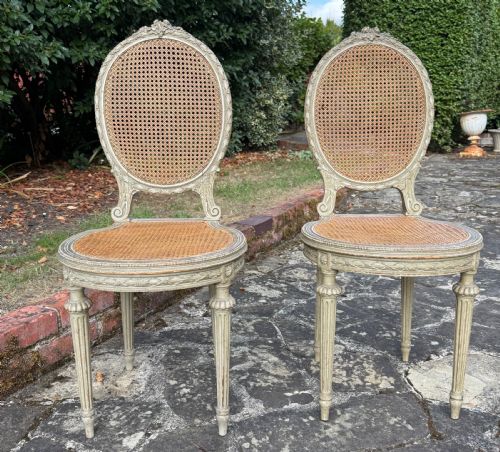
- A chair featuring a distinct oval or round backrest framed by carved wood, typical of neoclassical and Louis XVI revival seating. The circular back acts as a strong visual focal point.
French Cane Dining Chairs: Frequently Asked Questions
How do I spot Louis XV versus Louis XVI styles?
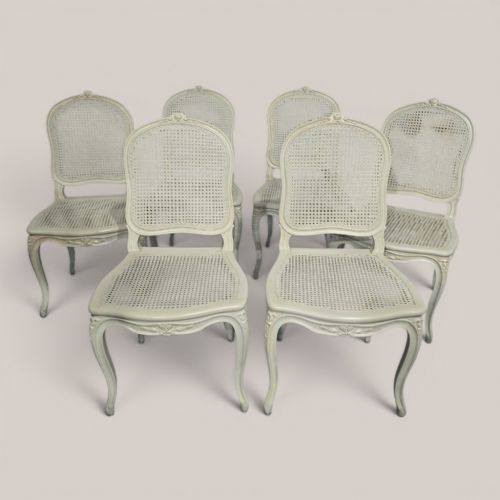
Louis XV style chairs exhibit sweeping asymmetrical curves, cabriole legs, and organic floral motifs carved into the wood. The overall silhouette feels fluid and dynamic rather than rigid.
In contrast, Louis XVI style embraces symmetry, straight tapered fluted legs, and geometric shapes like medallions or rectangles. The decoration draws directly from classical architectural elements.
Are cane seats comfortable for long dinners?
Cane seating offers surprising resilience and breathability, moulding slightly to the body during use. The woven grid distributes weight evenly across the frame.
For extended dining, many owners add loose squab cushions upholstered in fabric or leather to enhance softness. These can be tied to the frame and removed easily.
How do I care for antique cane?
Antique cane requires moderate humidity to prevent the natural fibres from becoming brittle and snapping. Keeping the chairs away from direct heat sources helps preserve the material.
Dusting regularly with a soft brush and occasionally wiping the underside with a damp cloth maintains the cane's moisture balance. Avoid harsh chemical cleaners entirely.
Can antique dining chairs mix with modern tables?
These chairs pair effectively with contemporary dining tables, introducing texture and historical contrast to a clean-lined modern room. The natural warmth of walnut and cane softens minimal spaces.
When mixing periods, consider matching the timber tone or the room's overall colour palette to create a cohesive dining environment.