


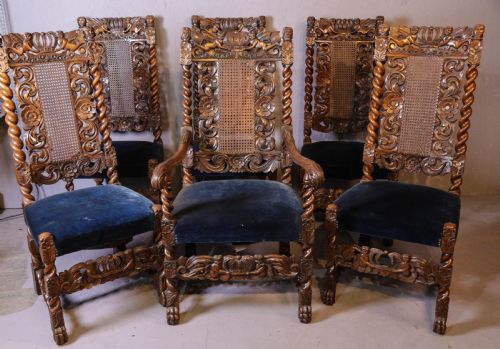

Caned Back Dining Chairs
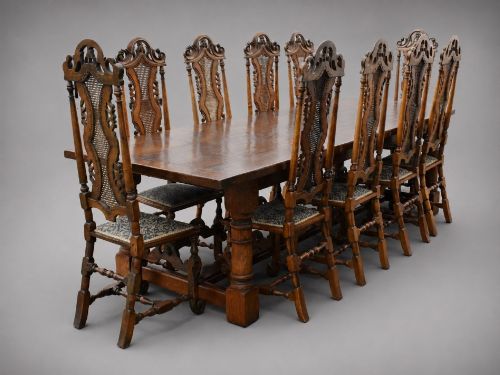
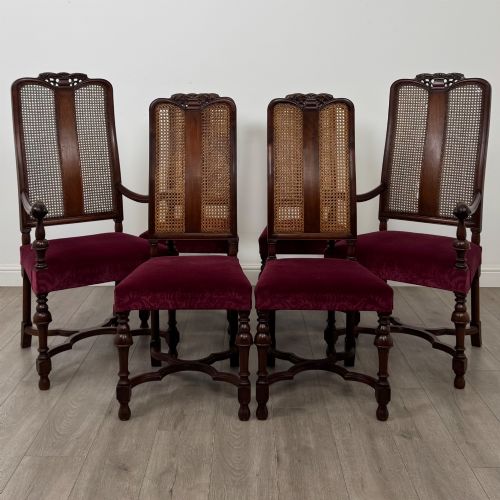
These caned back dining chairs bring centuries of woven texture and timber character to the table, offering a combination of resilient seating and refined frames that collectors prize for dining rooms.
Caned Back Dining Chairs
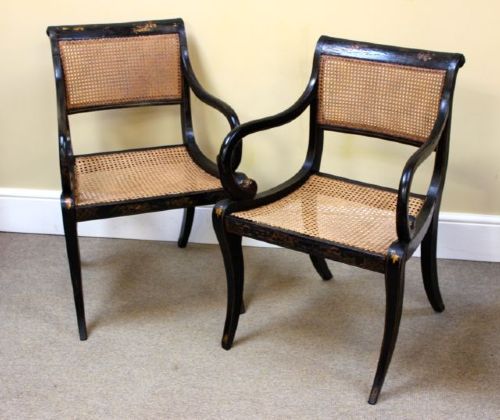
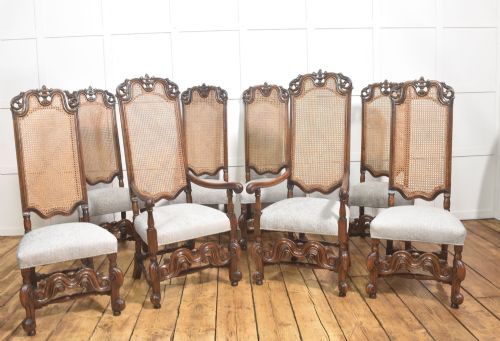
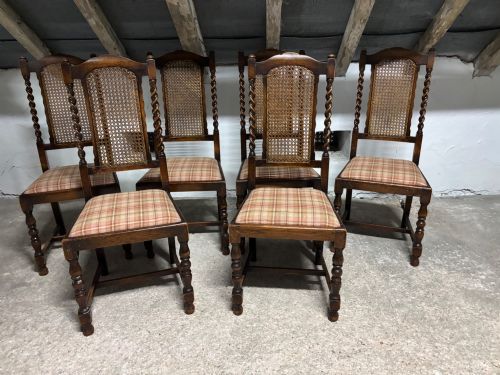
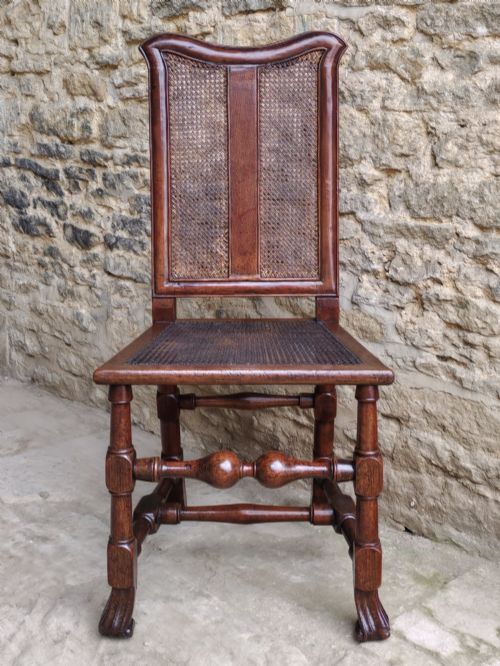
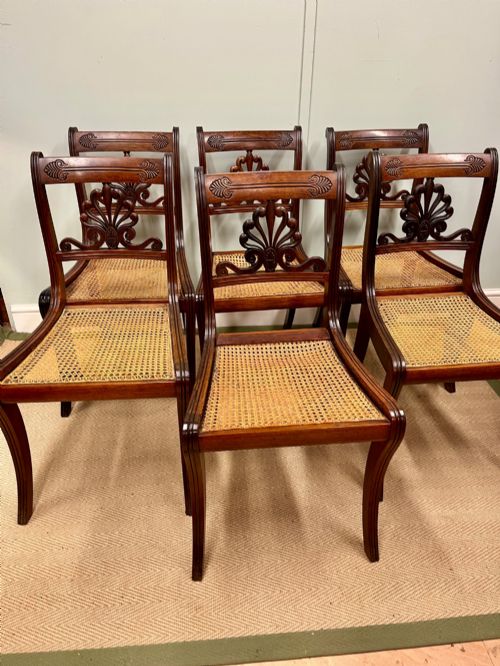
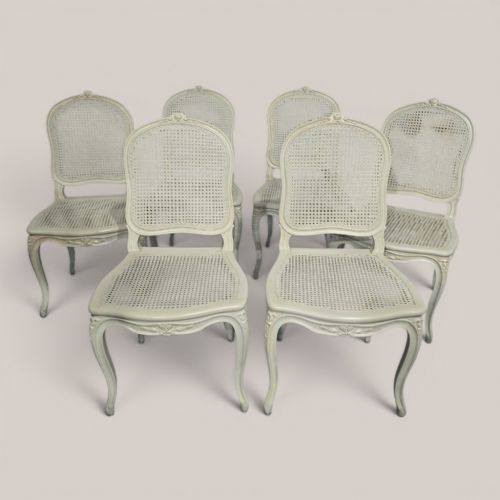
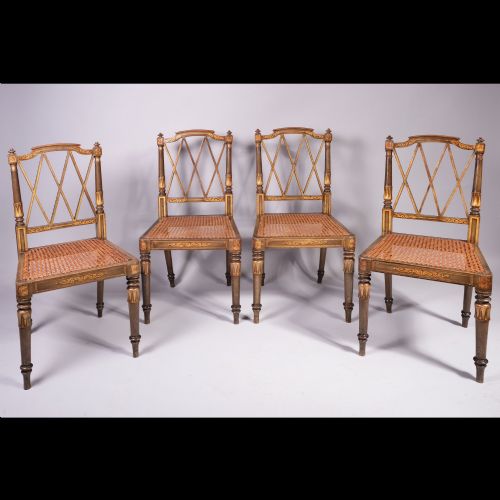
Caned back dining chairs cover a broad span of history, appearing in forms ranging from austere seventeenth-century oak seats to elegant Regency rosewood designs and later revival pieces. When exploring this selection, buyers frequently encounter matched sets or pairs from the Victorian and Edwardian eras, alongside earlier styles built with tall, carved uprights.
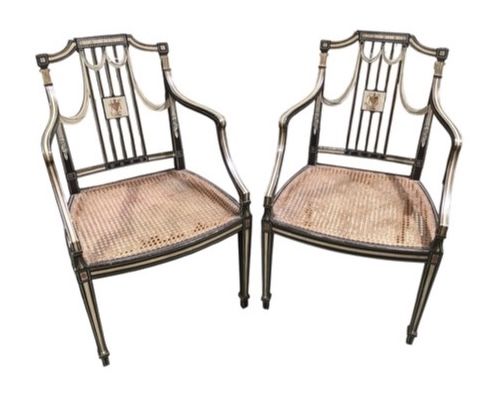
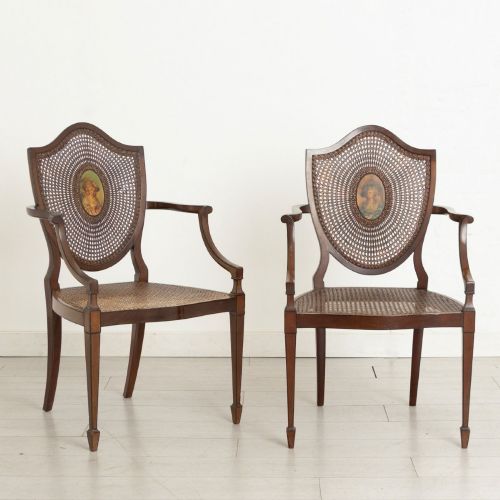
The inventory ranges from sturdy farmhouse chairs with barley twist legs to formal French neoclassical and bergere salon seats. Dining sets sit alongside armchairs and occasional chairs, meaning a buyer can furnish a complete dining table or simply source a pair of bedside or desk seats.
Materials and construction methods
Timber frames form the backbone of these pieces, utilising dense hardwoods such as oak, walnut, mahogany, rosewood and painted wood. Artisans shaped these materials into turned legs, curved rails and heavily carved crests, often incorporating bone inlay or gilded finishes on select models.
The defining feature relies on woven cane panels inserted into the backrests and sometimes the seats. Makers tensioned plant-based strands through drilled holes in the wooden frame, creating a flexible, supportive mesh that breathes during use.
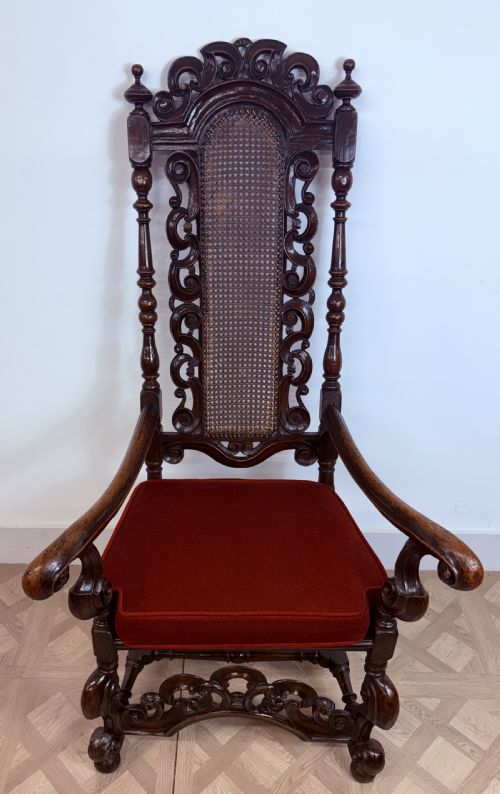
Some seventeenth-century chairs feature intricate crown carvings designed to celebrate the restoration of the monarchy.
Assessing craftsmanship and condition
Quality reveals itself in the crispness of the timber carving and the tightness of the joinery. Superior examples maintain rigid frames without excessive wobble, using traditional mortise and tenon joints that withstand daily dining use.
The integrity of the woven cane dictates much of the value. Original cane showing an even, aged patina commands respect, whereas neat modern re-weaving demonstrates that a piece has received careful maintenance to remain functional.
Waring & Gillow·Gillows
The Caned Back Dining Chairs Glossary
- Cane
- A material woven from peeled rattan or similar plant stems to form a flexible, patterned mesh. It provides lightweight strength to chair backs and seats.
- Carolean
- A seventeenth-century English style spanning the reign of Charles II, characterised by rich walnut framing, crown and scroll motifs, and open carved work.
- Regency
- A period of English design spanning the early nineteenth century, drawing inspiration from classical Greek, Roman and French aesthetics with clean lines and dark woods.
- Bergere
- An enclosed upholstered or caned armchair with wooden framing exposed around the sides and back, originating in France.
- Barley twist
- A woodworking technique where timber is turned into a helical screw pattern, frequently seen on legs and stretchers of seventeenth-century and revival furniture.
Caned Back Dining Chairs: Frequently Asked Questions
How do I care for antique cane?
Keep the woven panels slightly hydrated by wiping them occasionally with a damp cloth, as completely dry indoor air can make the material brittle.
Avoid placing these chairs directly next to intense heat sources or radiators to prevent the natural plant fibres from cracking over time.
Are these chairs strong enough for daily use?
Most sturdy wood frames with tight joinery handle regular sitting without issue, provided the underlying structure has been properly maintained.
Heavier users should exercise care with antique caning, as older or dry panels can stretch or snap under sudden pressure.
How do I distinguish original cane from replacement work?
Original cane displays darker colour tones, smoother surface wear from age, and minor irregularities in the hand-woven strands. Modern replacement cane usually looks lighter, feels stiffer, and shows uniform machine-like tension across the panel.
Can mismatched dining chairs work together?
Pairing different styles creates an eclectic dining arrangement, especially when tying pieces together through a shared wood tone like mahogany or oak.
Matching armchairs at the head of the table while surrounding the sides with simpler side chairs is a traditional method of mixing forms.