


French Neoclassical Dining Chairs
French neoclassical dining chairs bring architectural symmetry and classical restraint to a room, offering both formal presence and durable seating.
French Neoclassical Dining Chairs
When you search for french neoclassical dining chairs, you encounter seating designed around straight lines, classical motifs, and balanced proportions. The listings on this page span several centuries, including eighteenth-century examples alongside nineteenth-century and twentieth-century revivals.
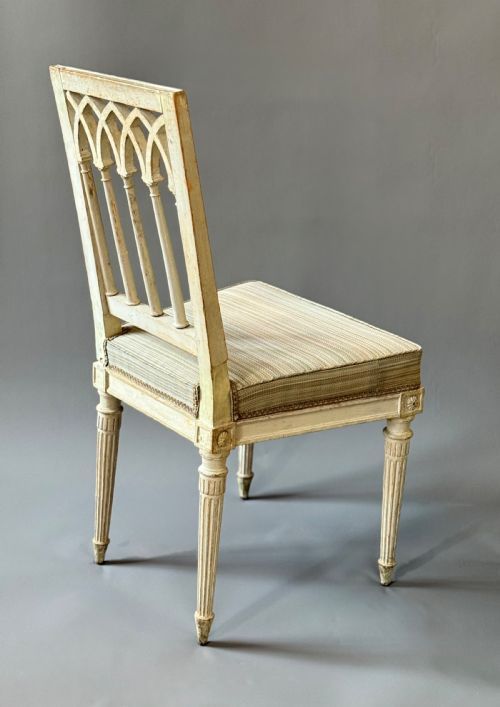
You are most likely to meet painted wood frames, giltwood finishes, and carved medallion backs reflecting Louis XVI and Empire styles. Forms range from single pairs of side chairs to large matching suites intended for formal dining rooms.
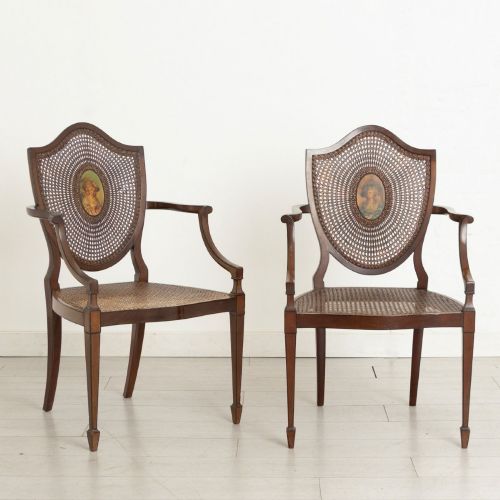
The selection also incorporates cane seats, upholstered pads in velvet or fabric, and carved walnut or brass structures. These pieces draw on French regional design traditions, including Gustavian aesthetics and Gothick taste interpretations.
Materials and construction methods
Makers utilised solid wood, carved walnut, and painted timber as the primary structural bases for these chairs. Surfaces often received hand-carved ornamentation, painted decoration, or complete gilding to achieve the desired neoclassical finish.
Upholstery techniques combined traditional webbing and stuffing with silk damask, fabric, or velvet coverings. Caning was frequently woven directly into wooden frames to create flexible, breathable seat panels.
Metal elements such as brass appeared in specific side chair designs, while applied paint layers preserved the timber underneath and defined the stylistic period.
One recorded suite managed to keep forty-two matching chairs together, ensuring nobody at the long table sat on a stranger's bench.
Distinctions in quality and execution
The standard of carving determines much of the distinction between pieces, with crisp, deeply defined foliage and fluting separating superior work from softer execution. The integrity of the original wood frame and the precision of the joinery dictate long-term stability.
Finishes also establish rank, as layered historical paint surfaces or well-preserved gilding carry greater visual coherence than unsympathetic later overpainting. Complete matching suites demonstrate unified design intent, whereas assembled groups rely on the harmony of their individual parts.
The French Neoclassical Dining Chairs Glossary
- Medallion back
- A circular or oval wooden chair back typical of Louis XVI seating design. This shape references classical Roman and Greek medallions.
- Giltwood
- Timber treated with a thin layer of gold leaf applied over a prepared gesso ground. It provides a reflective, opulent finish common in formal French interiors.
- Caning
- Woven rattan or split cane material used to form light, supportive seats and backs. This technique appears frequently on eighteenth and nineteenth-century French painted chairs.
- Empire style
- A neoclassical design movement spanning the late eighteenth and early nineteenth centuries, characterised by military motifs and heavy classical authority. It draws inspiration from ancient Roman, Greek, and Egyptian forms.
- Gustavian
- The Swedish interpretation of French neoclassical and Louis XVI design, known for a lighter palette and restrained ornamentation. Painted finishes in grey or white dominate this aesthetic.
French Neoclassical Dining Chairs: Frequently Asked Questions
How do I clean cane seats?
Wipe cane gently with a damp sponge using warm water to maintain moisture and prevent snapping.
Allow the material to dry completely before any weight is applied to the seat.
Can these chairs support daily use?
Most solid wood and upholstered examples handle regular dining room seating once structural joints are secure.
Chairs featuring delicate carved crests or historic painted finishes benefit from more careful handling.
How do I identify a revival piece?
Revival furniture incorporates construction techniques, wood species, and tool marks consistent with nineteenth or twentieth-century production.
These pieces replicate earlier eighteenth-century forms while reflecting the manufacturing methods of their actual date of creation.