

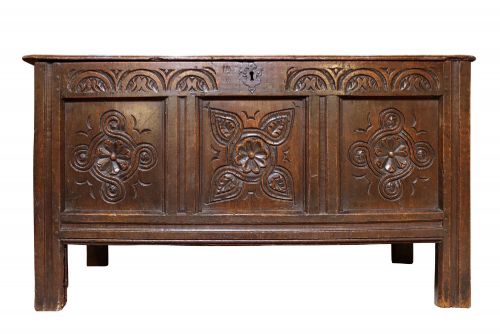


Charles II Carved Chest
A charles ii carved chest brings the robust timber and deep tool-work of the seventeenth century directly into a modern room.
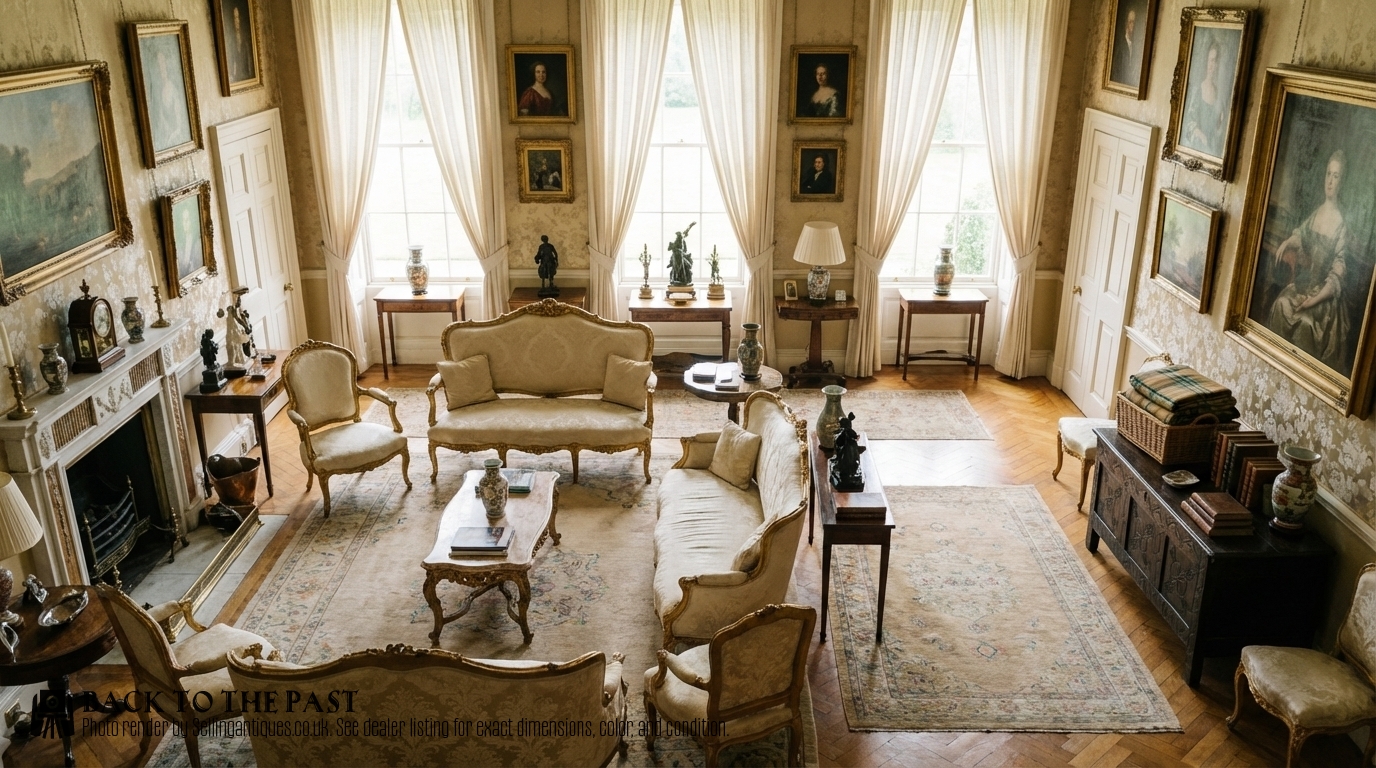
Charles II Carved Chest
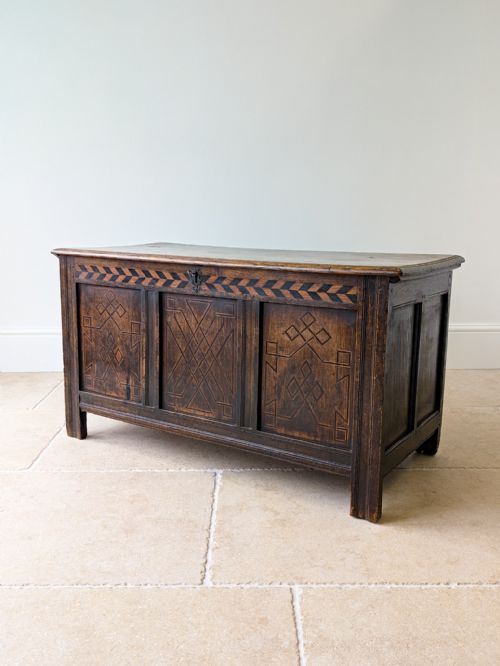
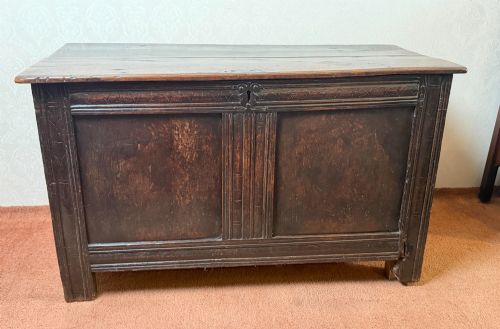
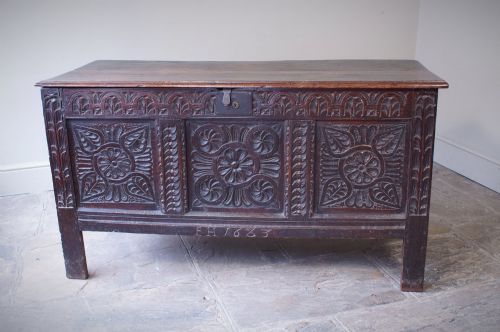
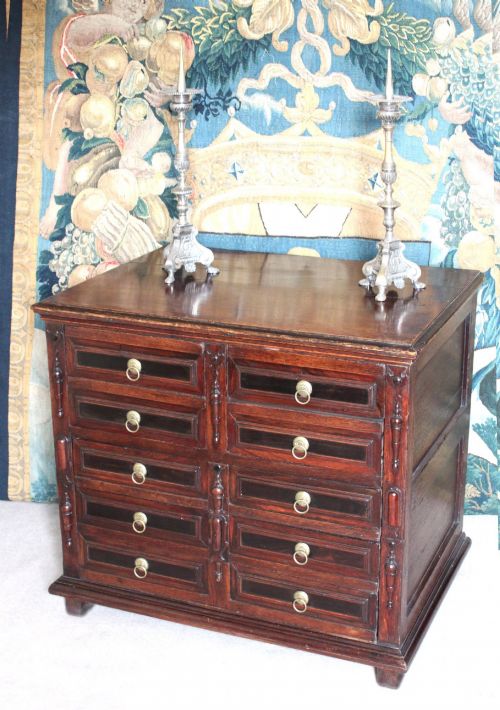
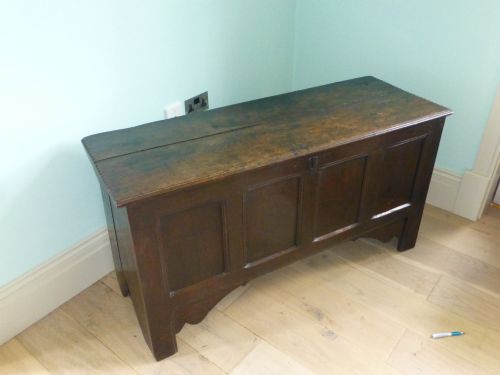
A charles ii carved chest embodies the heavy timber furniture produced during the later seventeenth century, combining utilitarian storage with intricate surface decoration. Buyers seeking this phrase encounter solid oak coffers, mule chests, and drawer units carrying the distinct ornament of the Restoration period.
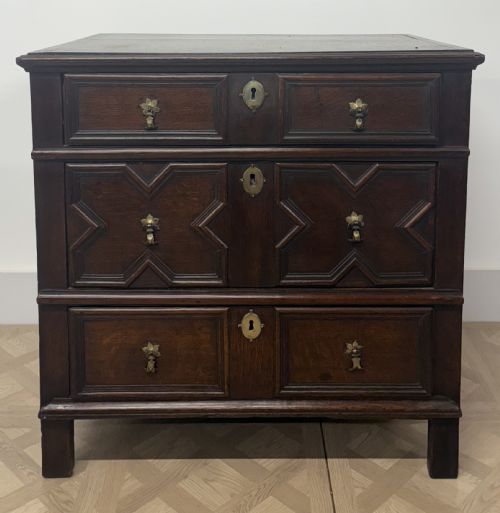
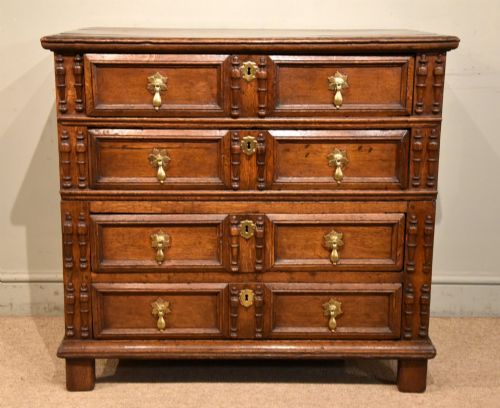
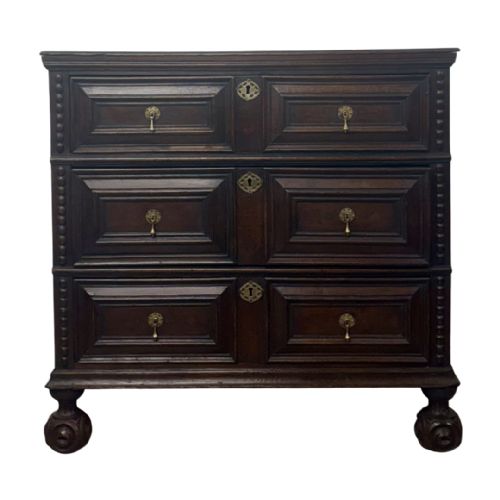
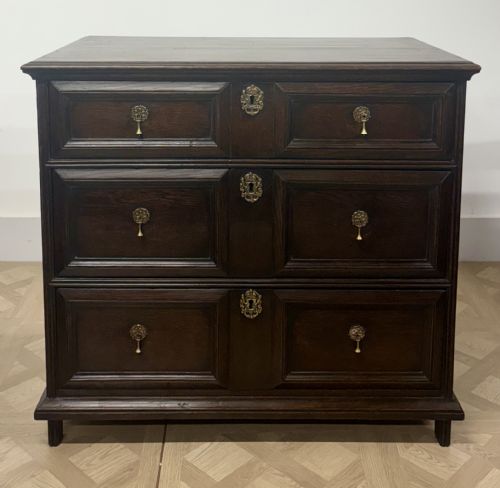
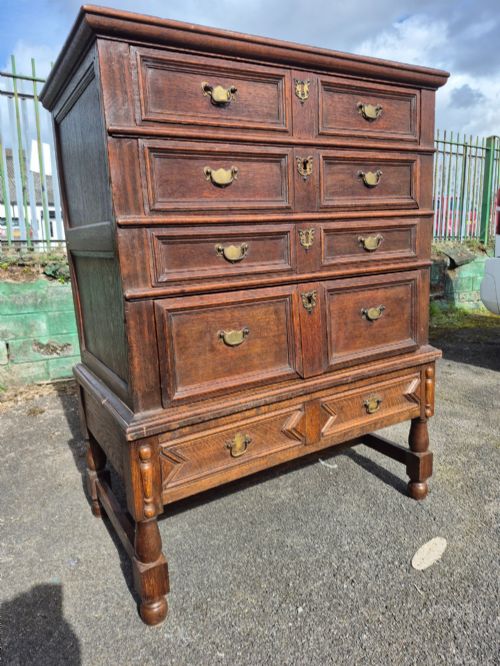
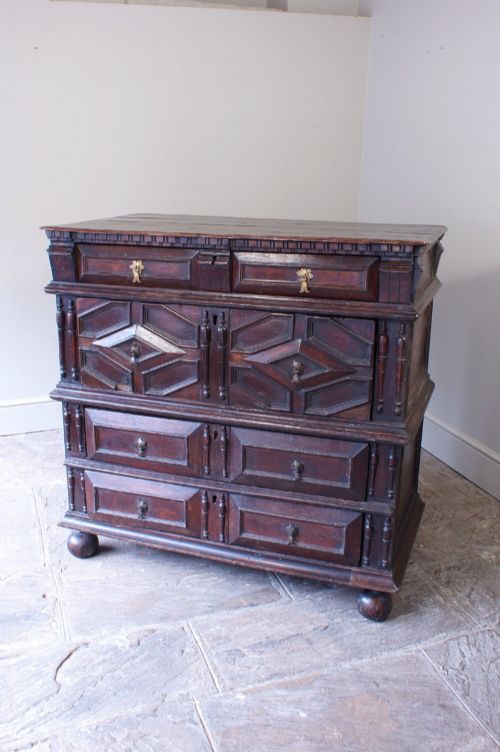
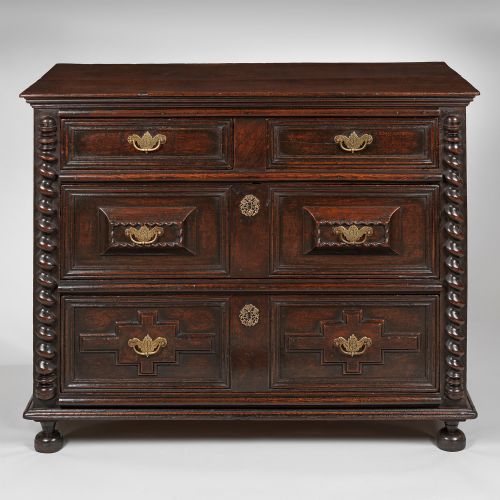
The selections span simple panelled boxes, geometric moulded drawers, and multi-panel trunks originating from regional workshops in England such as Lancashire and Wales. Most pieces take the form of lidded coffers or two-part chests of drawers constructed around sixteen-eighty.
Materials and Construction
Local timber forms the foundation of these pieces, with English oak dominating the structural framing alongside occasional panels of walnut, cedar, and wood inlay. Craftsmen utilised heavy board construction joined with pegged mortise and tenon joints to ensure rigidity.
Surface enrichment relies on chip-carving, scratch-carving, and applied geometric mouldings fixed to drawer fronts and panel faces. Iron and brass hardware, including hinges and lock plates, secures the lids and drawers.
Charles II Carved Chest Retail Price Guide 2026
Typical asking prices for charles ii carved chest among the pieces listed under this phrase on Sellingantiques today, from the lower quarter to the upper quarter. They describe what is for sale here now, not the wider market.
The listings on this site feature oak as the primary material, alongside walnut and cedar, spanning the seventeenth century.
Evaluating Quality and Surviving State
Depth and crispness of the chisel work distinguish superior carving from simpler regional output. The clarity of geometric mouldings and the integrity of the original timber boards determine the standing of each piece.
Survival of original elements, such as panel backs, board floors, and early ironwork, separates untouched examples from those altered by later restorations or conversions.
The Charles II Carved Chest Glossary
- Coffer
- A heavy wooden chest with a hinged lid, used historically for storing valuables and textiles. These storage pieces often feature panelled construction and carved fronts.
- Mule chest
- A traditional chest fitted with one or more drawers at the base beneath the main lidded compartment. This form bridges the evolution between the simple coffer and the chest of drawers.
- Geometric moulding
- Applied strips of wood arranged in repeating geometric patterns across drawer fronts or panels. This technique defines much of the decorative output of the later seventeenth century.
- Scratch carving
- A rudimentary decorative technique where a profile is scraped or gouged directly into the wood surface using a template or scratch stock. It appears frequently on vernacular regional furniture.
- Two-part chest
- A cabinet piece built in upper and lower sections to facilitate movement and placement. These units often display geometric mouldings or stand upon later cupboards.
Charles II Carved Chest: Frequently Asked Questions
What is a charles ii carved chest used for?
These pieces served originally to store household linens, valuable documents, and clothing in seventeenth-century homes. Today, they function as practical storage trunks or feature coffee tables in contemporary living spaces.
Their sturdy timber construction allows them to support weight while keeping stored items secure and enclosed.
How do I date a seventeenth-century oak chest?
Dating relies on examining the construction methods, such as hand-split oak boards, pegged joints, and the style of the surface carving. Regional variations and specific tool marks help narrow the manufacturing window.
Secondary woods, iron hardware, and historical wear patterns further assist in confirming the period of origin.
Where were these wooden chests made?
Carpenters and joiners produced these items in domestic workshops across England, with specific regional styles emerging from areas like Lancashire, Cheshire, and Wales. Local timber availability dictated whether oak, walnut, or cedar was selected for the frame.
Each region applied distinct decorative motifs, from geometric mouldings to scratch-carved panels.
How should I care for an antique oak chest?
Maintain stable indoor humidity levels and keep the wood away from direct heat sources to prevent timber splitting. Regular gentle dusting preserves the dry waxed finish accumulated over centuries.
Avoid commercial polishes and moisture, which can damage the historic surface patina.