
Dark Brown Oak Trunk
A dark brown oak trunk brings centuries of utility indoors, offering sturdy storage fashioned from solid timber and iron.
Dark Brown Oak Trunk
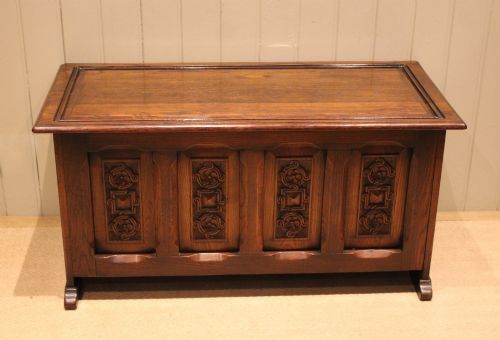
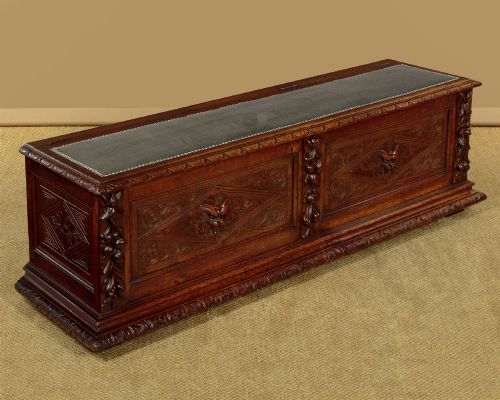
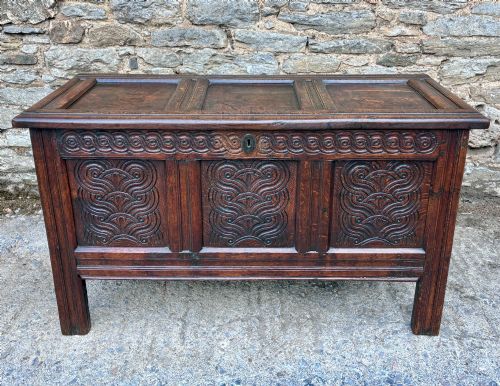
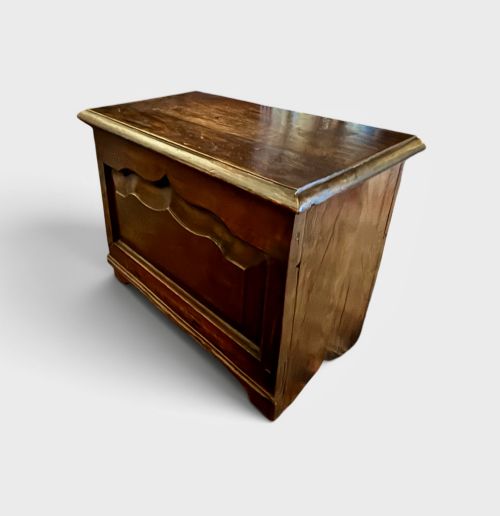
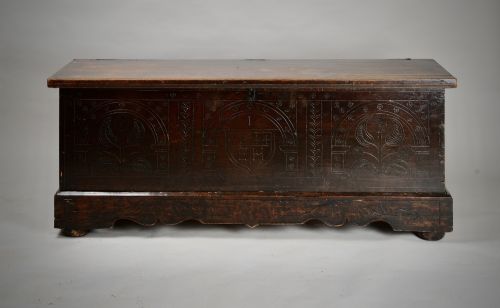
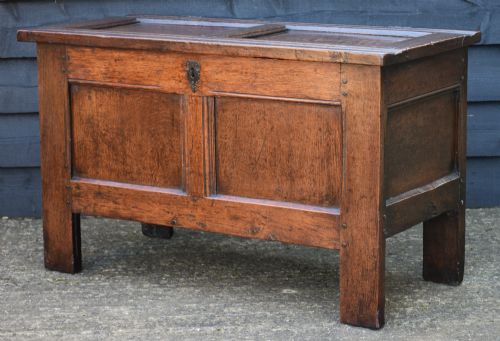
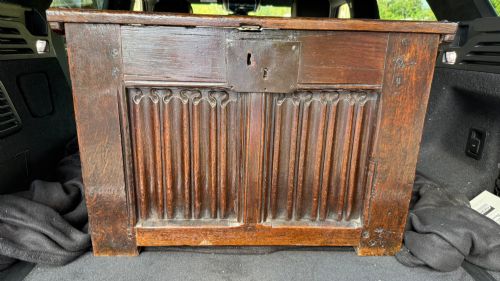
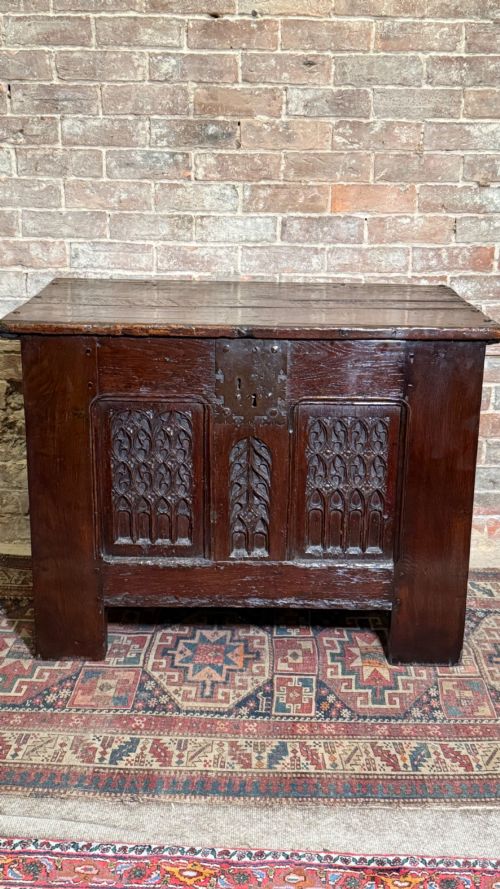
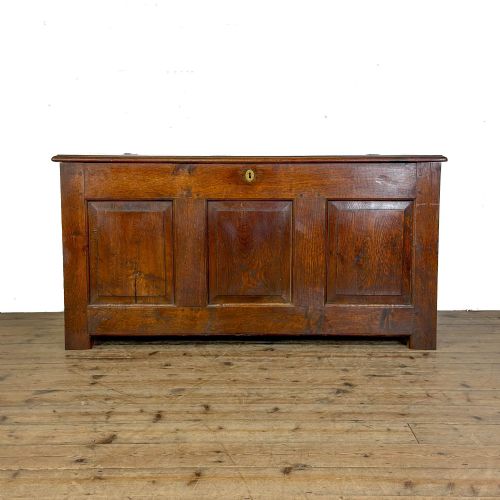
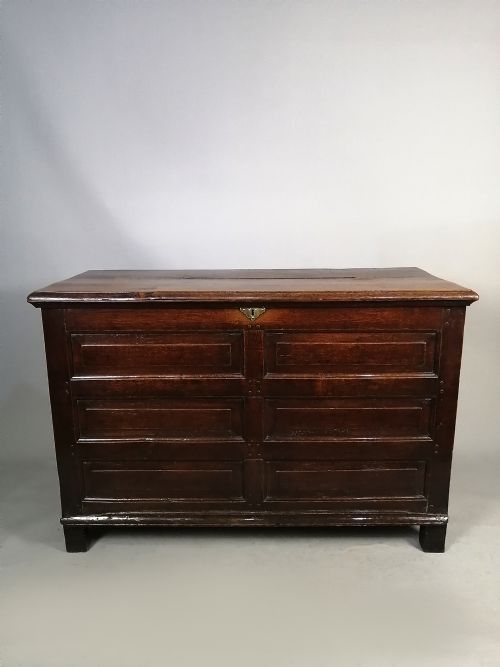
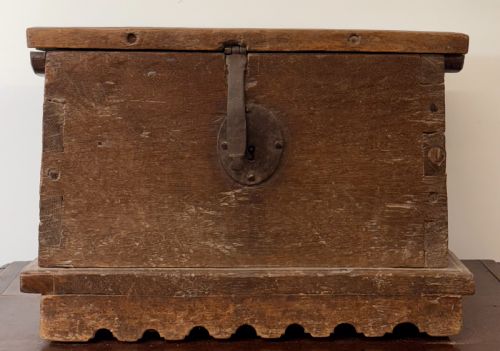
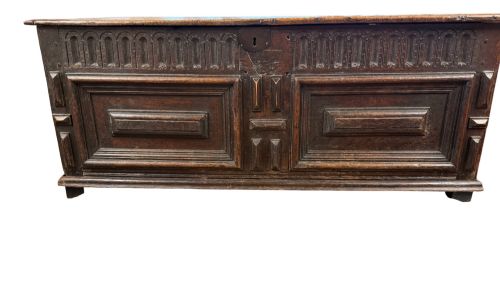
A dark brown oak trunk typically takes the form of a coffer, blanket chest, or mule chest designed for heavy domestic storage. These pieces span periods from the sixteenth century through the Edwardian era, reflecting generations of practical use in English and continental homes.
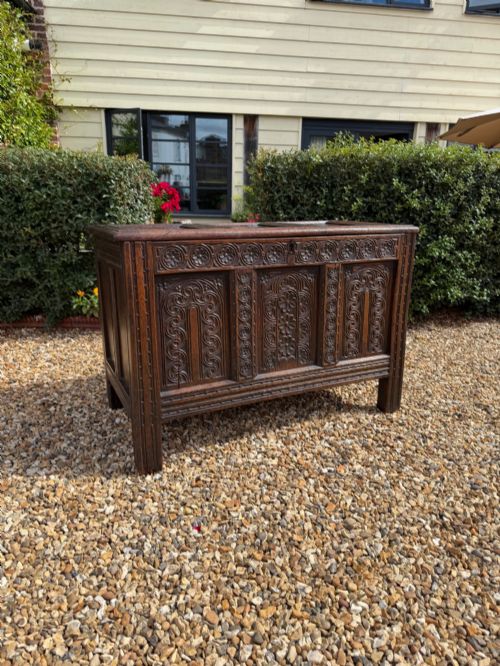
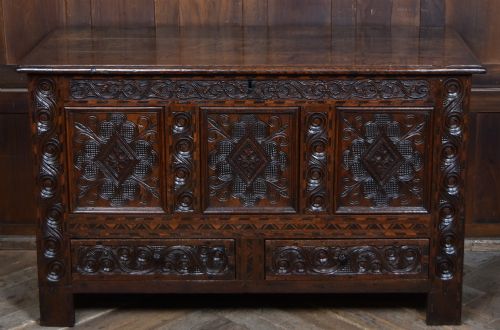
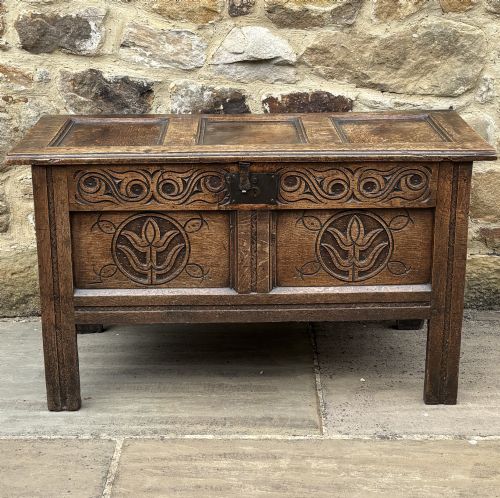
The most common examples encountered on this page date from the seventeenth century, often displaying panelled construction and straightforward rectangular proportions. Variations include smaller proportions, carved fronts, and occasional luggage stands tailored for raised placement.
Originating as receptacles for household valuables, linens, and personal gear, these objects retain their original purpose while functioning as seating or display surfaces in modern rooms.
Assessing quality
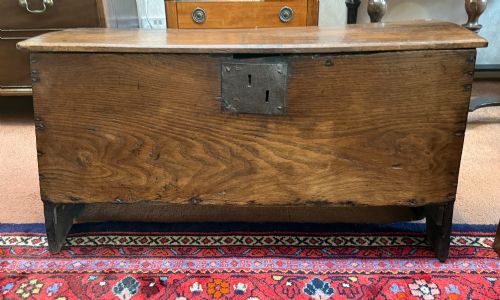
Quality depends upon the integrity of the original timber and the depth of carving, where crisp, confident hand-cut details distinguish superior craftsmanship from plain utility work. The survival of primary structural elements, such as stile feet and board lids, governs the authenticity of an example.
Patina dictates visual character, separating pieces with undisturbed surfaces and deep ageing from those with over-restored finishes. The complexity of the joinery, from boarded construction to sophisticated panel framing, indicates the original maker's skill.
The Dark Brown Oak Trunk Glossary
- Coffer
- A heavy wooden chest traditionally used for storing valuables or documents. These receptacles often feature hinged lids and sturdy boarded or panelled walls.
- Mule chest
- A storage chest characterised by one or more drawers fitted beneath the main compartment. They bridge the design gap between simple blanket boxes and chest of drawers.
- Panelled construction
- A method of joining timber where a central floating board fits within a grooved frame. This technique accommodates seasonal wood movement without splitting the timber.
- Boarded chest
- A primitive form of box constructed from thick planks nailed or pegged edge-to-edge at the corners. They represent some of the earliest surviving domestic furniture.
- Patina
- The surface sheen and colour acquired by wood through age, handling, and wax application. A rich patina indicates long-term care and natural oxidation.
Dark Brown Oak Trunk: Frequently Asked Questions
How were these trunks used originally?
These pieces served primarily to store heavy textiles, family valuables, and personal documents in domestic chambers or halls. Their robust construction also permitted their use as seating benches or tables when space required.
Over time, households adapted them for blankets and winter garments, placing them at the foot of beds or beside hearths for quick access to warmth.
Can I use an oak chest as a coffee table?
Many examples provide suitable height and flat top surfaces for placement in front of a sofa. Their internal capacity offers practical storage for living room items while maintaining a solid focal point.
Care should be taken to protect the historic wood surface from moisture rings and excessive heat by using appropriate coasters or trays.
How do I tell a seventeenth-century coffer from a later revival piece?
Early pieces display hand-tooled joinery marks, ironwork forged by hand, and timber shrinkage consistent with centuries of age. Hand-cut peg joints secure the frame rather than modern machine screws or industrial adhesives.
Revival pieces from later periods often mimic the carved motifs of earlier reigns but reveal uniform tool marks and cleaner interior timber surfaces lacking deep natural oxidation.
What is the difference between a coffer and a mule chest?
A standard coffer consists of a single top-opening compartment enclosed by sides and a lid. It represents a simpler, older form of household box.
A mule chest incorporates one or more drawers beneath the main upper storage well, offering easier access to smaller garments without lifting the heavy lid.