

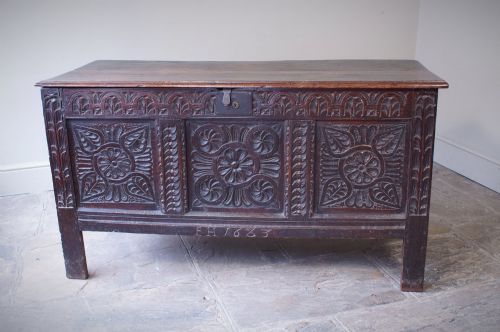
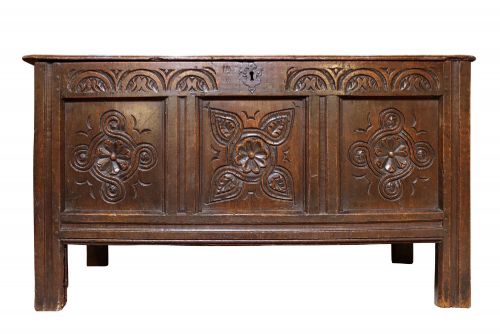
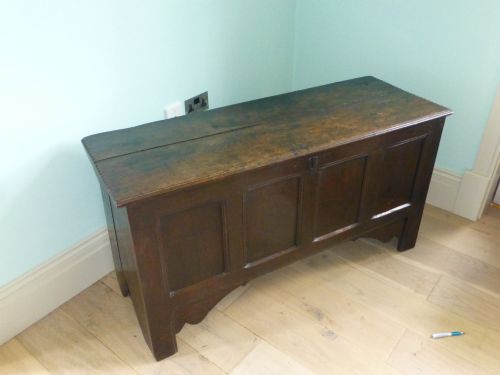
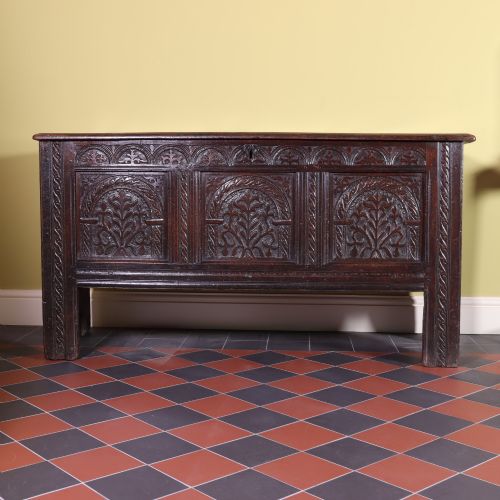
Charles I Oak Box
A charles i oak box brings domestic storage from the seventeenth century into modern rooms with heavy timber and simple lines.
Charles I Oak Box
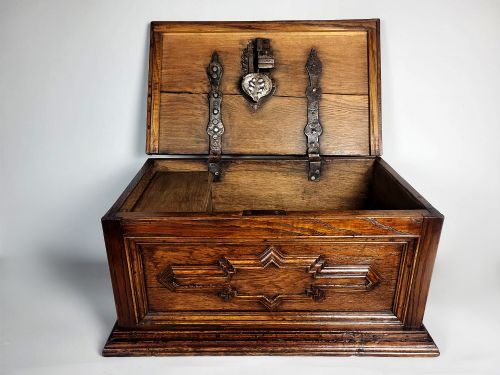
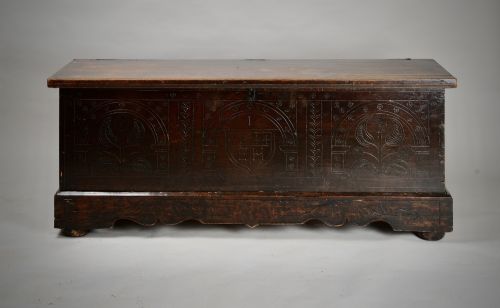
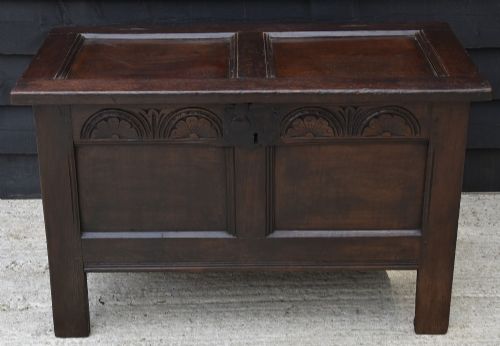
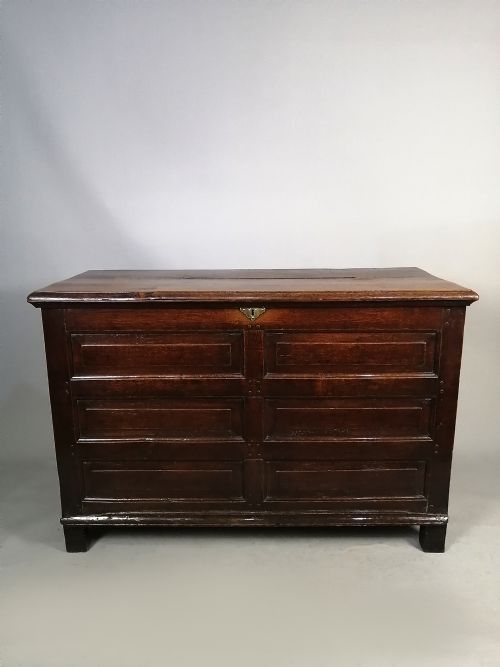
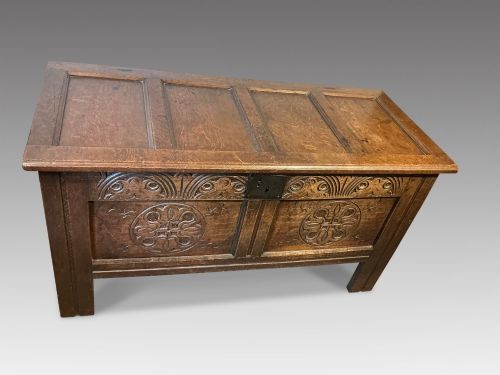
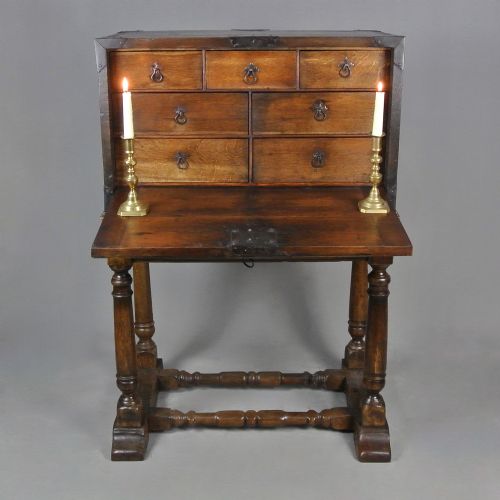
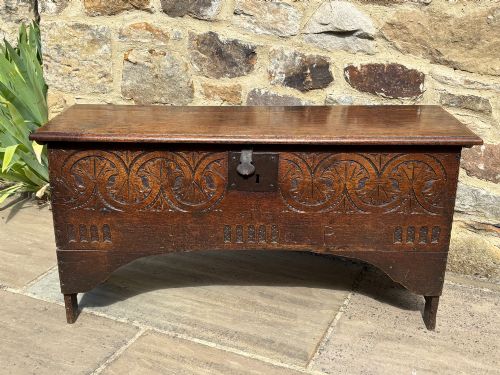
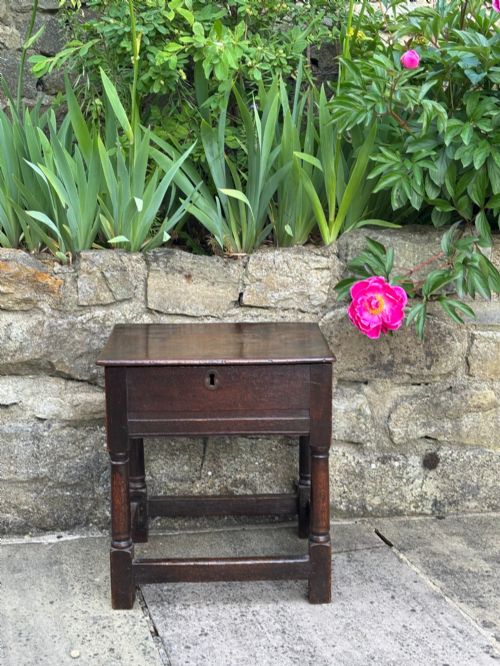
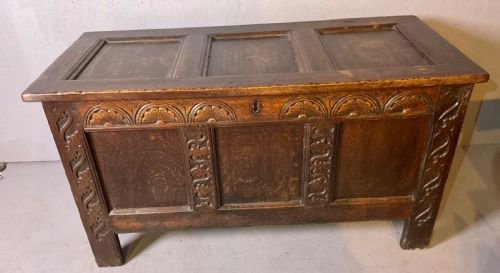
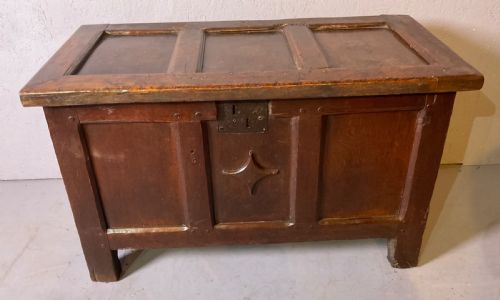
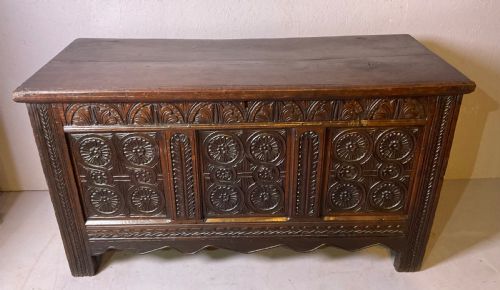
A charles i oak box encompasses small table boxes, bible boxes, and larger boarded or panelled coffers dating from the seventeenth century. The pieces on this page lean heavily toward joined and carved oak storage vessels, often associated with the Stuart period and Jacobean styles.
Buyers encounter sturdy desk boxes meant for documents alongside long coffers and blanket chests. Many examples show pegged mortise and tenon joints, scratch carving, or arcaded fronts typical of English workshops from the mid to late seventeenth century.
How they were made
Cabinet makers utilised native oak, shaping boards with saws and adzes before assembling them with pegged joints rather than modern fasteners. Iron hinges, brass plates, and complex steel locks provided security for valuable papers and household goods.
Surface decoration relied on gouge work, scratch carving, and low relief panels rather than applied veneers. Finish was left to natural wax and centuries of handling, which built up a dark surface tone.
Several boxes double as close stools, proving that seventeenth-century privacy required an oak lid.
What varies in quality
Quality rests in the survival of original components, such as the hinges, floor boards, and lid cleats, which often suffer replacement over time. Crispness of the initial carved ornament and the integrity of the joined frame also separate standard storage boxes from finer examples.
Proportion and scale dictate desirability, with smaller table boxes and miniature coffers commanding particular attention from collectors. The depth of the timber's surface colour and the presence of untouched workshop tool marks further define the hierarchy of surviving pieces.
The Charles I Oak Box Glossary
- Bible box
- A small tabletop chest with a sloped or flat lid, originally built to hold family scriptures and important documents. These pieces frequently feature carved fronts and small proportions.
- Coffer
- A large rectangular chest used for storing valuables, linens, and dry goods before fitted closets became common. They rely on heavy oak planks joined at the corners.
- Boarded box
- A primitive construction method where planks are nailed or pegged directly edge-to-face without a supporting internal frame. This style represents some of the earliest surviving domestic boxes.
- Arcaded
- A decorative motif carved into wood panels to resemble a succession of arches supported by columns. It is a common feature on English furniture from the seventeenth century.
- Mule chest
- A storage chest equipped with one or more drawers beneath the main compartment. This form emerged as domestic storage needs expanded during the Stuart era.
Charles I Oak Box: Frequently Asked Questions
What did people store inside a charles i oak box?
These containers held precious family documents, legal deeds, and household ledgers that needed protection from dampness and theft. Smaller desk versions provided a portable writing surface for literate members of the household.
Larger variants stored heavy textiles, woollens, and church silver. The incorporation of internal till compartments allowed owners to keep coins and small valuables separate from the main storage cavity.
How do I distinguish a seventeenth century box from later copies?
Examine the timber shrinkage, tool marks, and construction methods visible on the interior and underside. Period pieces show hand-sawn board edges, irregular peg placement, and authentic ironwork that integrates naturally with the oak housing.
Later revival pieces often display mechanical uniformity in the cutting of joints and machine-made screws or modern adhesives. The tactile feel of dry, dense oak with deep patination is difficult for later makers to replicate convincingly.
Can I use an antique oak box as a coffee table?
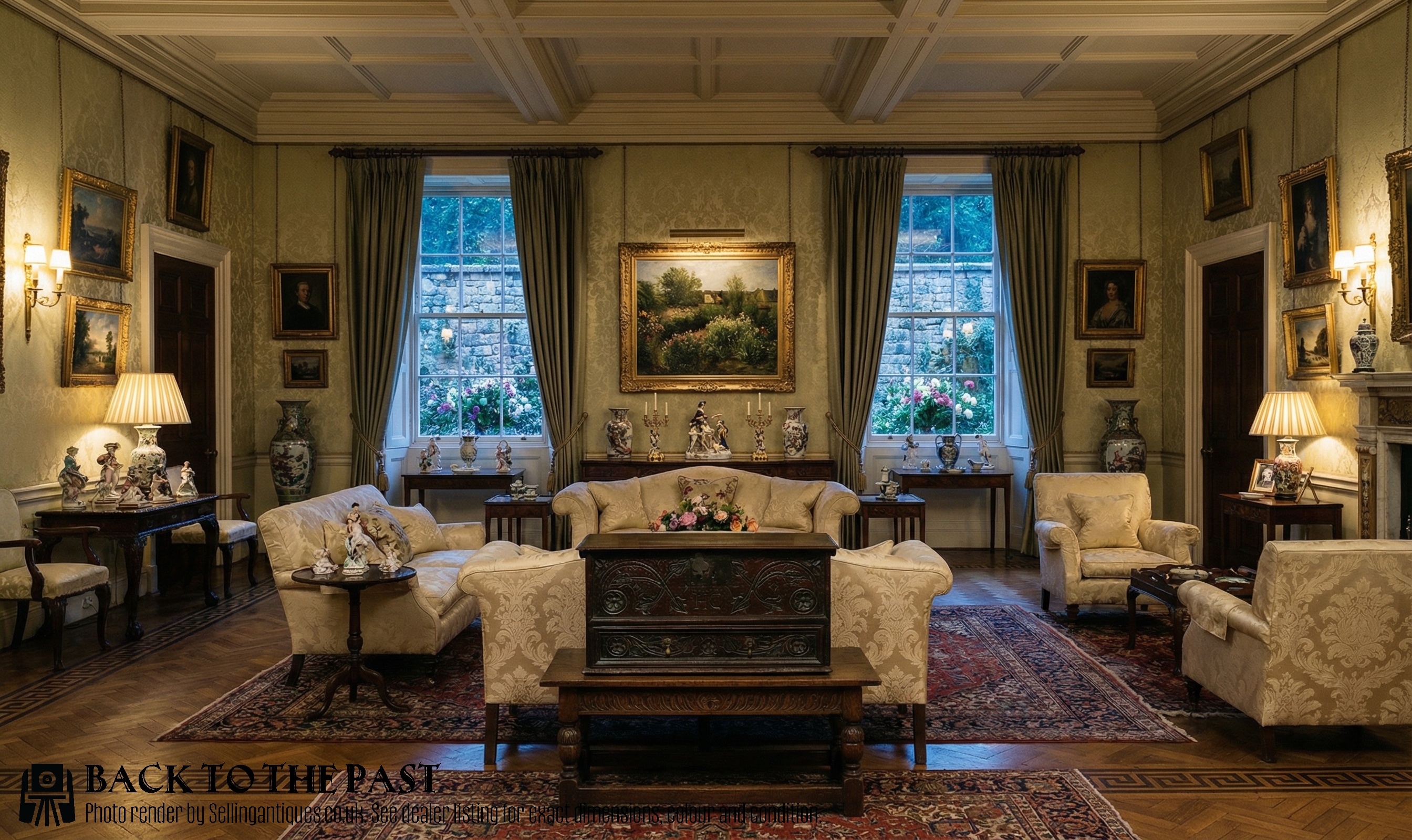
Low proportions make certain sturdy coffers and strong boxes suitable for placement in living spaces as occasional tables. The flat lid surface supports books and decorative objects provided the internal hinges remain stable.
Care should be taken to protect the antique wax finish from moisture and heat rings. Placing felt pads beneath items resting on the lid prevents scratching the historic timber.
How do I clean and maintain antique oak furniture?
Dust the surfaces regularly with a dry, soft cloth to prevent grit from settling into the grain and carved recesses. Avoid modern silicone sprays or harsh chemical polishes that soften the historic wax layer.
Feed the dry timber occasionally with a traditional beeswax polish applied sparingly and buffed to a soft sheen. Keep the box away from direct heat sources and dramatic humidity shifts to prevent the oak boards from splitting.