

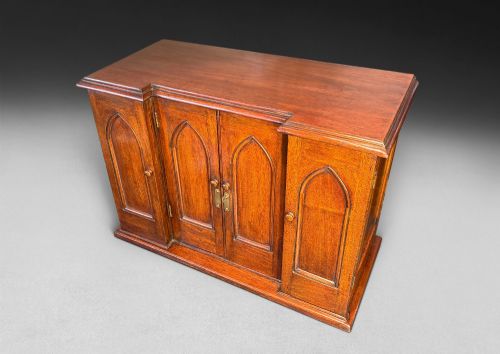
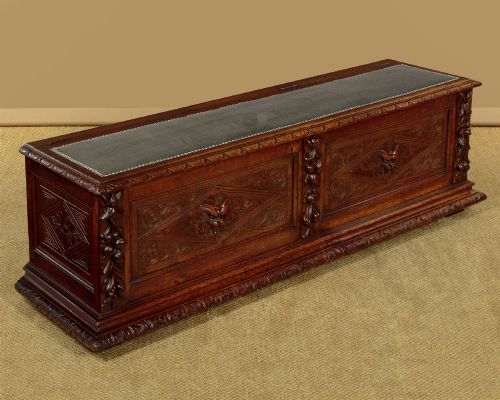
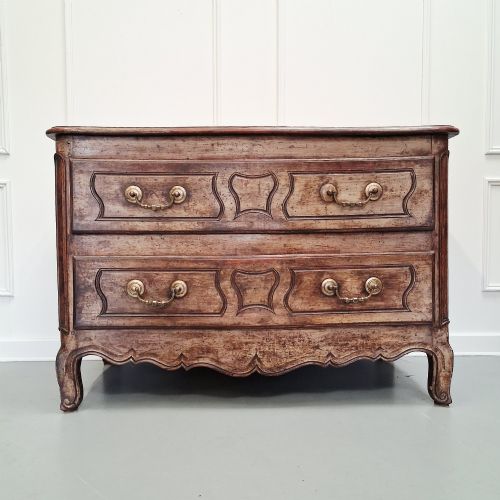
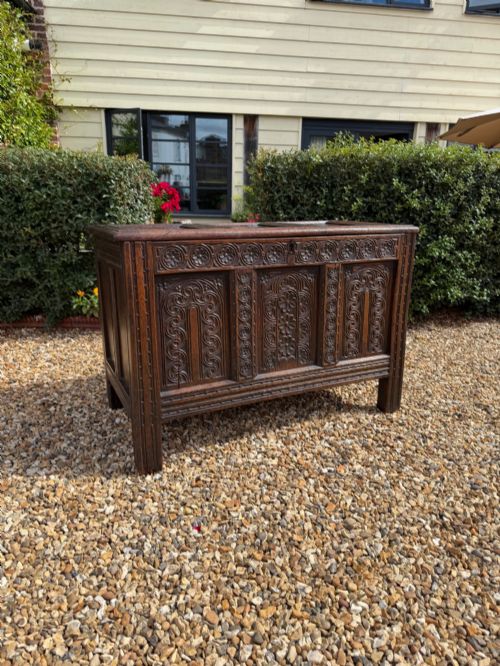
Brown Carved Oak Chest
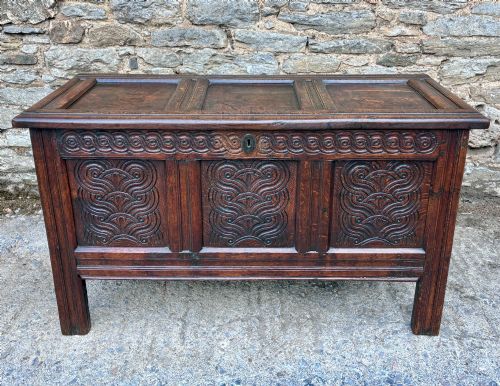
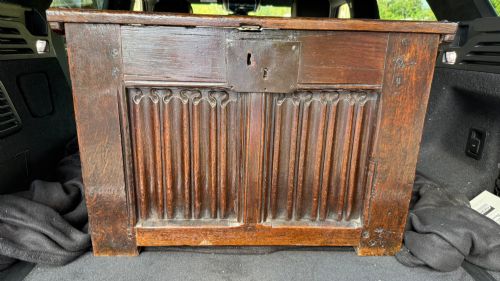
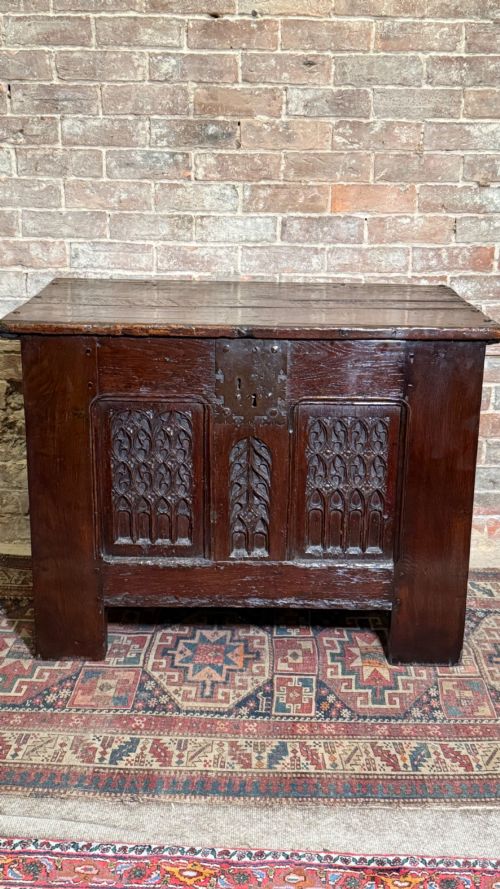
A brown carved oak chest brings solid timber, deep chisel work and centuries of storage history directly into a room.
Brown Carved Oak Chest
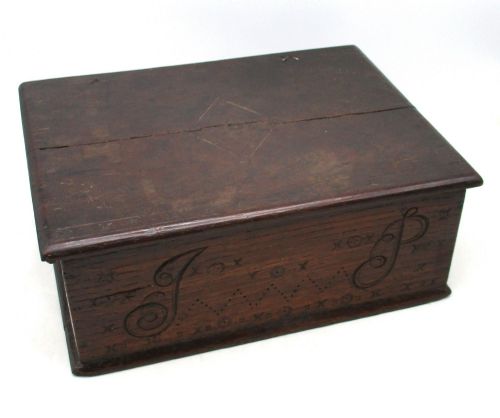
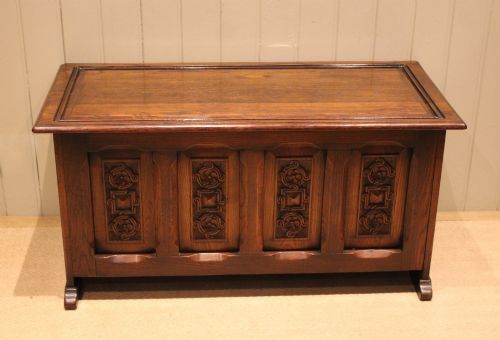
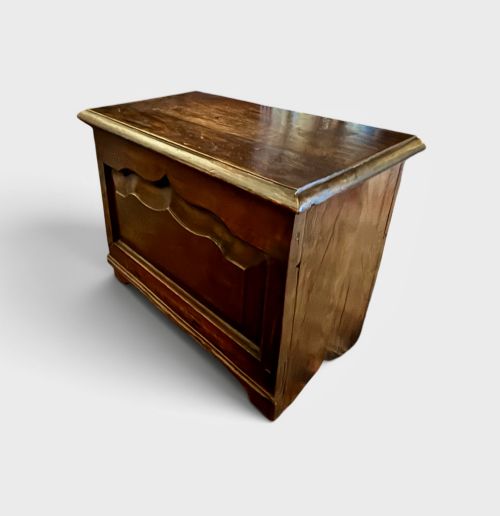
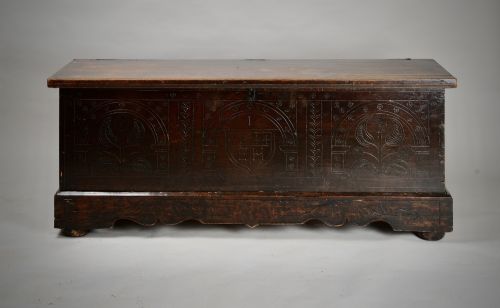
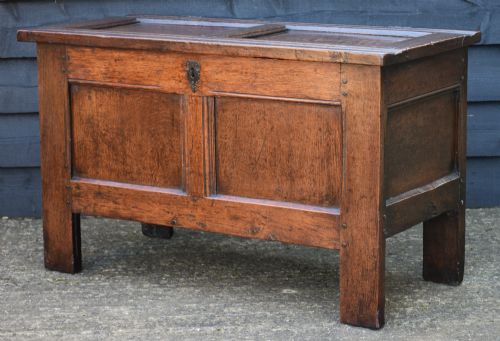
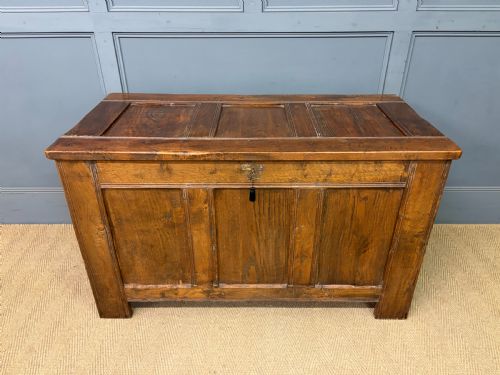
A brown carved oak chest serves as a robust storage container or drawer unit, encompassing coffers, blanket boxes and panelled storage forms.
Buyers browsing this selection frequently encounter sturdy pieces originating from the seventeenth and eighteenth centuries, alongside later revival interpretations.
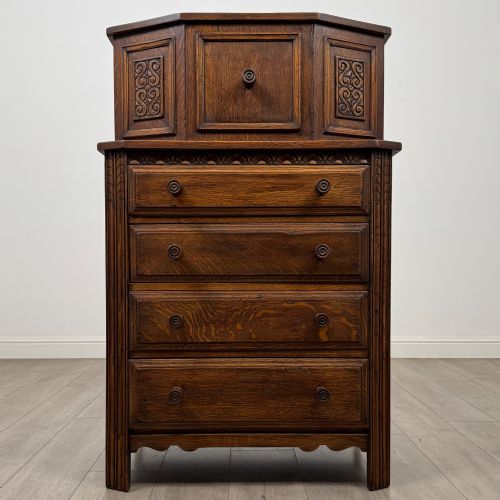
The assortment spans traditional coffer boxes, panelled receptacles and multi-drawer chests constructed primarily from solid timber.
Materials and construction methods
Carpenters built these vessels using solid oak, frequently augmented with brass or iron hinges, locks and handles.
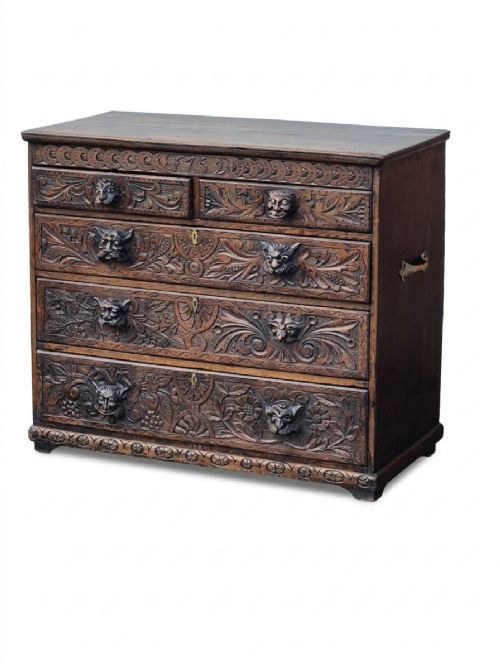
Surface decoration relies on hand chiselling, geometric moulding, wood inlay and linenfold carving directly into the timber.
Green Man masks peer out from Victorian carvings, keeping a watchful, leafy eye on the household laundry.
Markers of distinction
The depth and crispness of the carved detail distinguish superior examples from simpler utilitarian boxes.
Original hardware, such as period brass drop handles and wrought iron strapwork, elevates the integrity of an older piece.
The Brown Carved Oak Chest Glossary
- Coffer
- A large wooden chest traditionally used for storing valuables, textiles or documents. These storage boxes often feature hinged lids and heavy panel construction.
- Linenfold
- A style of relief carving on wood panels that imitates folded linen cloth. This decorative technique appears frequently on Tudor and seventeenth-century furniture.
- Jacobean
- A design period spanning the early seventeenth century characterised by heavy proportions and geometric ornamentation. Pieces from this era display dark patinated oak surfaces.
- Commode
- A low piece of furniture containing drawers or compartments, originating in France. These storage units often incorporate fine woodwork and decorative mounts.
Brown Carved Oak Chest: Frequently Asked Questions
How do I date a carved oak chest?
Examine the construction joints, tool marks and timber thickness. Hand-split boards and traditional pegged mortise joints typically indicate earlier centuries.
Hardware styles and secondary woods also offer clues. Machine-cut screws and standardised hinges point towards nineteenth-century or later revival manufacture.
Can I use a coffer as a coffee table?
Many people place low coffers in living spaces to function as tables while providing internal storage for blankets or books. Ensure the top boards are flat and stable.
Protect the surface from heat rings and moisture by using coasters and trays. The sturdy oak construction easily handles everyday living room use.
How do I maintain antique oak furniture?
Apply natural beeswax periodically to nourish the dry timber and maintain a soft lustre. Avoid silicone-based polishes that build up sticky residues over time.
Keep wooden chests away from direct heat sources and radiators to prevent the planks from splitting. Consistent indoor humidity preserves the structural integrity of the joints.
What is the difference between a coffer and a chest of drawers?
A coffer is essentially a trunk accessed via a hinged lid on the top, designed primarily for bulk storage. Drawers allow side access to contents without moving top items.
Both forms utilise heavy oak framing, but drawer units became more common in domestic interiors from the later seventeenth century onwards.