
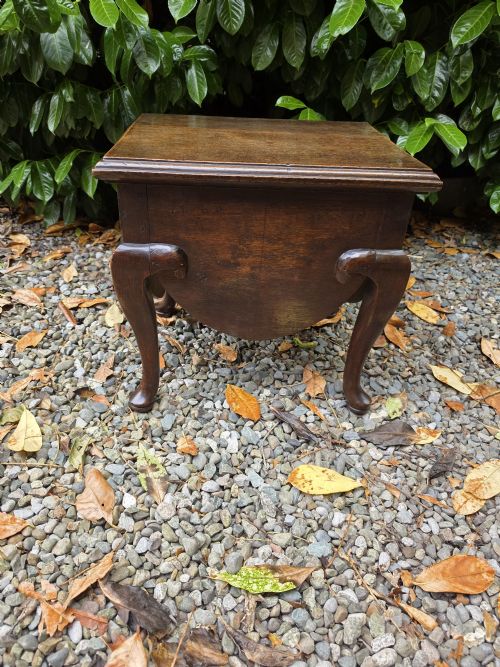
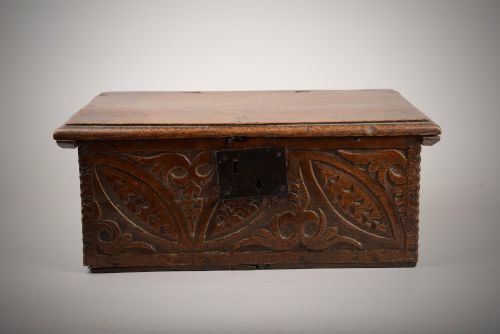

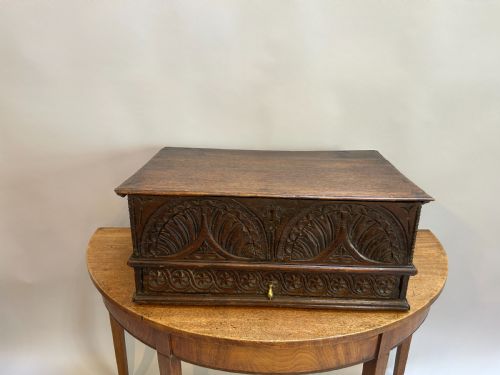

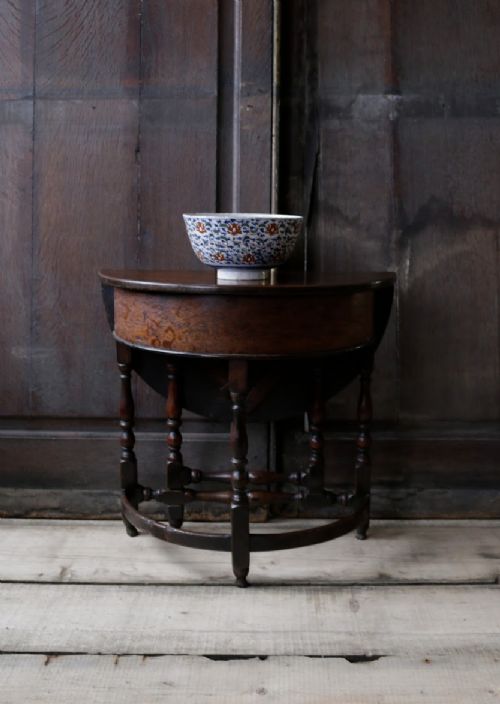


Dark Oak Table Box
A dark oak table box is a sturdy lidded container meant to sit on a surface, offering period storage.
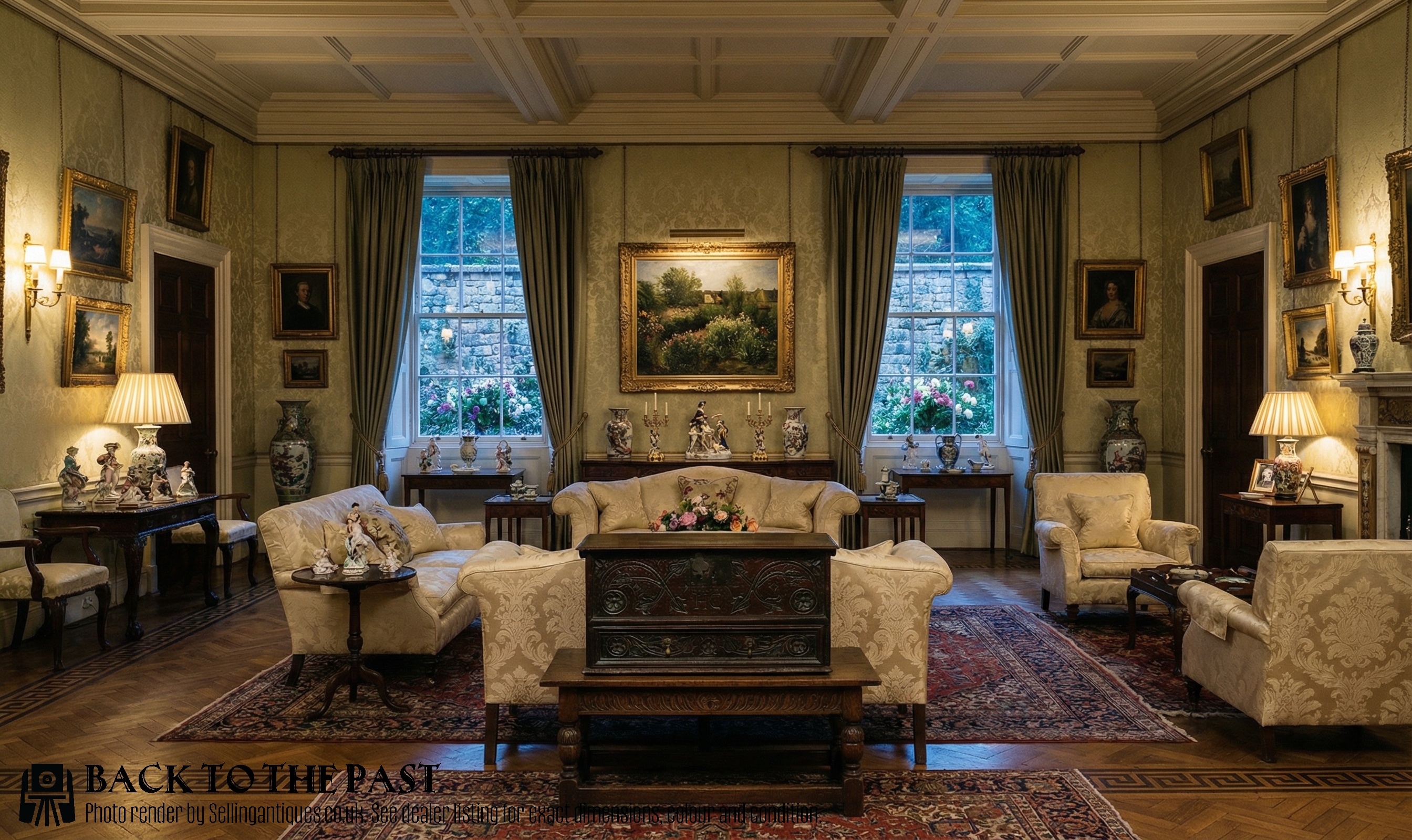
Dark Oak Table Box
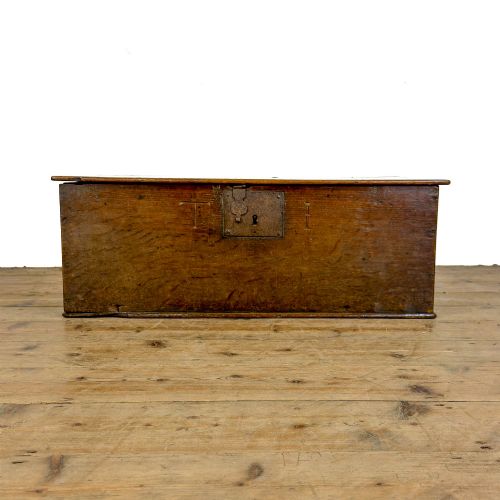
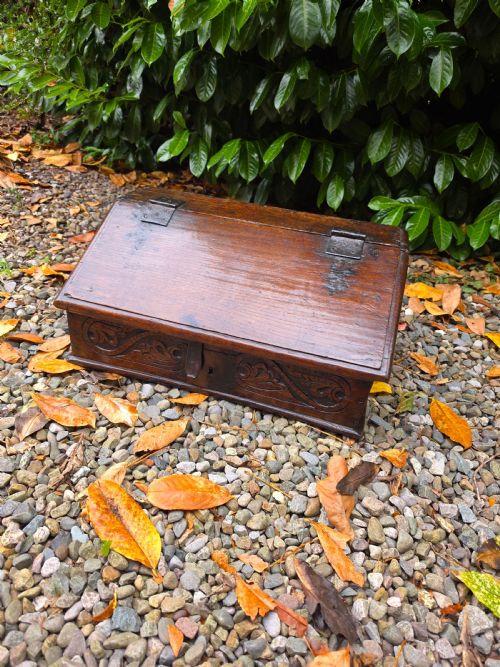
A dark oak table box sits on a surface to store documents, books, or valuables within a hinged lid. These pieces date across the seventeenth and eighteenth centuries, bearing the heavy timber construction typical of their eras.
The versions met on this page range from plain seventeenth century utility pieces to carved eighteenth century examples. Some feature internal drawers or slant fronts adapted for writing desks.
Makers shaped these items for practical storage in domestic or ecclesiastical settings, employing sturdy joinery to protect their contents. Their compact scale allowed them to rest safely on larger tables or chests.
Assessing Quality
Quality rests in the integrity of the timber and the crispness of the hand carving on the front panels. Pieces retaining their original iron hinges, locks, and internal drawers command greater respect from collectors.
Proportion and surface patination dictate the visual success of the box, distinguishing honest period examples from later revivals. A rich, warm tone developed through centuries of handling elevates a simpler box above a heavily restored alternative.
One seventeenth century box preserves the original owner's initials and date carved directly into the dark oak.
The Dark Oak Table Box Glossary
- Bible box
- A small lidded desk or box historically used to hold a family bible and writing materials. These items usually feature a sloping or flat top.
- Mortise and tenon
- A traditional joint where a projecting tongue fits snugly into a square hole to lock timbers together securely without modern adhesives.
- Frieze
- A decorative horizontal band carved across the upper portion of the front panel, often displaying geometric patterns or floral motifs.
- Slant front
- An angled writing lid hinged at the top, opening downward to reveal internal compartments and small drawers.
- Patina
- The surface sheen and deep colour developed by timber over centuries through exposure to light, air, and human touch.
Dark Oak Table Box: Frequently Asked Questions
What were dark oak table boxes used for?
These boxes provided secure storage for precious documents, account ledgers, and family bibles in homes and offices. Their portable nature allowed owners to move them between rooms while keeping contents locked.
They also served as writing surfaces when placed upon a table or stand, particularly variants featuring sloping lids and internal compartments.
How do I tell a seventeenth century box from a later revival?
Examine the construction methods, tool marks, and timber shrinkage visible on the interior and underside of the box. Period pieces display hand sawn boards, irregular peg placements, and authentic iron hardware.
Revival pieces often show uniform machine tooling, modern screws, and timber that lacks the deep patination found on genuine early examples.
Where should I place a table box in my home?
A table box sits well on top of a sturdy side table, chest of drawers, or sideboard where its carved front panel remains visible. Keep the box away from direct sunlight and radiators to prevent the dry oak from splitting.
The flat top can also display small objects or function as a secondary surface if the lid is stationary.
Do these boxes usually have internal drawers?
Some table boxes contain small internal drawers tucked beneath the main compartment for organising inkwells, quills, and seals. These hidden compartments add complexity and utility to the design.
Simpler models consist of a single open well beneath the lid, relying entirely on the main cavity for storage.