




Caucasian Soumak Bag
A caucasian soumak bag brings textured nomadic artistry into a room, offering flat-woven structure and rich tribal iconography.
Caucasian Soumak Bag
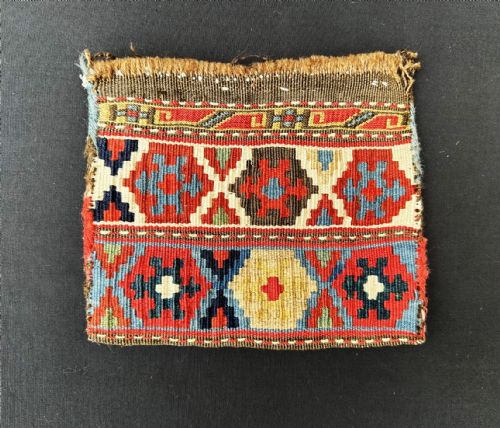
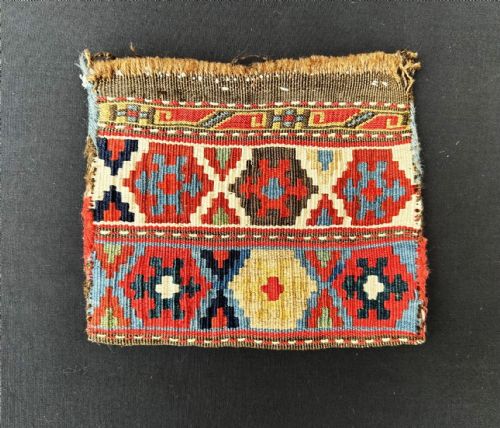
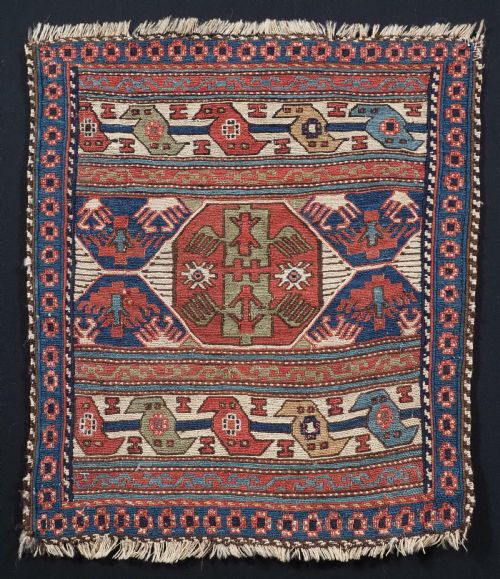
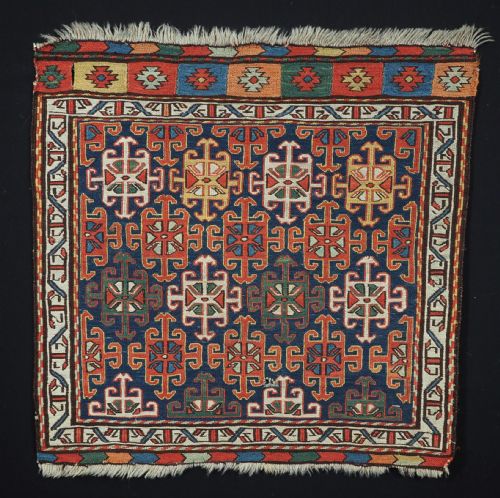
A caucasian soumak bag represents utilitarian nomadic weaving made for practical storage and transport during the nineteenth century. These textiles encompass complete mafrash storage pieces, saddlebags, khorjin, half-saddlebags, and vanity bags originating from the Caucasus and Azerbaijan regions. Shahsavan nomads produced many of these flat-woven examples, utilising distinctive regional motifs like birds and dragons across panels and bag faces.
Buyers encountering this group will frequently find individual bag faces and panels dating from the mid to late nineteenth century, specifically between the eighteen-fifties and eighteen-nineties. Complete storage containers and paired saddlebags appear alongside fragments and single faces preserved from larger khorjin assemblies. The forms reflect nomadic life, serving as portable containers woven with durable structures for daily use on the move.
Distinguishing quality in tribal weaves
The standard of a piece rests upon the crispness of the soumak weave and the complexity of the rendered motifs, such as avian or dragon forms. Tighter, finer wrapping creates superior structural stability and sharper pattern delineation across the bag face or panel. The vibrancy and preservation of the natural vegetable dyes further elevate an example, showing depth and harmonious ageing.
Completeness alters the character of an acquisition, distinguishing intact mafrash storage containers or paired saddlebags from single severed faces. The sophistication of the tribal attribution, particularly those linked closely to Shahsavan nomadic groups in Moghan and Azerbaijan, adds historical depth. Superior examples maintain structural soundness alongside uncompromised pictorial integrity in the design field.
Listings feature nineteen-century dates spanning from eighteen-fifty to nineteen-hundred, utilising hand-spun wool and natural vegetable dyes.
The Caucasian Soumak Bag Glossary
- Soumak
- A flat-weave technique involving coloured weft threads wrapped over warp threads in various sequences. This method creates a durable, textured surface with a smooth back and a ridged face.
- Khorjin
- The traditional Persian and Caucasian term for a double-sided saddlebag used for transport on animals. These items were essential for nomadic storage and travel.
- Mafrash
- A large, rectangular storage chest or container made from woven panels used by nomads for bedding and household goods. Complete examples comprise multiple decorated sides.
- Shahsevan
- A confederation of nomadic and semi-nomadic tribes originating in the Caucasus and northwestern Iran. They are renowned for producing distinctive soumak storage bags and panels.
Caucasian Soumak Bag: Frequently Asked Questions
What is a soumak weave?
A soumak weave is a flat-weaving technique where coloured weft threads wrap horizontally around the vertical warp threads. This creates a dense, ribbed texture on the front and loose floats on the reverse.
Unlike knotted pile carpets, soumak textiles gain their strength and pattern clarity from this wrapping action. It allows weavers to produce intricate geometric and figurative designs without pile.
How were these bags used?
Nomadic tribes utilised these containers for storage and transport during seasonal migrations across the Caucasus and Azerbaijan. Large mafrash boxes held bedding and garments inside tents.
Smaller khorjin saddlebags draped over pack animals to carry personal belongings and provisions. Every piece served a practical domestic function within daily tribal life.
How do I date these textiles?
Dating relies on examining the dyestuffs, wool quality, and structural characteristics typical of nineteenth-century production. Pieces from this era frequently employ vegetable dyes that age with specific tonal shifts.
Stylistic conventions and tribal attributions also help place items within decades such as the eighteen-seventies or eighteen-eighties. Expert evaluation connects wear patterns and materials to known historical periods.
How should I display a bag face?
Bag faces and panels mount successfully on stretched canvas or custom display backings to support their weight evenly. Keeping them out of direct sunlight protects the natural vegetable dyes from fading.
Gentle vacuuming through a mesh screen removes surface dust without harming the hand-spun wool fibres. Proper hanging preserves the structural integrity of the flat-weave over time.