




Khorjin Tribal Bag
When you search for a khorjin tribal bag, you are looking at nomadic textile work woven to carry possessions across miles of landscape.
Khorjin Tribal Bag
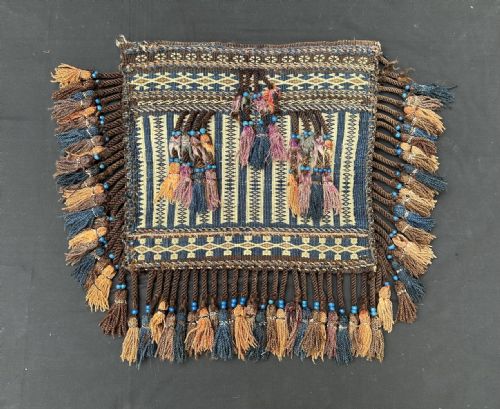
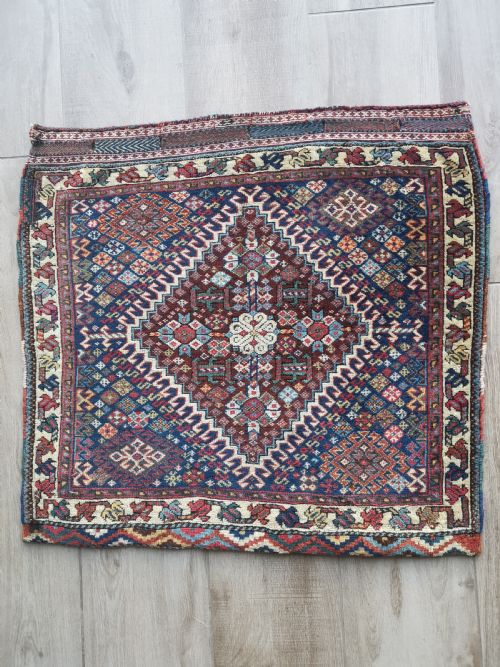
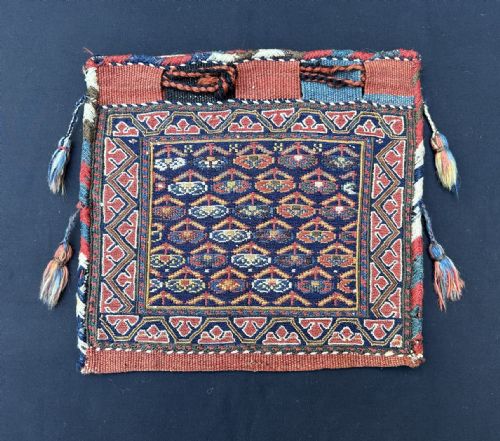
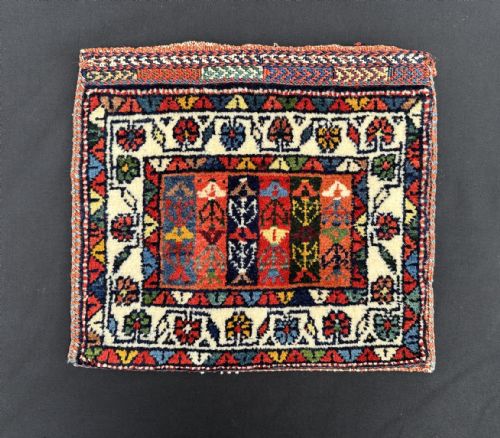
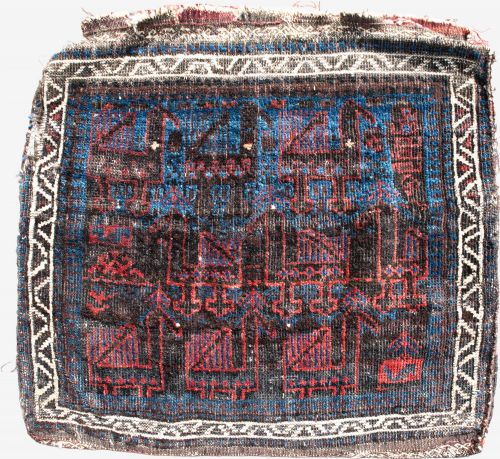
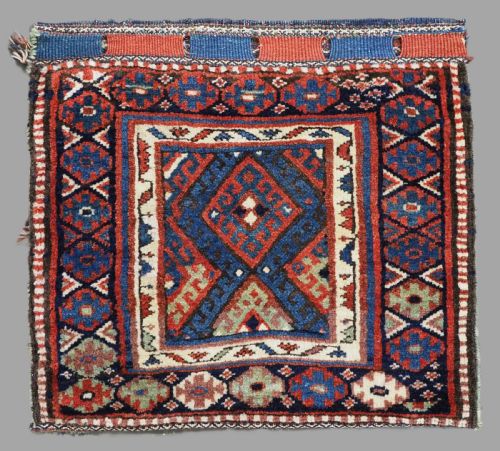
A khorjin tribal bag is a double-sided storage sack or single bag face produced by nomadic and village weavers across Persia, the Caucasus, and surrounding regions. These pieces served practical purposes for transport and storage, often made as paired saddlebags or smaller personal vanity bags known as chantehs. Surviving examples date from the nineteenth and early twentieth centuries, reflecting the distinct tribal traditions of makers such as the Qashqai, Shahsavan, Afshar, Baluch, and Luri.
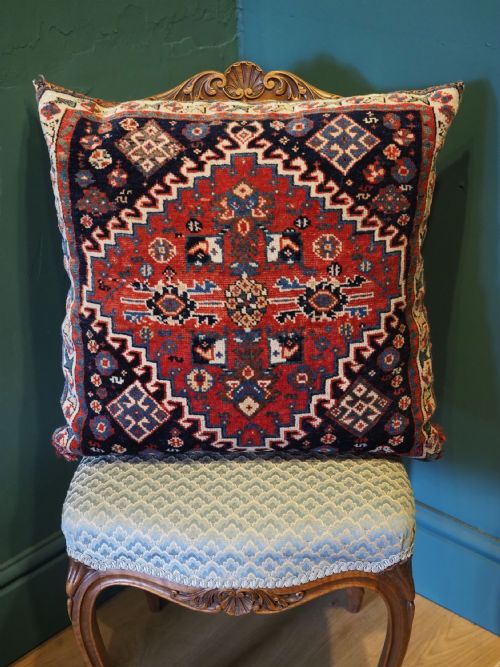
Buyers will encounter both complete saddlebags retaining their plain weave backs and connector webs, as well as individual bag faces that were later adapted into cushions or displayed as textile art. The forms range from small personal pouches measuring just a few centimetres to larger storage containers intended for animal transport. Each piece demonstrates the structural requirements of nomadic life, where utility and pattern were bound together in the construction of everyday gear.
Factors of quality
Quality in these nomadic textiles rests upon the density of the weave, the handling of the wool, and the depth of the dye palette. Finer knotting or precise soumac work allows for sharper definition in complex geometric and figurative motifs, whereas looser work results in broader, less articulate patterns. The condition of the wool, the retention of original side cords, and the survival of the complete reverse side significantly influence the structural integrity of the piece.
The visual balance of the composition and the saturation of the natural dyes separate standard utility items from exceptional examples. Skilled weavers achieved harmonious colour transitions and balanced proportions within constrained formats, creating pieces that retain their visual impact long after their original nomadic function has ceased.
Listings feature pieces spanning the nineteenth and early twentieth centuries, originating from tribal groups across Persia, Azerbaijan, and the Caucasus.
The Khorjin Tribal Bag Glossary
- Khorjin
- A traditional double-sided saddlebag used by nomadic peoples for transporting household goods. These pieces were designed to be slung across the back of a pack animal.
- Bag face
- The decorative front panel of a storage sack that survived after the plain back panel wore away or was removed. Many were later converted into decorative cushions.
- Soumac
- A flat-weave technique where coloured weft threads are wrapped around the warp threads in a continuous motion. This method creates a textured surface resembling embroidery without the use of a loom pile.
- Chanteh
- A small personal vanity bag or pouch used by nomads for carrying small belongings. These miniature containers frequently display the same intricate knotting as larger rugs.
- Boteh
- A traditional almond-shaped or paisley motif representing a floral spray or cypress tree. It appears frequently in Afshar and Qashqai weaving.
Khorjin Tribal Bag: Frequently Asked Questions
What is a khorjin?
A khorjin is a traditional double saddlebag woven by nomadic groups to carry belongings during seasonal migrations. The pieces were constructed as a pair of connected pouches designed to balance across a pack animal.
Over time, many of these double bags were separated into individual bag faces, either through wear or to be used independently as small mats or wall hangings.
How were these bags used?
Nomadic families utilised these containers for storing grain, bedding, clothing, and personal possessions inside tents or during transit. Their sturdy construction protected contents from dust and rough handling on long journeys.
Smaller versions, such as vanity bags, were kept for personal items and carried directly by individuals or mounted inside the dwelling space.
How do I identify different tribal styles?
Tribal attribution is determined by specific combinations of colours, structural materials, and characteristic motifs. Shahsavan pieces often feature crisp soumac wrapping and geometric stripes, while Afshar bags frequently display deep indigo fields with boteh or large central medallions.
Examining the weave density and the specific handling of goat hair edges also provides clues to the producing confederation and region.
Can I use them as floor cushions?
Many surviving bag faces and complete pieces are sturdy enough to function as decorative cushions when properly lined and padded. Their durable hand-spun wool construction handles light domestic use well.
It is advisable to place them away from heavy foot traffic or direct sunlight to preserve the natural dyes and historical structure.