



Moghan Tribal Carpet
These moghan tribal carpet pieces are robust Caucasian textiles woven with striking geometric motifs that ground a room with authentic nomadic character.
Moghan Tribal Carpet
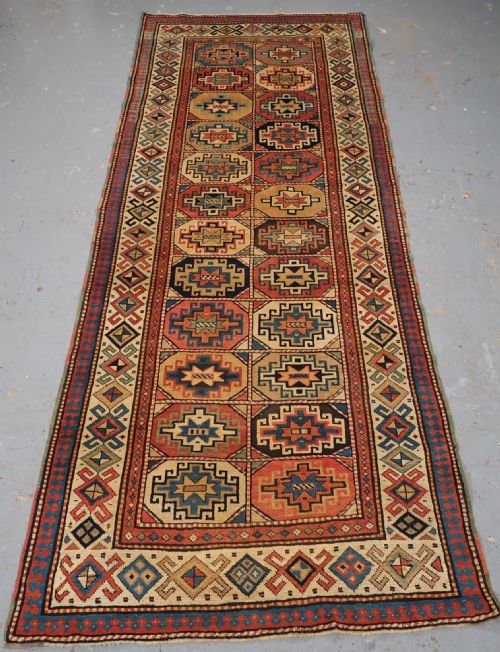
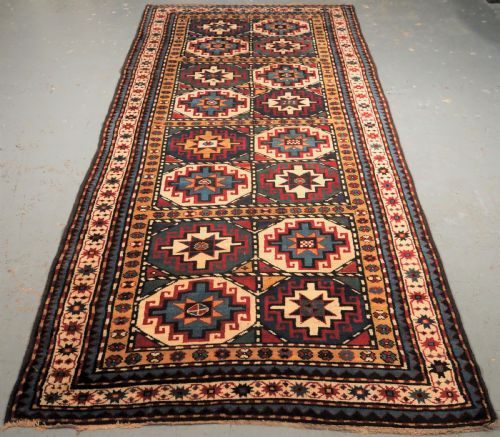
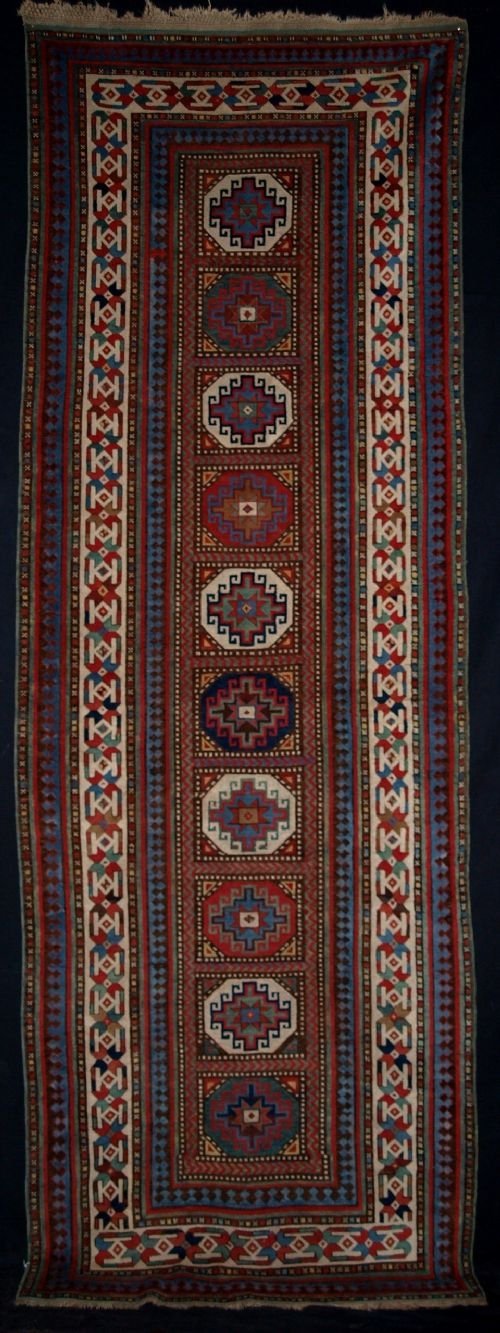
A moghan tribal carpet represents the rich weaving heritage of the Caucasus, specifically linked to nomadic and regional workshops. These pieces appear as rugs, long rugs, runner rugs, and even half-saddlebags originating from the Moghan region and Azerbaijan.
Buyers are most likely to encounter nineteenth-century examples, particularly Kazak styles displaying classic designs like hooked medallions and Memling guls. The selection spans decades from eighteen sixty through to nineteen hundred, showing distinct Caucasian and Shahsevan tribal influences.
The format ranges from compact saddlebags to elongated runners suited for hallways or galleries. Each moghan tribal carpet carries the distinct visual grammar of its makers, balancing bold geometric structures with softer historic palettes.
How they were made
Every moghan tribal carpet relies on traditional wool foundations and pile, knotted by hand to withstand generations of daily use. Weavers utilised natural dyes to achieve the rich hues seen across these nineteenth-century textiles.
The construction employs durable wool throughout the warp, weft, and pile. This organic material interaction allows the natural dyes to age gracefully, developing nuanced variations in tone over decades of exposure.
Design structures include classic hooked medallions and repeating Memling guls across Caucasian and Shahsevan tribal styles.
What varies in quality
Quality in a moghan tribal carpet rests upon the precision of the geometric drawing and the crispness of motifs like hooked medallions and Memling guls. Finer examples display a harmonious balance between the saturated design elements and the surrounding field.
The handling of natural dyes also dictates the visual success of the piece, with superior specimens exhibiting soft, harmonious colour shifts. Structural integrity and the preservation of original wool pile further separate standard domestic pieces from exceptional textile art.
The Moghan Tribal Carpet Glossary
- Kazak
- A designation for rugs woven in the southwestern region of the Caucasus known for bold geometry and vibrant primary colours. These pieces often feature prominent medallions and substantial wool piles.
- Memling Gul
- An octagonal guls motif with hooked appendages, frequently repeated in rows along the central field of Caucasian weaving. It is named after the fifteenth-century Flemish painter who depicted similar carpets in his art.
- Shahsevan
- A confederation of nomadic tribes inhabiting northwestern Iran and the southern Caucasus. Their textiles are celebrated for inventive tribal designs and functional objects like half-saddlebags.
- Natural Dyes
- Colourants derived from plants, insects, and minerals before the advent of synthetic aniline dyes in the late nineteenth century. They impart a rich, shifting patina as the wool ages.
- Talish
- A region in the southeastern Caucasus producing long rugs with narrow fields and prominent border arrangements. Pieces with a moghan design bridge regional weaving characteristics.
Moghan Tribal Carpet: Frequently Asked Questions
How do I clean a moghan tribal carpet?
Regular gentle vacuuming without a beater bar removes surface dust before it settles into the wool pile. Professional textile cleaning is essential for deeper maintenance to protect the natural dyes.
Avoid harsh chemical treatments or domestic carpet cleaners which can strip the wool of its natural oils. Promptly blot liquid spills with a clean, dry white cloth without rubbing.
Where should I place a long rug?
Long rugs and runners suit hallways, entryways, or narrow corridors where their linear geometry guides the eye. They also function effectively alongside a bed or in galley kitchens.
Ensure you use a quality underlay beneath the textile to prevent slipping and reduce friction against hard flooring. This simple addition prolongs the life of the wool foundation.
What is a Memling gul?
A Memling gul is a specific octagonal motif featuring small hooked extensions protruding from its edges. Weavers repeated this geometric emblem down the central axis of Caucasian rugs.
Its presence links nineteenth-century nomadic weaving directly to much older artistic traditions recorded in Renaissance European paintings. It remains one of the most recognizable symbols in tribal carpet design.
How do I date a nineteenth-century rug?
Dating relies on assessing the organic colour palette, the handling of natural dyes, and the structural characteristics of the wool foundation. Subtle inconsistencies in the weave point to human handcraft rather than mechanical production.
Comparing the specific medallion structures and border designs against established regional typologies helps narrow down the decade of creation. Expert appraisal confirms these stylistic markers.