
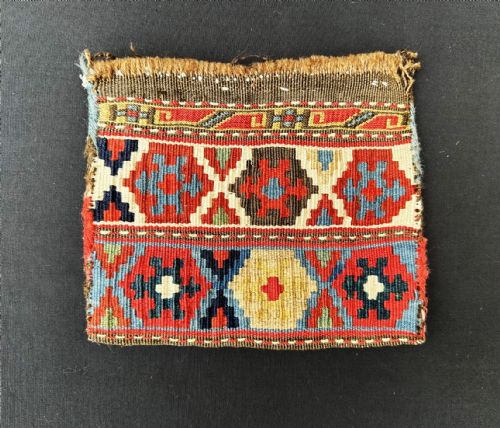
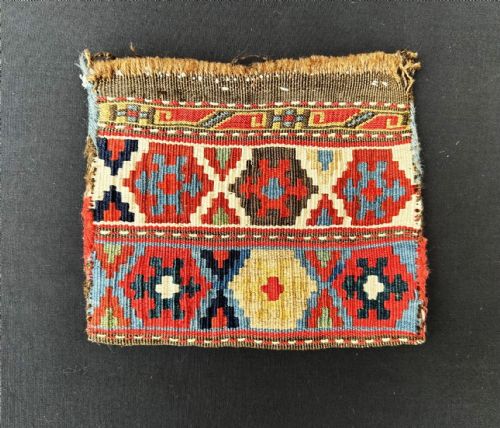


Wool Caucasian Textile
A wool caucasian textile is a dense, nomadic weaving created for daily utility or transport, carrying generations of tribal pattern.
Wool Caucasian Textile
When you examine a wool caucasian textile, you encounter items woven by tribal and nomadic groups such as the Shahsavan, Kurdish, and Yomut peoples across the nineteenth and early twentieth centuries. These pieces encompass utilitarian objects including saddlebags, vanity bags, storage containers, runner rugs, and larger floor coverings.
The most common formats on this page are bag faces and panels derived from larger storage containers known as mafrashes, alongside smaller scatter rugs and runner rugs. These objects reflect the material culture of pastoral communities operating within the Caucasus and adjacent regions like Azerbaijan.
Collectors focus on these forms because they preserve authentic tribal designs executed in resilient wool before commercial chemical dyes altered carpet production. Each piece serves as a physical record of nomadic life, utilising geometric motifs and animal depictions passed down through tribal weavers.
How They Were Made
These textiles rely primarily on hand-spun wool for the pile and foundation, supplemented by cotton in specific structural elements. Weavers built these pieces using traditional hand-knotting or flat-weaving methods such as the soumak technique, which creates a textured, embroidered surface without cutting pile.
Colour derives from natural and vegetable dyes applied to the wool, producing rich tones that age with distinct character. The combination of hand-spun materials and natural colorants forms the backbone of every authentic piece recorded in the inventory.
Several Shahsavan bag faces faithfully record mythical dragons alongside small birds, keeping guard over the saddle.
What Varies in Quality
Quality rests upon the tightness of the weave, the precision of the tribal geometry, and the depth of the natural dyes used in the wool. Finer pieces demonstrate superior control over the soumak or knotting technique, resulting in crisp delineation of birds, dragons, and lattice motifs.
The integrity of the surviving material also dictates standing, with complete storage bags and intact bag faces commanding higher regard than fragmented panels or heavily restored remnants. Original plain-weave backs and complete pairs further elevate a piece by preserving its functional context.
The Wool Caucasian Textile Glossary
- Soumak
- A flat-weave technique where coloured threads wrap over and under the warp yarns to create a smooth face with structural texture. This method allows for intricate geometric and figurative designs without a cut pile.
- Mafrash
- A large rectangular storage chest or box-bag constructed from four woven panels and a base, used by nomads for bedding and household goods. Surviving panels are frequently separated and repurposed into smaller decorative rugs or kilims.
- Khorjin
- A traditional pair of saddlebags linked by a central web, designed to be loaded over horses or camels during seasonal migrations. Complete pairs remain particularly valued for retaining both matching pouches.
- Yomut
- A major Turkmen tribal group known for distinctive primary colours and precise geometric ornamentation on bags and trapping rugs. Their weaving utilises fine hand-spun wool and disciplined structural execution.
Wool Caucasian Textile: Frequently Asked Questions
What is a wool caucasian textile used for?
These items originally served practical nomadic functions such as transporting belongings on animals, storing household goods, or providing seating and floor covering inside tents. Today, collectors display them as wall hangings, cushion covers, or small floor rugs to add texture and history to interior spaces.
Because they were constructed from durable wool to withstand harsh travel, they adapt well to modern domestic environments when placed out of heavy foot traffic.
How do I care for an antique woven bag?
Maintenance requires gentle vacuuming without a rotating brush roll to remove dust from the wool fibres without pulling the hand-spun yarns. Professional textile cleaning should be undertaken sparingly and only by specialists familiar with natural dyes.
Keep these textiles away from direct, prolonged sunlight to prevent the vegetable dyes from fading over time, and ensure they remain in dry conditions to protect the natural animal fibres.
What does a mafrash panel mean?
A mafrash panel is a single side or end section taken from a large rectangular storage box used by nomadic groups for bedding and clothing. Many of these panels were later separated and finished as small kilims or cushion faces as their original container use ended.
Identifying these panels involves looking for the characteristic long format and structural edge finishes that once joined the pieces into a rigid container.