
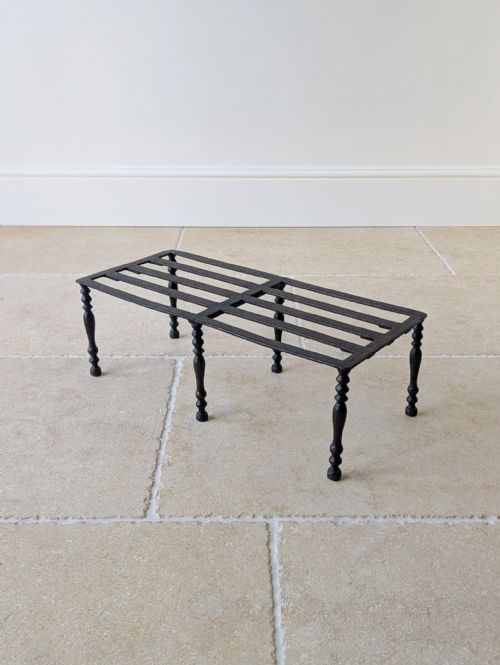
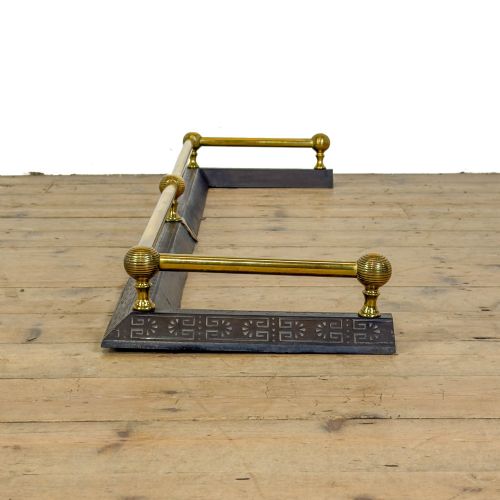
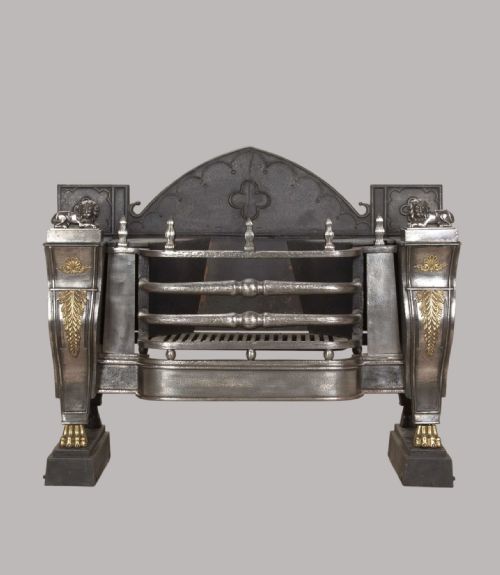
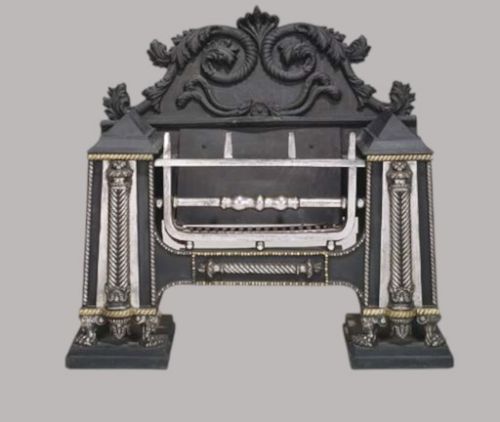
Cast Iron Fire Irons
Cast iron fire irons provide the robust companions needed for tending an open hearth, bringing functional utility and period character to a fireplace.
Cast Iron Fire Irons
Cast iron fire irons represent the heavy-duty pokers, tongs, and companion sets designed for managing coal and wood fires in traditional hearths. The selection spans robust nineteenth-century pieces alongside associated grates, fire backs, and andirons from Victorian, Georgian, and later periods.
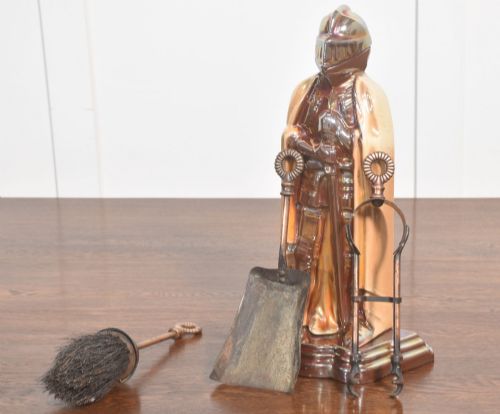
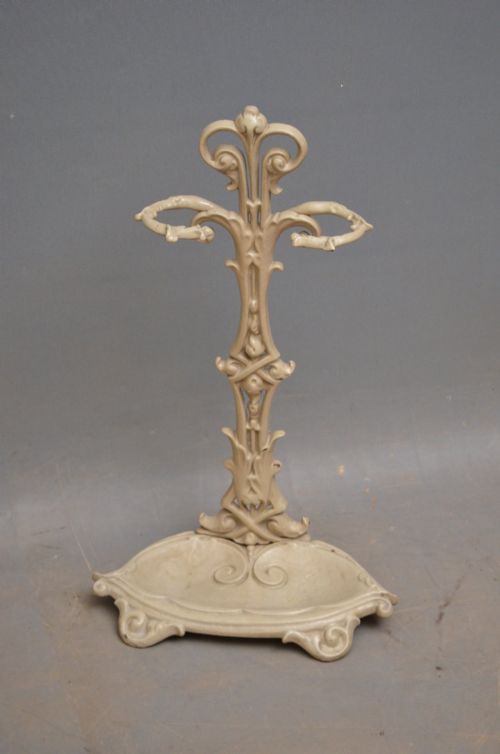
Buyers commonly encounter companion sets combining cast iron with brass or steel, often paired with stands or umbrella holders. These groupings reflect the heavy domestic use of fireplaces across country houses and urban properties alike during the Victorian and Edwardian eras.
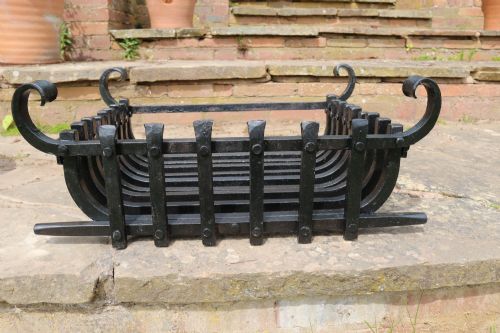
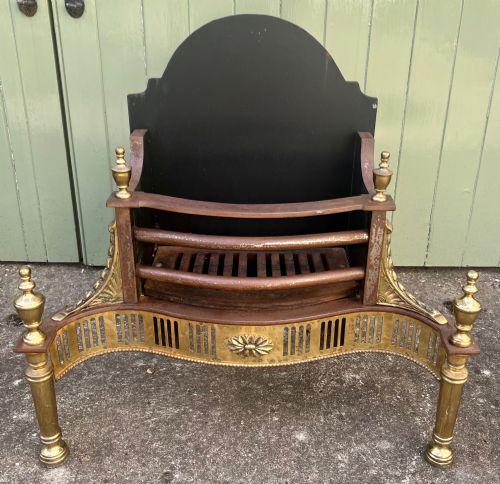
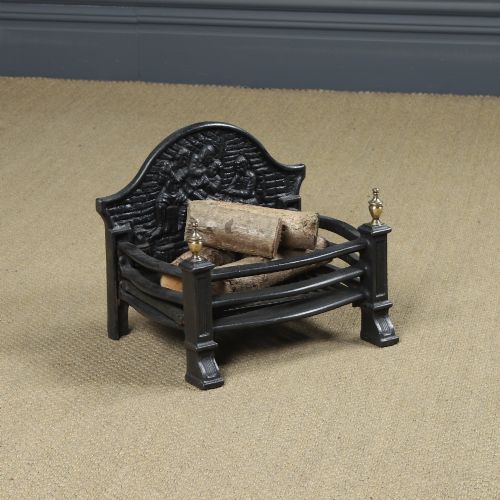
The category overlaps closely with broader hearth furniture, including fire baskets and hob grates forged from iron and steel. Pieces range from plain utility tools to decorative revival styles incorporating neoclassical or gothic motifs.
Materials and construction
Makers utilised cast iron for its ability to hold intricate relief patterns and withstand intense radiant heat within the hearth. This was frequently combined with wrought iron for handles or shafts, offering a balance of rigid moulding and ductile strength.
Many companion sets integrate brass or gunmetal elements to provide contrasting bright highlights against blackened iron surfaces. Hand-forged components appear alongside machine-cast parts, demonstrating the transition from traditional blacksmithing to industrial foundry production through the nineteenth century.
Several Victorian inventories include miniature salesman's samples, proving that travelling ironmongers once carried tiny hearth furniture in their sample cases.
Distinctions in quality
Superior examples display crisp casting detail in decorative handles and armorial plaques, whereas lower-grade pieces exhibit blurred edges from worn moulds. The proportional balance and weight distribution determine how comfortably a poker or pair of tongs handles during use.
Complete, matching sets surviving with their original stands or andirons command greater interest than assembled groupings of mixed provenance. The integrity of the original metal finish, whether polished steel or blackened cast iron, significantly impacts the character of the piece.
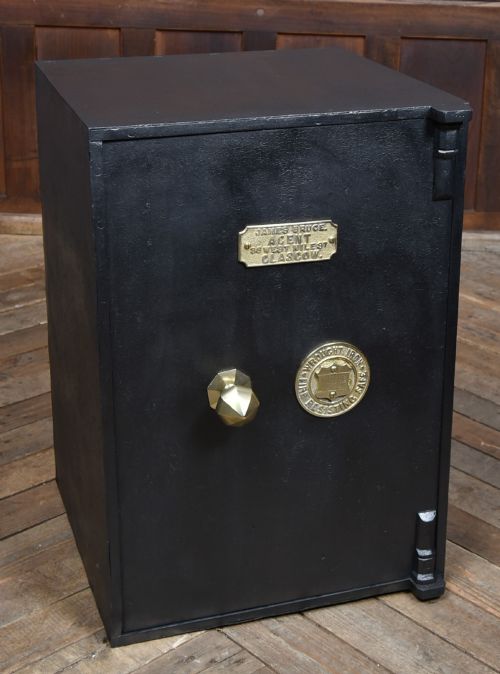
Coalbrookdale·Carron Foundry·James Bruce
The Cast Iron Fire Irons Glossary
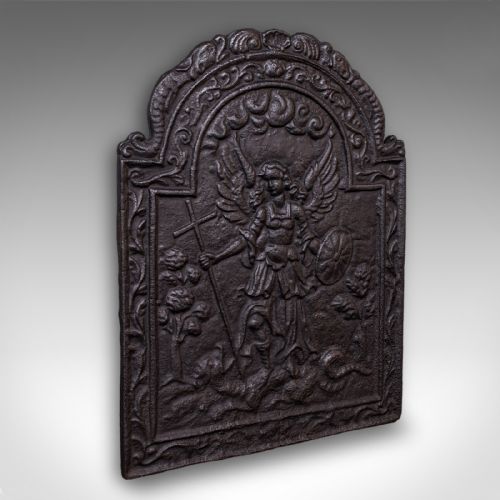
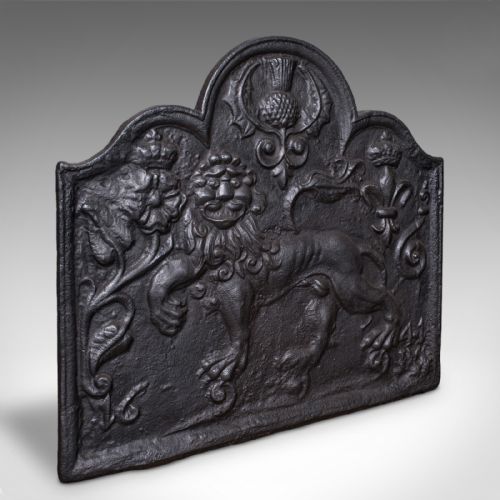
- Fire back
- A heavy iron plate placed at the back of an open fireplace to reflect heat into the room and protect the masonry wall. They often feature moulded relief designs showing historical or heraldic scenes.
- Andiron
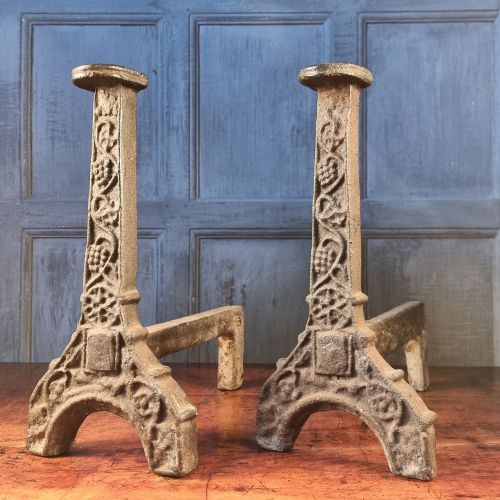
- A horizontal support raised on legs, used in pairs to hold logs above the hearth floor for better air circulation. These are also known as fire dogs.
- Fire basket
- An open metal container designed to hold coal or logs within a larger fireplace opening. They incorporate cast and wrought iron components.
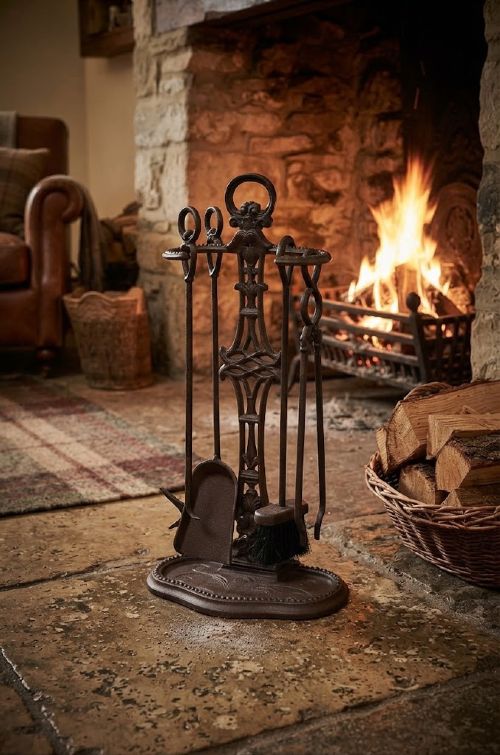
- Companion set
- A coordinated group of fireplace tools, typically including a poker, tongs, and shovel, arranged together on a dedicated stand. They became widely popular during the Victorian period.
- Hob grate
- A cast iron fireplace featuring raised side platforms used for heating kettles or food. This style is closely associated with Georgian and Regency interior design.
Cast Iron Fire Irons: Frequently Asked Questions
How do I clean cast iron fire irons?
Maintenance involves removing soot and light surface rust using a soft wire brush or fine steel wool without damaging the underlying metal. Applying a light coat of grate polish or oil helps preserve the dark finish and prevents future corrosion.
Avoid using harsh chemical cleaners or water, which can strip historic patination and promote rapid rusting. Regular dry dusting keeps everyday ash accumulation under control.
Are these fire irons suitable for daily use?
Most nineteenth-century and earlier pieces were built for active service and easily handle regular handling around an open fire. Solid cast iron and steel construction ensures durability during heavy work like moving logs or breaking up coal.
Finer antique sets featuring delicate brass ornamentation or brittle early castings are better reserved for decorative hearth display. Assessing the structural weight and handle security guides whether a set suits active duty.
How do I date a set of fire irons?
Dating relies on stylistic clues such as the neoclassical motifs of the Georgian period or the heavier gothic revival forms of Victorian manufacture. Tool handles, joining techniques, and the presence of foundry marks provide further chronological indicators.
Comparing the design against dated grates and companion sets in the broader record helps narrow the period of production. Industrial casting methods grew more refined towards the end of the nineteenth century.
What is the difference between andirons and fire dogs?
The terms are generally used interchangeably to describe the paired metal supports that hold logs inside an open fireplace. Historically, andirons sometimes incorporated horizontal baskets or spits, while fire dogs focused purely on log support.
Both items perform the vital role of lifting fuel off the hearth floor to improve draught and combustion efficiency. Decorative front terminals often match the design of nearby fire irons.