
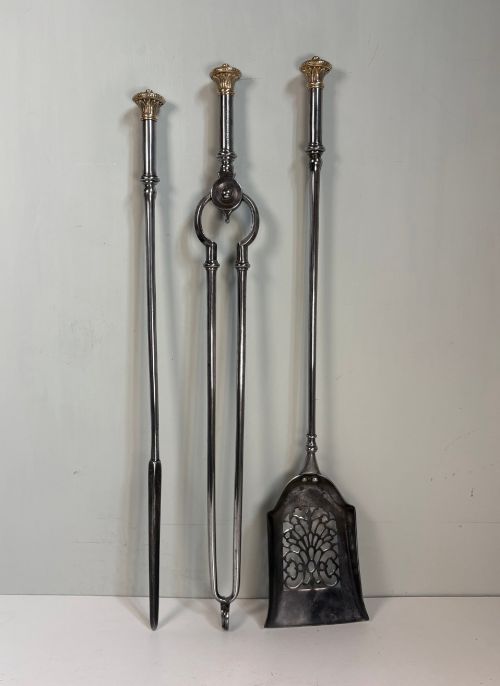
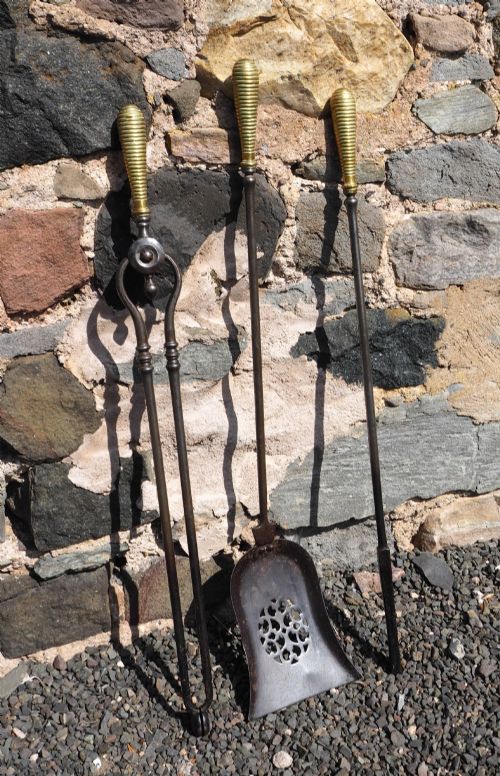
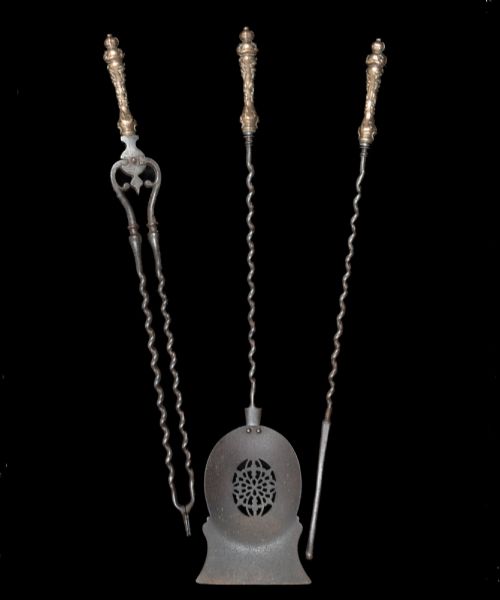
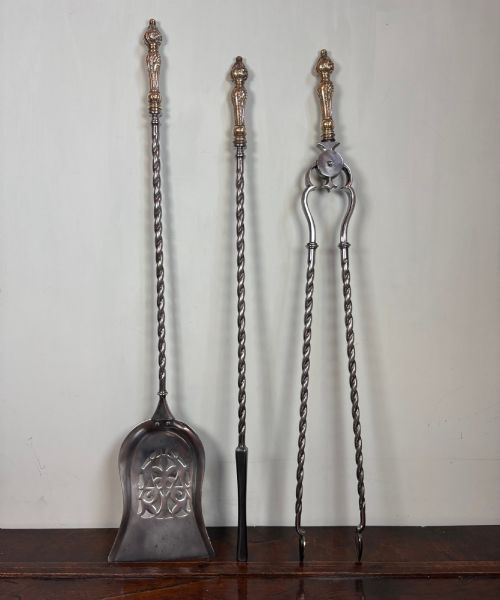
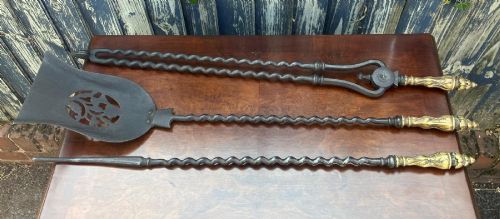
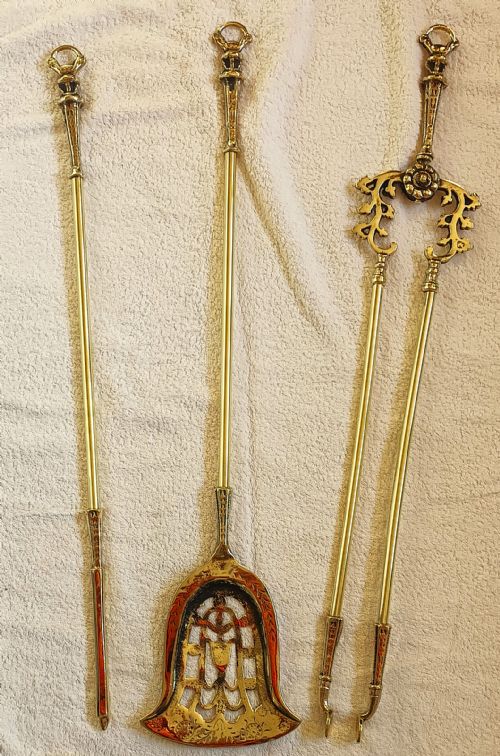
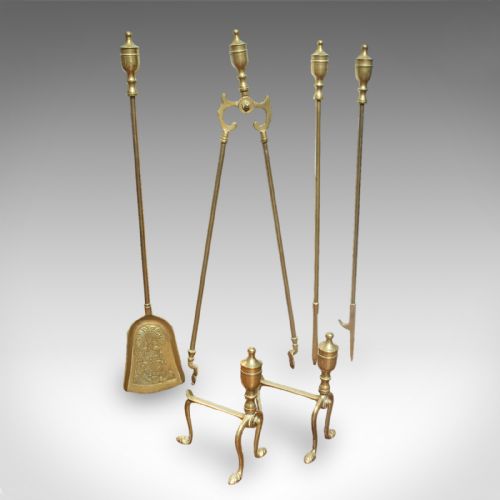


Brass Shovel and Tongs
Brass shovel and tongs are essential hearth furniture that brings period character and practical utility to an open fire.
Identifying brass shovel and tongs
When you search for brass shovel and tongs, you are looking at hearth furniture designed for tending domestic coal and wood fires. These pieces emerge from Victorian, Edwardian, and George III periods, spanning the nineteenth and early twentieth centuries.
The objects appear as companion sets, fire irons, and fireside suites. You will frequently meet three-piece sets containing a shovel, tongs, and poker, alongside fender combinations and claw and ball designs.
Originating as utilitarian room furnishings, these items reflect the domestic interior tastes of past centuries. The surviving examples on this page represent the core forms used in period homes.
Materials and construction
Makers utilised brass as the primary visible material, often combining it with iron and steel for structural strength. Polished brass surfaces provide the bright finish characteristic of these fireplace accessories.
Individual items combine forged metals with cast elements, such as the detailed claw and ball design. The integration of steel and iron components ensures the working ends of shovels and tongs withstand daily use.
Retail Price Guide 2026
Typical UK retail prices for brass shovel and tongs, calculated from the Sellingantiques database of over a million retail prices indexed since 2003. This retail price guide relies exclusively on Sellingantiques data; no external sources or auction records are used, so the figures do not describe the wider market.
Listings span the Victorian, Edwardian, and George III periods, utilising brass, iron, and steel.
Distinctions in quality
Quality in these fireside accessories rests on the weight of the metal and the crispness of the cast details. Superior examples display substantial brass substance and refined finishing rather than thin pressed sheet metal.
The sophistication of the design, such as elaborate claw and ball motifs, separates standard production from higher tier items. Better pieces maintain proportional harmony across the entire set of ironmongery.
The Brass Shovel and Tongs Glossary
- Companion set
- A matched collection of fireplace tools, usually comprising a shovel, tongs, and poker, held together in a stand or resting on a fender.
- Fender
- A low metal guard placed in front of an open fireplace to contain embers and sparks, often incorporating rests for fire irons.
- Claw and ball
- A decorative foot motif featuring a talon grasping a spherical object, frequently seen on fireside furniture and andirons.
- Andirons
- A pair of horizontal metal supports used to hold logs in an open fireplace, also known as fire dogs.
Frequently Asked Questions
What are brass shovel and tongs used for?
These tools were designed for managing coal or wood fires in domestic hearths. The shovel clears ash, while the tongs manoeuvre burning fuel.
In period interiors, they formed part of a working display beside the fireplace. Their polished metal surfaces reflected the light of the fire into the room.
How do I date a brass companion set?
Dating relies on stylistic clues, manufacturing methods, and material combinations. Victorian and Edwardian sets often show heavier casting and specific handle profiles.
Comparing the decorative motifs against documented period designs helps narrow the manufacturing era. George III pieces display distinct proportions compared to later Victorian suites.
Are brass fire irons purely decorative?
While highly decorative, these tools were manufactured for active daily service. The steel and iron components inside the brass casing provide the necessary strength.
Users should balance regular maintenance with gentle handling to preserve the polished finish. Heavy daily use requires careful cleaning to prevent surface wear.
What is a fireside suite?
A fireside suite is an expanded collection of matching hearth accessories. It typically includes a set of fire irons alongside related items like andirons or fenders.
These coordinated suites ensured a unified decorative scheme across the fireplace installation. They represent the more comprehensive end of period hearth equipment.