


Cast Brass Fire Dogs
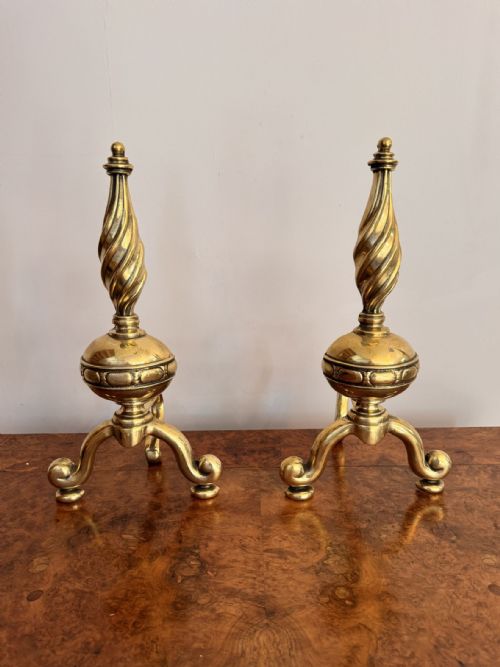
Cast brass fire dogs hold hearth logs safely in place while adding a bright, reflective metal accent to period fireplaces.
Cast Brass Fire Dogs
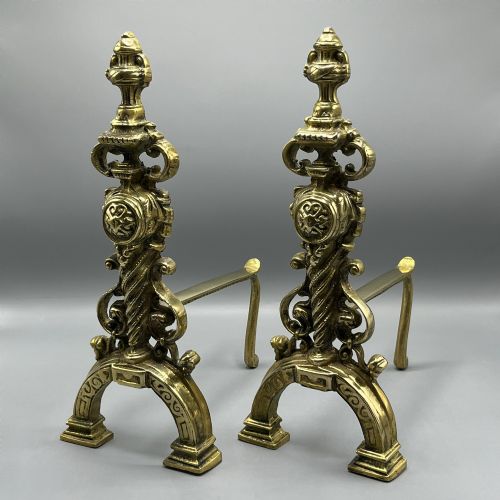
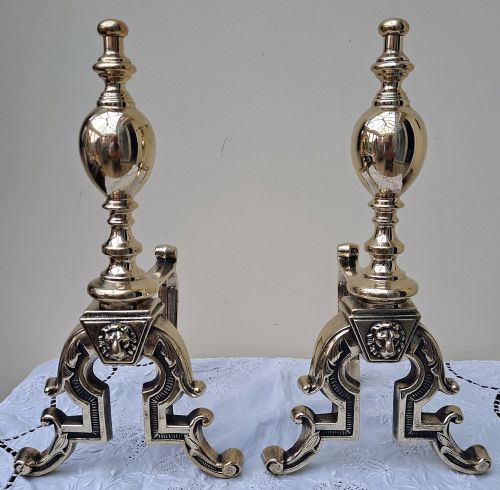
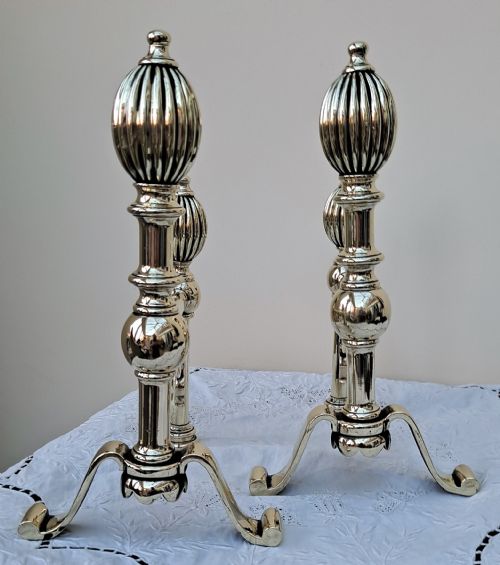
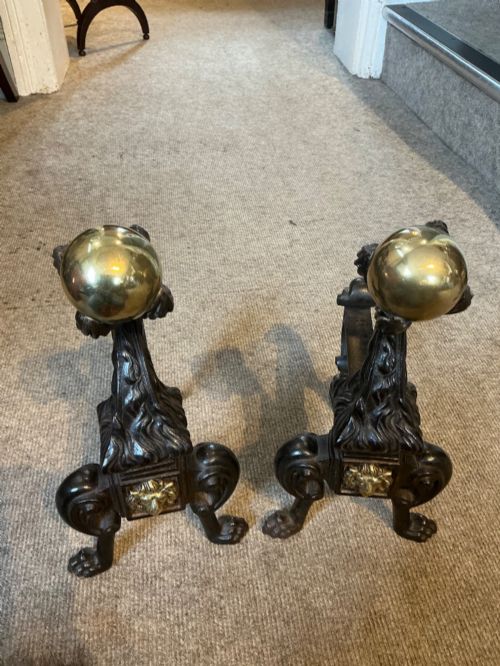
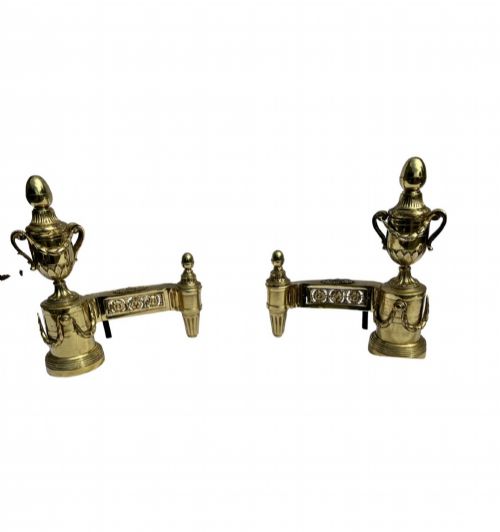
Cast brass fire dogs are substantial hearth accessories designed to support logs above the floor of an open fireplace, allowing air to circulate underneath for a better burn. When you search for cast brass fire dogs, you encounter heavy functional pairs shaped with decorative front finials and sturdy iron billets extending backward into the hearth.
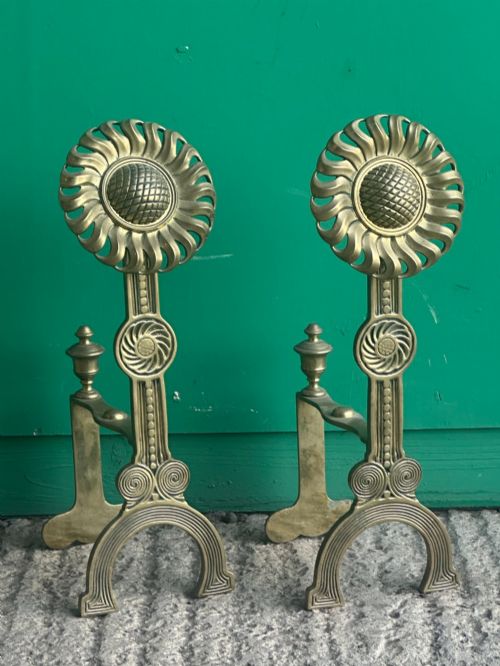
The selections available run predominantly through Victorian and later periods, capturing aesthetic movements from Neoclassical and Adam style to Gothic Revival and Arts & Crafts designs. Many surviving pairs date from the nineteenth century, reflecting an era when domestic hearths remained the central heating point of the home.
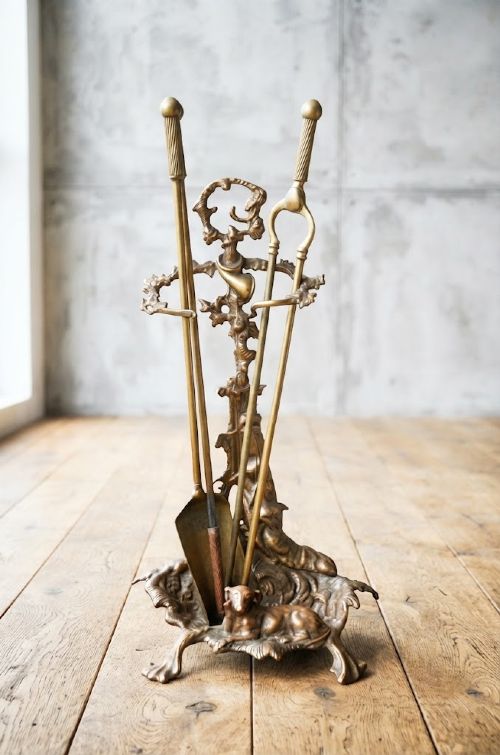
While some listings present simpler utilitarian pairs, many feature ornate casting work incorporating floral motifs, animal forms, or classical architectural elements. They frequently appear alongside matching fire irons, grates, or fenders to create a cohesive fireplace display.
Materials and construction
These pieces rely on a combination of cast brass for the decorative visible fronts and iron or cast iron for the load-bearing billets and bars that endure direct contact with burning wood. Molten brass was poured into detailed moulds to create crisp surface ornament before being hand-finished and polished by artisans.
The heavier components, such as the rear bars and support legs, utilise robust cast or wrought iron to withstand intense hearth temperatures without warping. Gilt brass and solid brass variations also appear, demonstrating different surface treatments ranging from bright metallic sheens to rich patinated finishes.
Some nineteenth-century brass fire dogs secretly double as umbrella stands when the hearth goes cold for summer.
Distinctions in manufacture
Quality in these hearth furnishings is defined by the crispness of the casting detail and the heft of the metal utilised. Superior examples display sharp, deeply chased surface decoration on the brass fronts without the blurring or porosity seen in simpler production pieces.
Structural integrity also separates standard items from exceptional ones, particularly the secure joining of the decorative brass front to the heavy iron billets. Finer pairs maintain rigid alignment and substantial weight, ensuring they remain stable when loaded with heavy logs.
Thomas Jeckyll·William Tonks
The Cast Brass Fire Dogs Glossary
- Andiron
- An alternative term for fire dogs, consisting of a vertical front support and a horizontal bar that holds wood off the hearth floor. They typically appear in matched pairs flanking the fireplace opening.
- Billets
- The horizontal iron bars extending backward from the decorative front of a fire dog to support the logs. These sturdy iron supports take the direct weight and heat of the fire.
- Chenet
- The French term for fire dogs, often used to describe decorative hearth furniture featuring Rococo or Empire styling in gilt or cast brass. These pieces frequently emphasise sculptural scrollwork and ornate front feet.
- Fender
- A low metal guard placed in front of the hearth to contain stray embers and ash. They are frequently made in matching brass or iron styles to coordinate with the fire dogs.
- Fire Grate
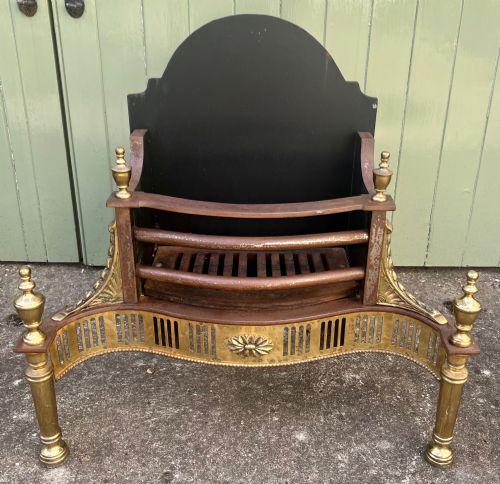
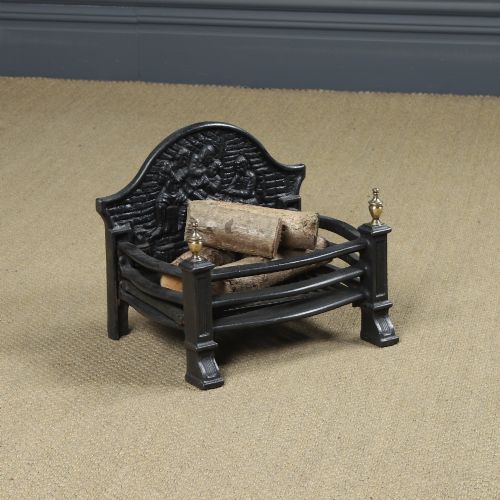
- A metal basket or rack designed to hold coal or wood inside a fireplace. Many period examples combine cast iron baskets with decorative brass fronts and integrated fire dog supports.
Cast Brass Fire Dogs: Frequently Asked Questions
What are fire dogs used for?
Fire dogs elevate logs above the floor of an open hearth to improve airflow beneath the wood. This elevation promotes a cleaner, more efficient burn and allows ash to fall safely away from the flames.
Beyond their utility, they serve as decorative focal points for the fireplace. Paired with fenders and fire irons, they complete the traditional hearth arrangement.
How do I style fire dogs?
Place a matched pair symmetrically on either side of the fireplace opening, ensuring the iron billets point inward toward the centre of the hearth. They look best when paired with a complementary fire basket, grate, or fender.
Keep the brass polished to a warm glow or let it develop a natural dark patina depending on the aesthetic of your room. They anchor the fireplace even when no fire is lit.
Are fire dogs the same as andirons?
Yes, fire dogs and andirons are identical items serving the exact same functional and decorative purpose in the hearth. The term andiron is frequently used interchangeably with fire dogs in antique listings.
Regional preferences often dictate which term appears, with andirons common in American and older British texts while fire dogs remain traditional in UK terminology.
How do I date antique fire dogs?
Dating relies on examining the prevailing design style, such as Victorian Gothic Revival, Neoclassical, or Arts and Crafts. Cast brass techniques and the wear patterns on the iron billets also offer clues to age.
Consulting the specific period markers associated with the casting quality helps narrow down the decade of manufacture. Many surviving pieces date from the nineteenth and early twentieth centuries.