
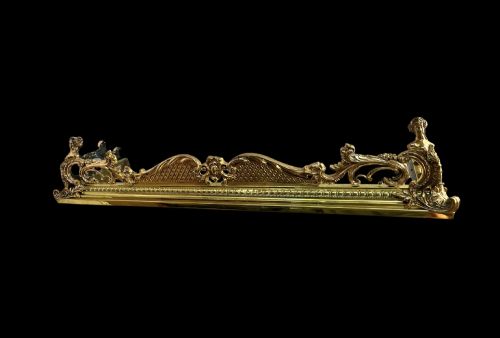


Cast Brass Fire Curb
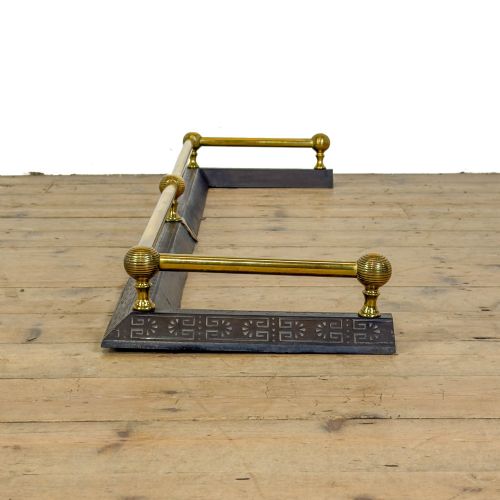
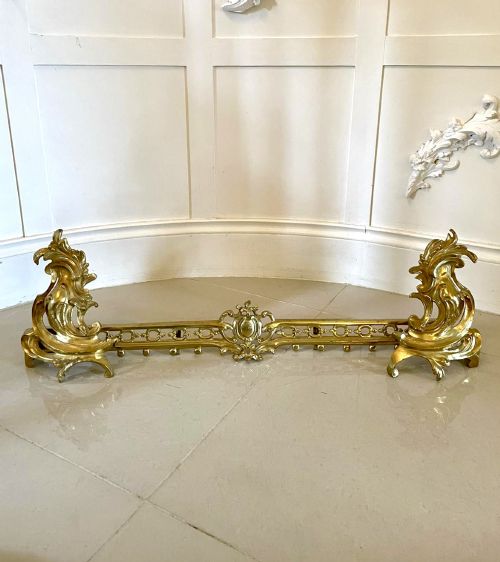
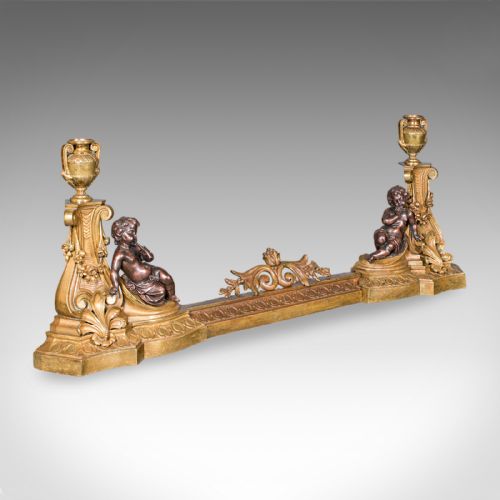
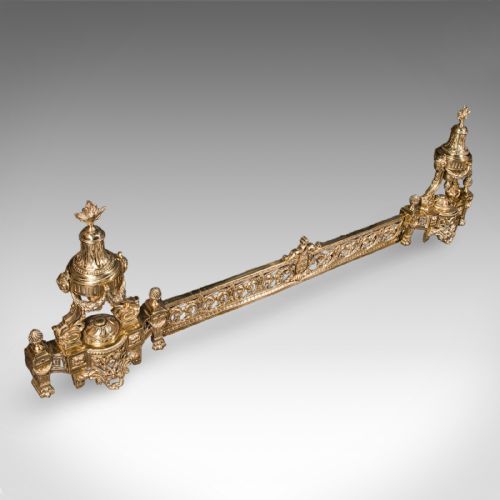
A cast brass fire curb sits low before the hearth, defining the fireplace edge and containing stray embers with heavy metalwork.
Cast Brass Fire Curb
A cast brass fire curb forms the protective barrier around a hearth, keeping coal embers safely contained within the fireplace. These pieces date across the nineteenth century into the Edwardian era, spanning Victorian, French Rococo, and Art Nouveau stylistic influences.
Most examples found here take the form of adjustable hearth fenders or extending fire guards, often combining cast brass with iron, bronze, or steel components. English and French designs predominate, ranging from simple heavy gauge mountings to ornate scrolled or gilded brass frameworks.
Buyers choose a cast brass fire curb to anchor a traditional fireplace scheme with authentic period metalwork. The scale varies from curved bronze frames to linear extending formats fitted with lions or garlands.
Materials and construction methods
Makers utilised heavy gauge cast brass, bronze, and gilt brass for the primary decorative bodies, frequently combining these with structural iron or steel bases. Gilded surfaces and cast brass garlands added visual richness to the hearth border.
Extending mechanisms allowed single curbs to fit varying fireplace widths, whilst detailed casting produced intricate French Rococo scrolls and Louis XV motifs. Iron and steel internal sections provided the necessary structural weight and thermal resilience.
Cast Brass Fire Curb Retail Price Guide 2026
Typical asking prices for cast brass fire curb among the pieces listed under this phrase on Sellingantiques today, from the lower quarter to the upper quarter. They describe what is for sale here now, not the wider market.
Some nineteenth-century hearth guards proudly incorporate cast brass lions to watch over the hearth.
Assessing quality and manufacture
The distinction between standard production and top tier work rests on the thickness of the metal and the crispness of the casting. Heavy gauge brass and deep, hand-chased ornamentation separate superior pieces from lighter, simpler designs.
Ingenuity in extending mechanisms and the integration of secondary metals like bronze or steel indicate better workshop standards. Finer curbs retain crisp relief work in details such as lions and garlands rather than soft, worn casting edges.
The Cast Brass Fire Curb Glossary
- Cast brass
- An alloy of copper and zinc poured into moulds to create solid decorative components. This technique allows for complex relief patterns and heavy structural forms.
- Fender
- A low metal guard placed around the hearth to contain coals and ash. Fenders protect the surrounding floor and provide a finished boundary to the fireplace.
- Extending fender
- A design featuring sliding sections that adjust to fit different fireplace widths. This mechanical adaptability made them practical for various room proportions.
- Gilt bronze
- Bronze coated with a thin layer of gold or gold-coloured alloy. Also known as ormolu, it provides a bright, tarnish-resistant finish.
Cast Brass Fire Curb: Frequently Asked Questions
How do I measure for a fire curb?
Measure the width and depth of your hearth stone to ensure the curb sits comfortably within the perimeter. Account for whether the piece is fixed or extending when matching it to your fireplace opening.
Leave adequate clearance around the hearth edges so the metal frame rests securely on stone or brick rather than carpet.
Are these curbs suitable for open fires?
These metal curbs are built to withstand hearth heat and contain stray embers from open fires. The heavy brass and iron construction handles standard fireplace temperatures safely.
Ensure the internal iron or steel components are stable before regular use with an active fire.
How do I clean cast brass?
Dust the metal regularly with a soft cloth to prevent soot and ash accumulation. Avoid harsh chemical cleaners that strip the historic surface character.
Gentle wiping preserves the aged tone and any original gilt or bronze patination built up over the decades.
How do I date a brass fender?
Examine the weight, casting sharpness, and stylistic markers such as Art Nouveau curves or Louis XV scrolls. Heavier gauge metal and integrated sliding mechanisms often point towards Victorian or Edwardian production methods.
Compare the construction techniques and fastening screws with known period examples to narrow down the decade of manufacture.