


Brass Fire Surround
A brass fire surround anchors the hearth with warmth and presence, offering the classic metalwork collectors seek for period interiors.

Identifying a brass fire surround
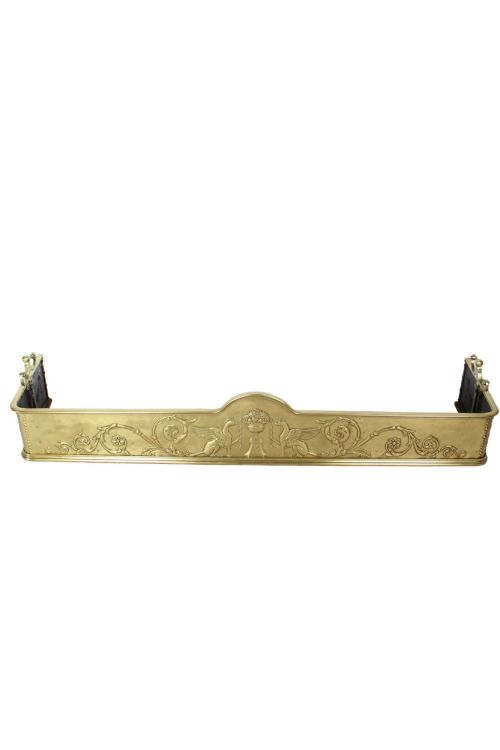
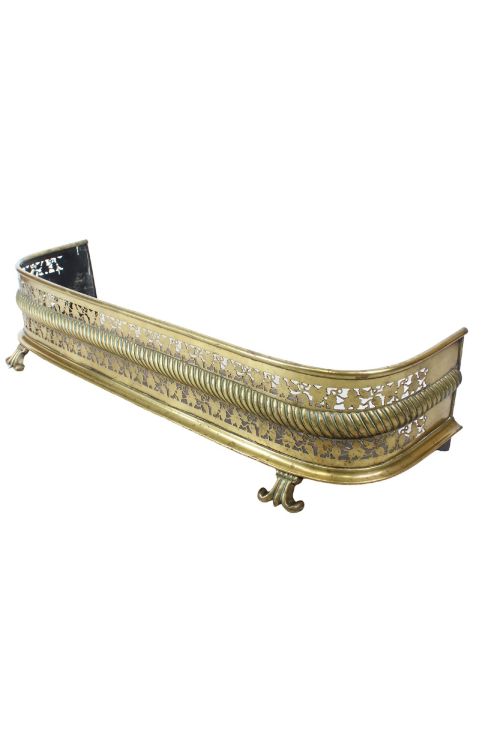
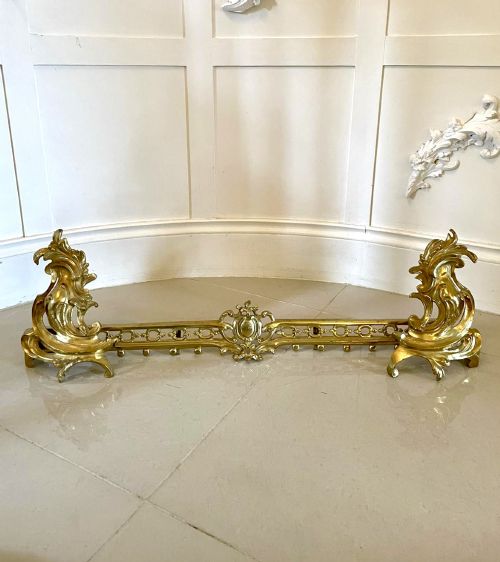
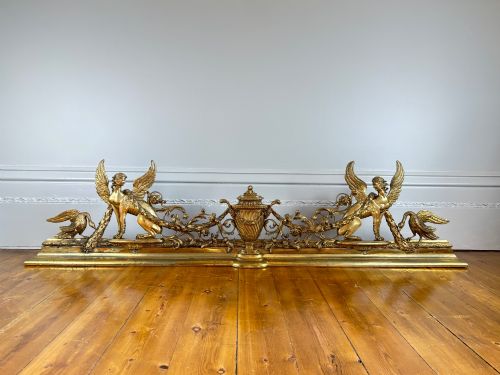
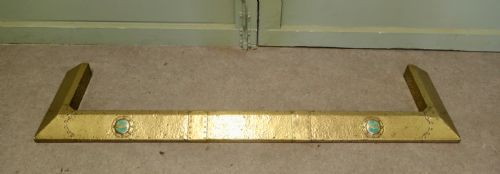
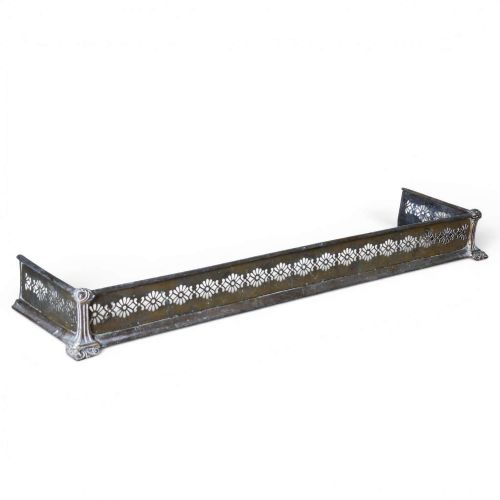
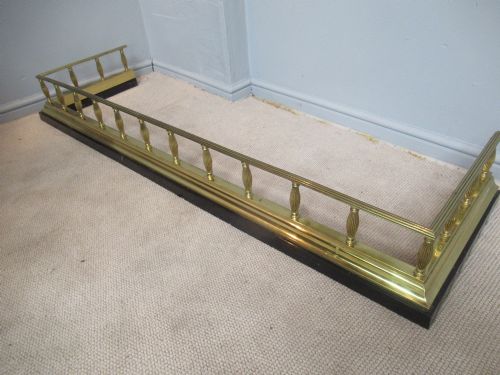
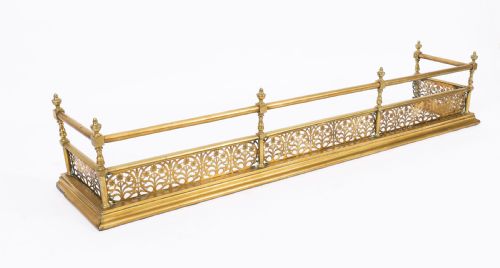
A brass fire surround spans hearth furniture designed to frame or protect the fireplace, appearing as fenders, kerbs, and club fenders across this page. These pieces emerge primarily from Victorian workshops, along with occasional Georgian and Art Nouveau examples recorded in the archive.
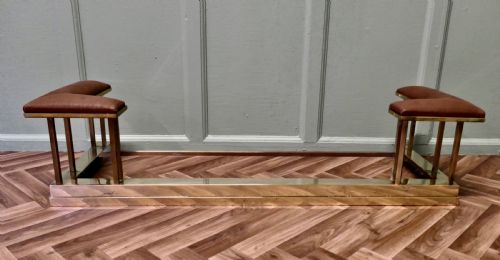
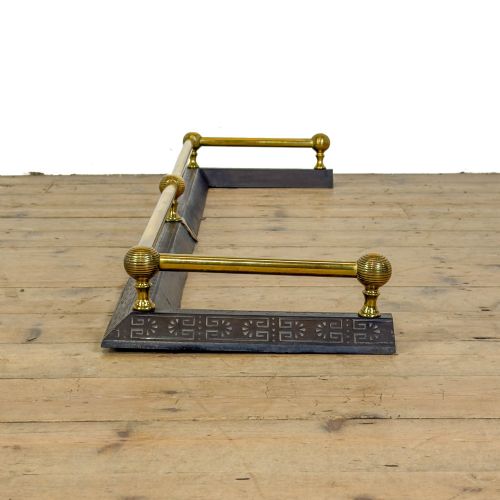
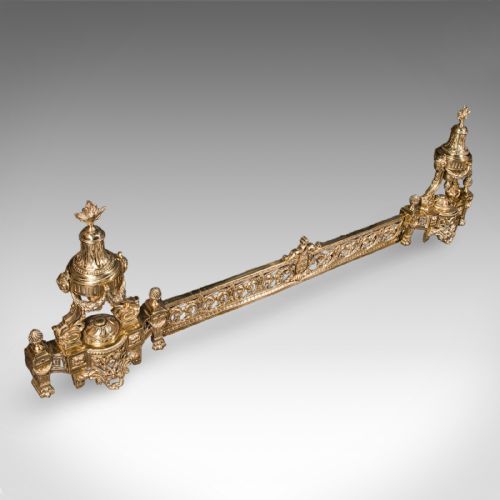
The selections here showcase distinct forms such as extending fenders, low kerbs, and seated club fenders upholstered in leather. Such items served to contain ash and stray embers while providing a polished metallic border to the hearth.
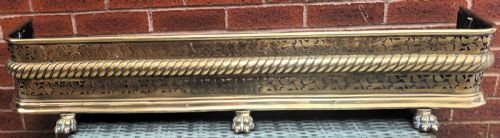
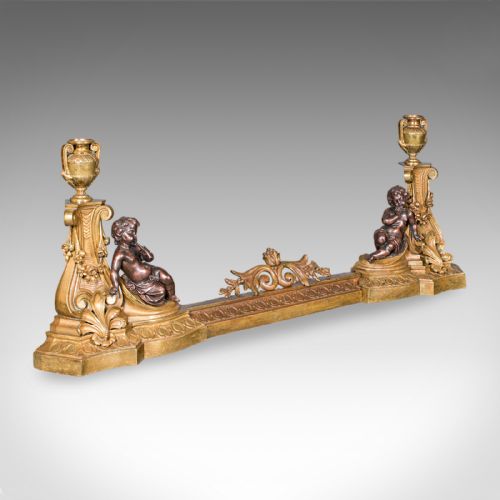
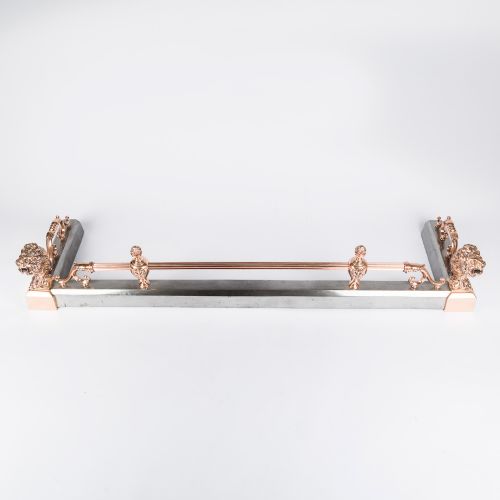
Origin points range from English workshops to French foundries executing ornate Rococo Revival styles. Buyers encounter both simple cast rails and elaborate decorative hearth surrounds featuring lion heads and rope twist details.
Materials and construction
Foundries utilised heavy gauge brass, cast brass, and gilded brass to build these hearth furnishings, frequently combining the metal with iron framework. Bronze elements and leather upholstery appear on specific seating variants.
Craftsmen shaped the metal through casting and fine scrolling work, incorporating functional adjustments on extendable models. Detail elements like finials and rope twist rails demonstrate traditional metalworking techniques of the nineteenth century.
Retail Price Guide 2026
Typical UK retail prices for brass fire surround, calculated from the Sellingantiques database of over a million retail prices indexed since 2003. This retail price guide relies exclusively on Sellingantiques data; no external sources or auction records are used, so the figures do not describe the wider market.
Design styles recorded in the archive range from Victorian and French Rococo to Art Nouveau and Georgian forms.
Judging quality in hearth metalwork
Excellence in these pieces rests upon the weight of the metal and the crispness of the casting. Heavy gauge brass and sharply defined ornamentation distinguish finer workshops from simpler commercial production.
The sophistication of the design dictates the upper tier of the range, seen in French Rococo scrolling, integrated leather seats, and finely chased lion head motifs rather than plain functional rails.
The Brass Fire Surround Glossary
- Club fender
- A low, padded hearth seat framed in brass or iron that allows people to sit close to the fire. These upholstered versions provide comfortable fireside seating.
- Fender
- A low metal guard placed around the hearth to keep burning coals and ash contained within the fireplace. They often feature adjustable rails to fit specific hearth dimensions.
- Fire kerb
- A low border or barrier marking the perimeter of the fireplace hearth. This term frequently describes low decorative brass surrounds.
- Gilded brass
- Brass treated with a thin layer of gold or gold-coloured finish to enhance its brilliance. This finish appears on ornate nineteenth-century French pieces.
- Finial
- A decorative ornamental knob or projecting terminus fitted to the ends of metal rails. They provide a finished aesthetic to the corners of the surround.
Frequently Asked Questions
What is a club fender?
A club fender is a low hearth guard featuring an upholstered seat top. It provides a traditional seating area directly around the fireplace.
These pieces combine functional metal framework with comfortable leather upholstery for fireside sitting.
How do I measure for a fender?
Measure the width and depth of your hearth stone to ensure the metal surround sits correctly within the space. Extending models offer flexibility in overall width.
Check whether the design is fixed or adjustable before selecting a piece for your specific fireplace opening.
Are these pieces adjustable?
Certain examples feature extending mechanisms with sliding rails to alter the overall width. This allowed nineteenth-century households to fit the metalwork precisely to different hearth sizes.
Fixed models maintain a single rigid dimension established by the maker.
What periods do these surrounds date from?
The pieces span the Victorian era, the wider nineteenth century, and select Georgian and Art Nouveau periods. Stylistic cues like French Rococo influence help identify the design era.
Foundry work from these decades displays distinct casting weights and decorative motifs.