
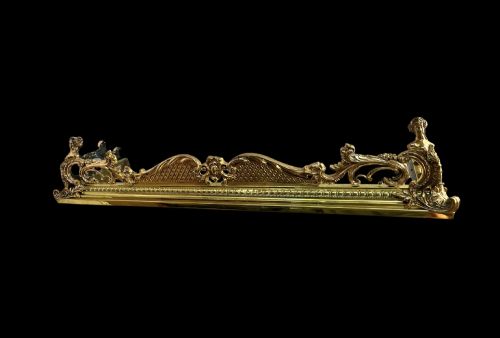


Cast Brass Fender
These cast brass fender pieces frame the hearth with weight and polish, turning an ordinary fireplace into the proper visual centre of a room.
Cast Brass Fender
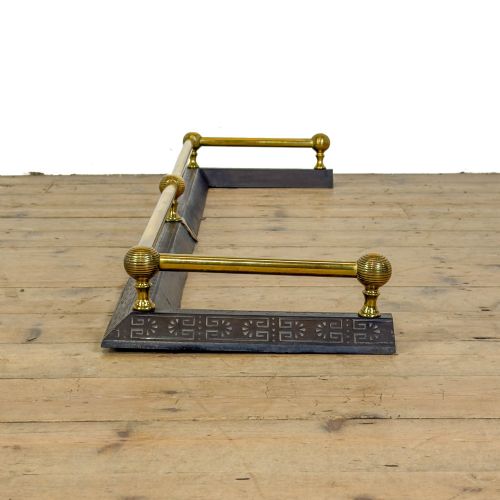
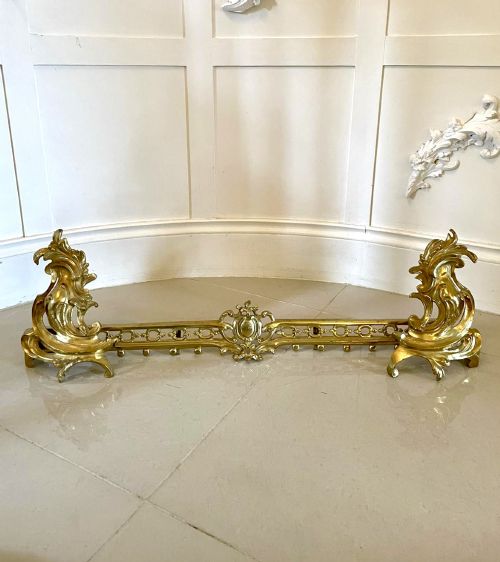
A cast brass fender guards the hearth, keeping embers contained while anchoring the fireplace within the room. Buyers searching for a cast brass fender encounter forms ranging from simple Victorian curbs to ornate French Rococo and Louis XV styles.
The pieces on this page span the Victorian and Edwardian eras, alongside nineteenth-century examples and specific dates like eighteen-sixty and eighteen-eighty. Common formats include adjustable hearth fenders, extending designs, and club fenders featuring leather seating alongside cast iron and brass components.
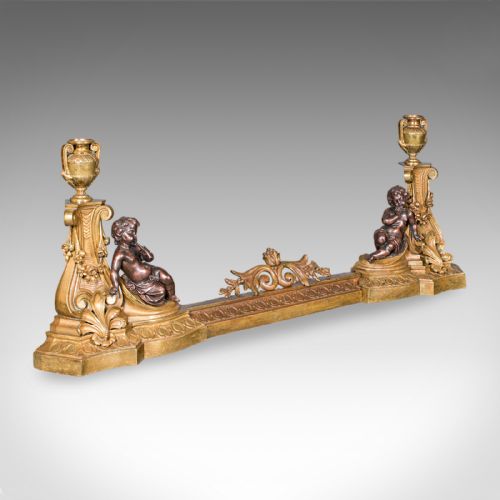
Origin details in the evidence point to English and French workshops, encompassing grand exhibition pieces and heavy gauge domestic curbs. Many designs incorporate lions or floral garlands, reflecting the decorative ambitions of nineteenth-century domestic interiors.
What distinguishes superior examples
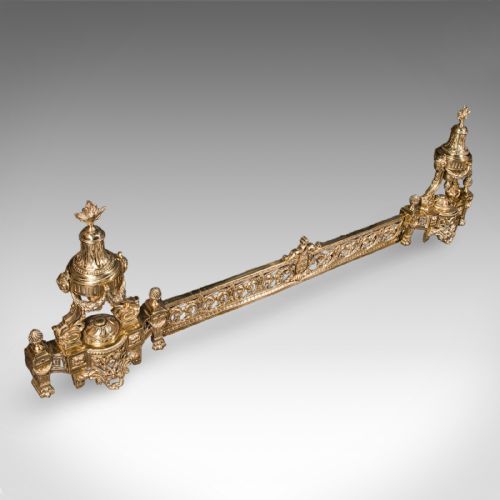
Quality rests in the weight of the metal and the crispness of the cast ornamentation, such as scrolled foliage or detailed garlands. Heavy gauge brass and substantial cast iron cores indicate sturdiness and durability compared to lighter alternatives.
Design ambition separates standard hearth curbs from exceptional pieces, particularly in French Louis XV or ornate Victorian styles where chased details and gilding demand higher skill. The presence of functional adjustments and integrated club seating also shifts a piece into a different category of craftsmanship.
Several nineteenth-century fenders arrive bearing the heraldry of private institutions like The In & Out Club, ready to warm a modern living room.
The Cast Brass Fender Glossary
- Cast brass
- Molten brass poured into a mould to create solid, highly detailed decorative metal components. This technique allows for intricate scrolls and garlands that sheet metal cannot achieve.
- Club fender
- A low, padded hearth fender featuring upholstered leather seats on either side. These pieces originated in gentlemen's clubs to provide fireside seating.
- Fire kerb
- A low metal barrier placed directly on the floor around the hearth to retain stray coals. It serves a purely functional containment role while framing the grate.
- Gilt bronze
- Bronze coated with a thin layer of gold, providing a brilliant, durable metallic finish. It appears frequently on French Empire and Rococo revival pieces.
- Serpentine
- A gentle curving line shaped like a snake, often seen on eighteenth and nineteenth-century hearth fenders. This contour adds movement and elegance to the fireplace front.
Cast Brass Fender: Frequently Asked Questions
How do I measure for a fender?
Measure the width and depth of your hearth area precisely, leaving adequate clearance around the fireplace opening. Adjustable and extending models offer flexibility if your hearth dimensions fall between standard sizes.
Check whether the design sits directly on the floor or requires specific fixing space against the hearth stone. Heavier cast iron and brass models rely on their own weight to stay in place.
Are club fenders comfortable for seating?
Club fenders incorporate padded leather tops designed for sitting close to the fire. They provide sturdy, low-level seating that originated in traditional social spaces and libraries.
The height is typically lower than standard chairs, intended for warming oneself directly by the hearth. The internal frame beneath the leather remains solid iron or brass.
How do I clean cast brass?
Dust the surface regularly with a soft dry cloth to prevent soot accumulation. Avoid harsh chemical cleaners that strip historical patina from nineteenth-century metalwork.
Gentle polishing maintains the brightness of brass and gilt surfaces without damaging delicate cast details or chased ornamentation. Take care around cast iron components to prevent rust formation.
What is the difference between Victorian and Edwardian fenders?
Victorian pieces tend to feature heavier ornamentation, cast brass garlands, and elaborate Rococo or Louis XV influences. The metalwork is substantial and often paired with dark cast iron.
Edwardian designs, including Art Nouveau examples, often display more stylised floral motifs and flowing lines. The aesthetic shifts toward lighter visual weight while retaining solid metal construction.