





Traditional Fireplace Fender
A traditional fireplace fender frames the hearth, offering a low barrier and often padded seating designed to anchor the room.
Traditional Fireplace Fender
A traditional fireplace fender creates a formal boundary around the hearth while offering practical utility in the principal rooms of a house. When you search for a traditional fireplace fender, you encounter metal frames designed to contain ash and protect the room from stray embers. The pieces span the nineteenth century through the Edwardian period and into the early twentieth century.
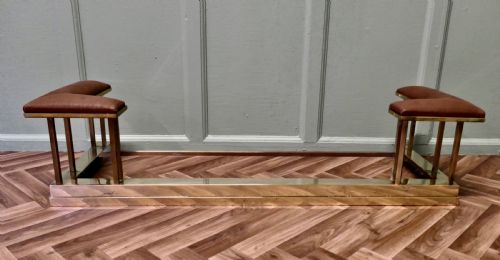
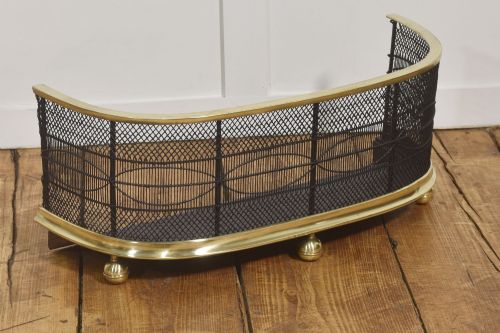
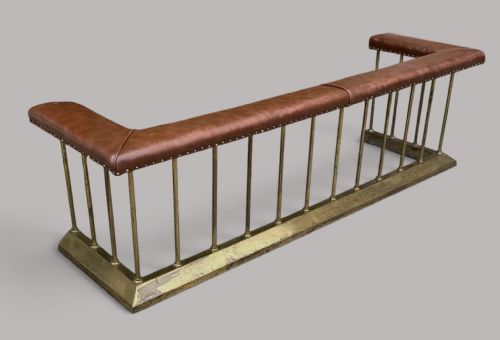
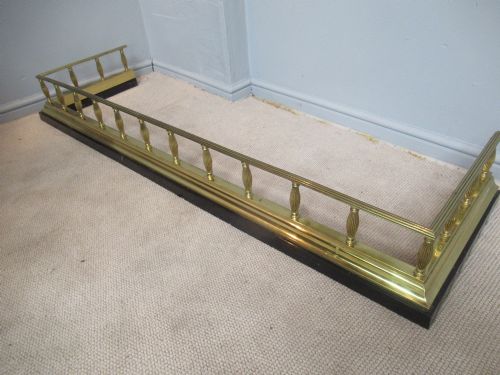
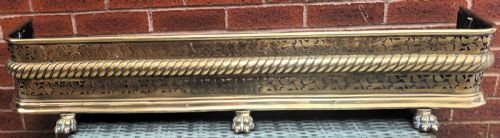
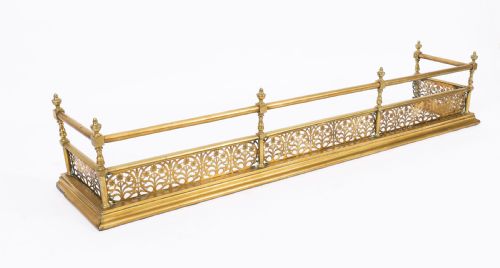
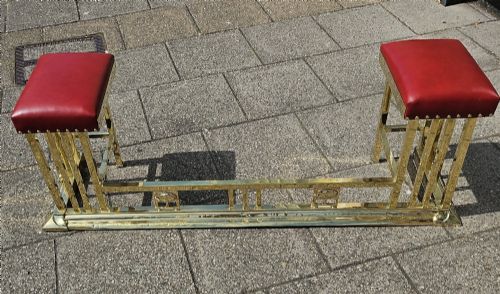
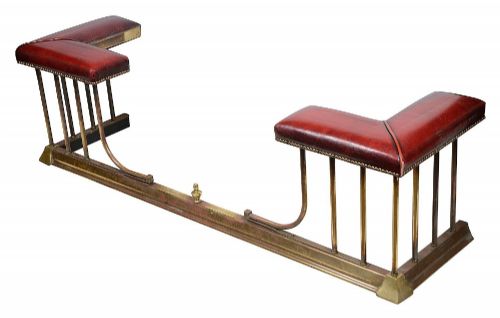
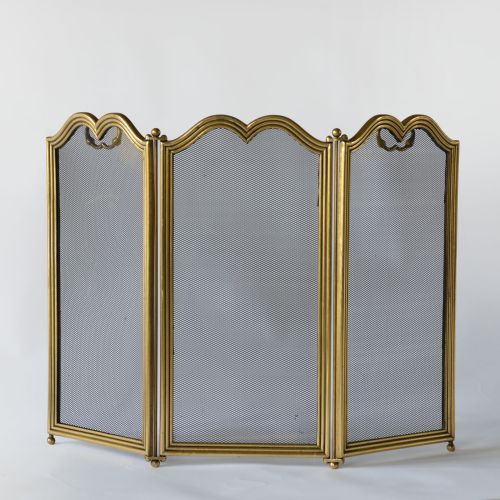
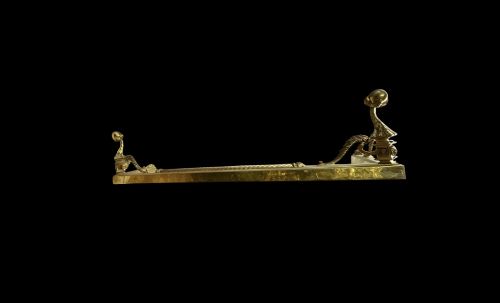
The most common forms on this page are club fenders, featuring upholstered leather seats flanking the hearth, alongside pierced brass kerbs and folding wire mesh fire guards. Materials range from polished brass and cast iron to steel and wrought iron. Many incorporate leather seats in tan or green tones.
The styles reflect Victorian, Edwardian, and Art Deco tastes alongside English Country House aesthetics. You will find standard hearth surrounds alongside nursery fenders equipped with rails or mesh screens for added protection.
Materials and construction methods
Makers utilised heavy metals such as brass, cast iron, steel, and copper to construct the structural frames of these hearth surrounds. Metalwork involved casting, piercing, and forging to create decorative patterns and robust corner supports.
Upholstered club fender seats were built with sturdy internal frames covered in leather, often secured with traditional studding. Wire mesh and iron wirework were woven carefully for spark guards and nursery screens.
Traditional Fireplace Fender Retail Price Guide 2026
Typical asking prices for traditional fireplace fender among the pieces listed under this phrase on Sellingantiques today, from the lower quarter to the upper quarter. They describe what is for sale here now, not the wider market.
Listings feature brass, iron, steel, copper, and wire mesh alongside leather upholstery in mature tan and green shades.
Distinctions in craftsmanship
Quality rests in the weight of the metal and the precision of the assembly, from thick cast brass sections to finely pierced galleries. Substantial frames display crisp casting and robust structural joins that endure decades of use.
Upholstery standards elevate certain club fenders, where high-grade leather, tight buttoning, and firm padding distinguish bespoke seating from simpler iterations. The integration of solid steel components and detailed decorative metalwork also marks out finer examples.
The Traditional Fireplace Fender Glossary
- Club fender
- A low, metal hearth surround featuring upholstered corner or top seats where people sat close to the fire. These originated in gentlemen's clubs and country houses.
- Nursery fender
- A tall protective guard, often incorporating wire mesh or a clothes rail, designed to keep children safely away from the hearth. They surround the fire completely.
- Kerb
- The low stone or metal border defining the edge of the fireplace hearth. Metal kerbs often incorporate decorative pierced brass or cast iron.
- Spark guard
- A folding or fixed screen made from wire mesh or wirework designed to catch flying embers. They sit directly across the fireplace opening.
Traditional Fireplace Fender: Frequently Asked Questions
What is a club fender?
A club fender is a hearth surround fitted with cushioned leather seats on top. They provide extra seating directly around the fire.
Originating in nineteenth-century country houses and gentlemen's clubs, they allowed people to sit close to the warmth of the hearth.
How do I choose the right size?
Measure the width and depth of your fireplace hearth carefully before selecting a fender. Ensure there is adequate clearance around the fire opening for the metal frame to sit securely.
Consider whether you want a standard low kerb or a wider club fender with seating, depending on the available floor space in your room.
Are these fenders adjustable?
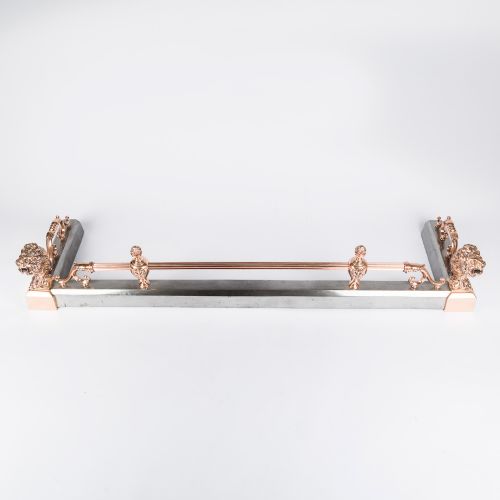
Some period pieces include extending mechanisms designed to fit varying hearth dimensions. These allow the metal frame to slide outwards to the desired length.
Fixed-size fenders require precise measurement to match your hearth, whereas extending versions offer flexibility for different fireplace widths.
How do I care for brass and leather?
Clean brass frames using appropriate metal polishes applied gently to avoid disturbing any patination. Leather seats benefit from regular conditioning to maintain their supple texture.
Avoid harsh chemical cleaners on antique metalwork and leather surfaces to preserve the original finish acquired over the decades.