

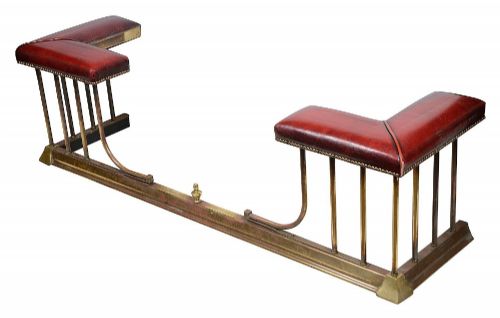


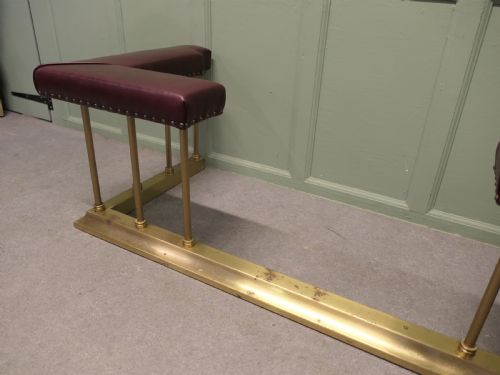


Brass Club Fender
A brass club fender brings low, seated comfort to the hearth with polished metal and leather.
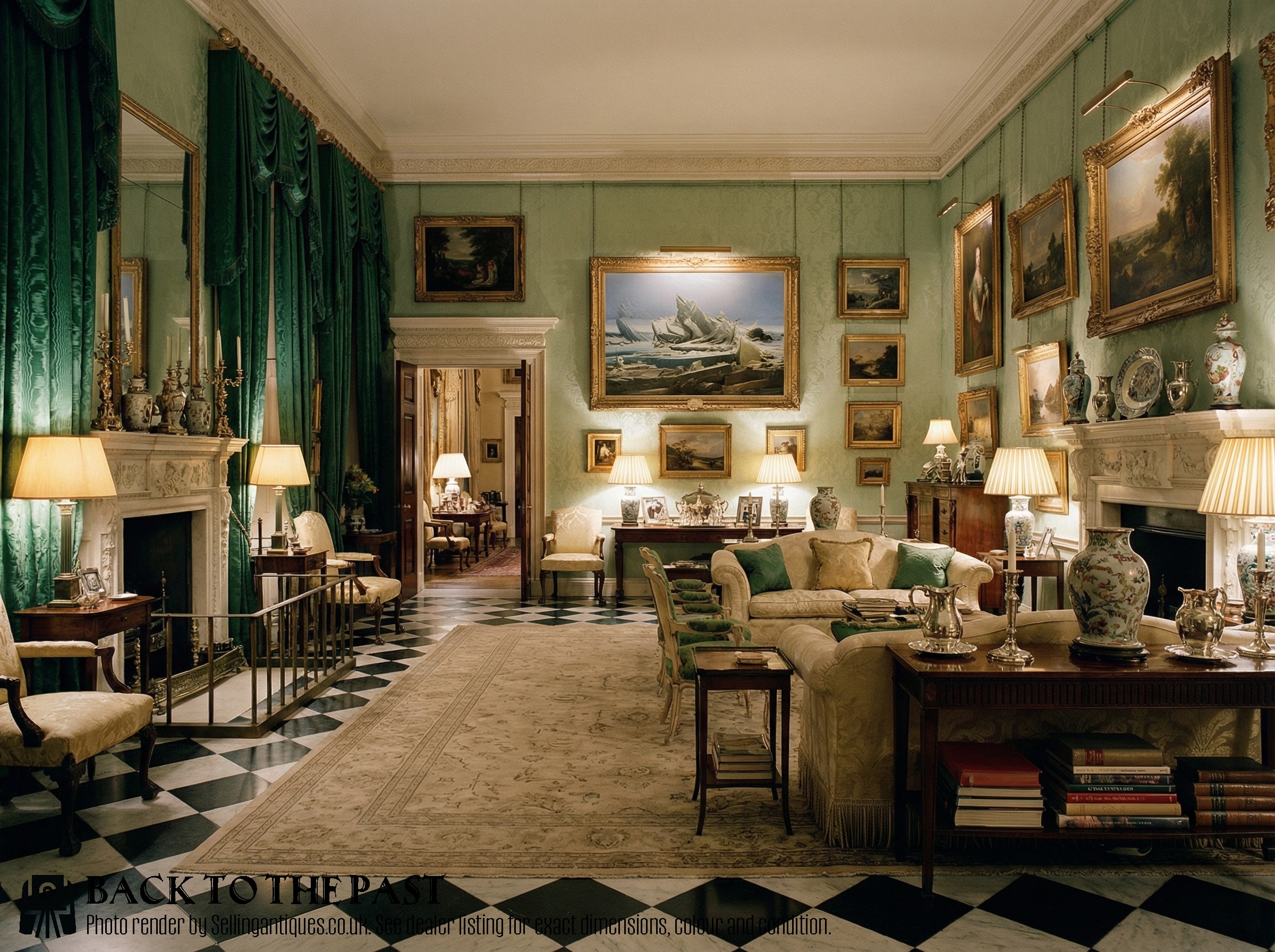
Brass Club Fender
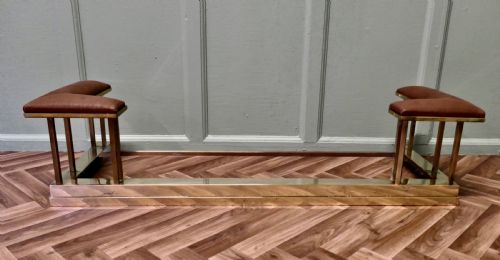
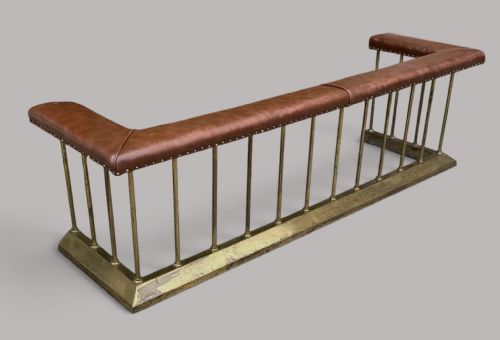
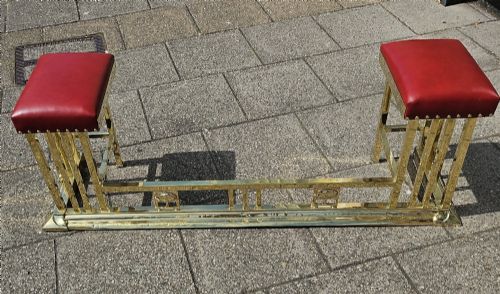
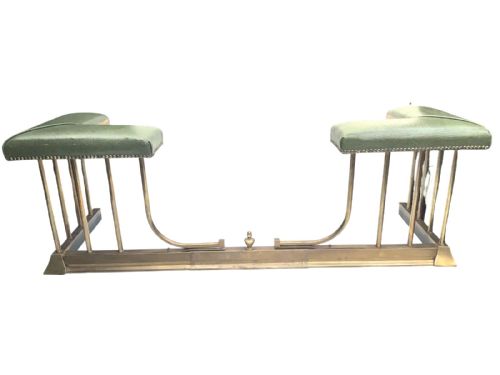
A brass club fender forms a low, padded hearth seat constructed around an open fireplace, designed to bring company close to the fire. When searching this phrase, you find substantial tubular frames topped with upholstered benches on either side of the grate.
The pieces appearing here span the nineteenth century, the Edwardian era, and the art deco period of nineteen twenty. Most examples combine gleaming brass or copper frameworks with tan, green, or dark leather seating.
Makers adapted these frames in various formats, including extending versions and box configurations. They served in gentleman's clubs and country houses to provide warm, practical seating directly upon the floor.
How they were made
Craftsmen built these fenders using substantial tubular brass or copper frameworks, sometimes incorporating cast steel or iron for structural strength. Metal sections were polished, pierced, or patinated to achieve a gleaming or subdued metallic finish.
Top seats were constructed with sturdy wooden bases and stuffed with traditional padding before being upholstered in durable materials. Leather predominated, particularly in buttoned chesterfield styles and mature tan or green shades, though velvet cord also appeared.
Brass Club Fender Retail Price Guide 2026
Typical asking prices for brass club fender among the pieces listed under this phrase on Sellingantiques today, from the lower quarter to the upper quarter. They describe what is for sale here now, not the wider market.
Some nineteenth century gentlemen enjoyed their club fender seating so thoroughly that special extending mechanisms were invented just to accommodate extra guests by the coals.
What varies in quality
Quality rests in the heaviness of the metal framework and the precision of the corner joints and spindle work. Substantial gauge brass and cast components denote a superior build that withstands regular seating use.
The grade of the leather upholstery and the integrity of the internal padding differentiate standard production from finer workshop output. Original hides with deep patination hold greater character than later replacements.
Maple & Co
The Brass Club Fender Glossary
- Club Fender
- A low upholstered hearth seat built over a metal frame. It allows people to sit directly in front of an open fire.
- Chesterfield Seat
- A deep buttoned leather upholstery style often used on the top benches of these fenders. It provides a cushioned and traditional surface.
- Extending Fender
- A design featuring a sliding mechanism that adjusts the overall width. This allowed the structure to fit varying fireplace dimensions.
- Pierced Fender
- Metalwork decorated with open fretwork patterns or cutouts. This technique added ornamental detail to the fire guard.
- Polished Brass
- Metal treated to produce a bright, reflective surface finish. It forms the primary structural material for Edwardian and Victorian examples.
Brass Club Fender: Frequently Asked Questions
What is a brass club fender used for?
These pieces provide low, comfortable seating directly around the hearth. They kept guests close to the warmth of the fire in large rooms.
Historically, they were common in country houses and gentlemen's clubs where fires burned continuously through winter months.
How do I identify an Edwardian club fender?
Edwardian examples often feature bright polished brass frames paired with buttoned leather or velvet seats. Their design tends to be restrained and symmetrical.
Many incorporate adjustable extending mechanisms that became popular during the early twentieth century.
Are all club fenders made of brass?
While brass is the most common material, makers also utilised copper, cast steel, and iron. Some pieces combine brass frameworks with copper details or steel bases.
Upholstery materials also vary, ranging from mature tan leather to green hides and velvet cord.
How do I fit a club fender to a fireplace?
Measure the width and depth of your hearth space carefully before selecting a fender. Many period examples are extendable, allowing you to adjust the metal frame for an exact fit.
Ensure there is adequate clearance between the metal structure and the active fire source for safety.