



Traditional Club Fender
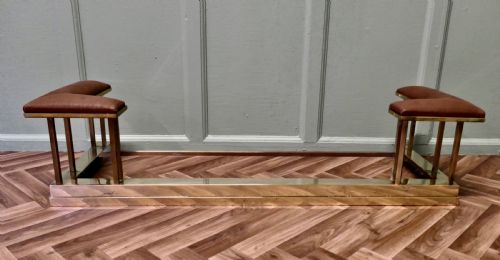
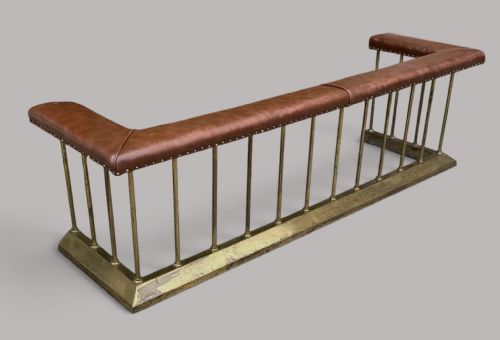
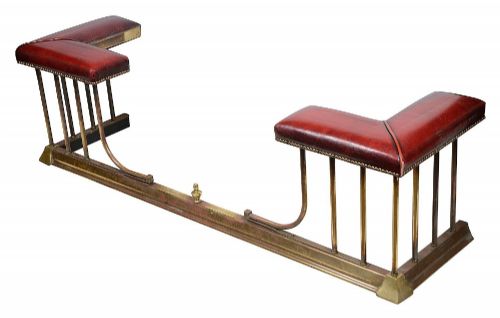
A traditional club fender brings fireside seating into the room, combining sturdy metal frames with low leather pads for warmth and conversation.

Traditional Club Fender
A traditional club fender surrounds a hearth with low corner seats, keeping company close to the fire. Most examples encountered here date from the Victorian and Edwardian periods, stretching into the early decades of the twentieth century.
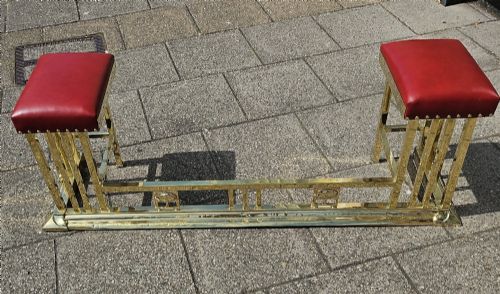
Makers built these hearth surrounds in brass, steel, wrought iron, and copper, often pairing the metal framework with upholstered leather seats. Forms range from simple polished brass tubes to robust cast steel and oak structures.
The style fits comfortably within English Country House and Art Deco interiors, bridging the gap between functional fireside accessory and domestic furniture.
How traditional club fenders were made
Metalworkers formed the skeletal frames using polished brass, cast steel, wrought iron, or copper, joined securely to withstand the heat and weight of daily fireside use. Some pieces combine brass with blackened iron or silvered finishes for textural contrast.
Upholsterers fitted the low corner seats with mature tan, green, or castle green leather, frequently employing Chesterfield buttoning over supportive padding. Oak or mahogany timber tops also appear, providing a firmer surface alongside the hide.
Traditional Club Fender Retail Price Guide 2026
Typical asking prices for traditional club fender among the pieces listed under this phrase on Sellingantiques today, from the lower quarter to the upper quarter. They describe what is for sale here now, not the wider market.
Materials recur in polished brass, mature leather, cast steel, wrought iron, and solid oak timbers.
What varies in quality
Quality rests in the gauge of the metalwork and the rigidity of the frame construction, separating lighter domestic pieces from substantial institutional or club-sourced examples. Heavier gauge brass and solid steel bases ensure the structure remains steadfast over decades of use.
The standard of upholstery and the selection of hide dictate the character of the seating pads. Supple, real leather upholstery with careful stitching and deep buttoning marks out the finer productions from this era.
The Traditional Club Fender Glossary
- Club fender
- A low fireside surround incorporating upholstered corner seats designed for proximity to the hearth. This form originated in gentlemen's clubs before entering domestic drawing rooms.
- Chesterfield seat
- An upholstered cushion style featuring deep buttoning and padded rolls. This technique provides a firm yet comfortable seat for fireside lounging.
- Wrought iron
- Iron beaten and shaped by hand into decorative and structural forms. It offers a dark, textured contrast to bright polished brass.
- Hide
- Natural animal skin used for durable upholstery. Mature tan and green hides are typical of traditional English hearth seating.
Traditional Club Fender: Frequently Asked Questions
What is a club fender?
A club fender is a low metal hearth surround featuring integrated upholstered seats at the corners. It allows people to sit directly around the fireplace for warmth.
Originating in nineteenth-century gentlemen's clubs, these pieces soon found a permanent home in country house drawing rooms as both furniture and fire guard.
How do I choose the right size?
Measure your fireplace hearth width and depth carefully to ensure the fender clears the stone or brick surround comfortably. Leave adequate space around the fire opening for safety.
Consider the height of the seat pads in relation to your existing fireside chairs and hearth level for a balanced room arrangement.
How do I care for the leather?
Maintain the leather seats by applying a suitable nourishing balm periodically to keep the hide supple and prevent cracking. Avoid placing the fender too close to excessive direct heat.
Clean the metal frames gently with appropriate metal polish or a soft cloth depending on whether the surface is polished brass, steel, or wrought iron.
Can I date a club fender?
Dating relies on observing the combination of materials, construction methods, and stylistic cues such as Art Deco geometry or Victorian cast ornamentation. Edwardian and Victorian examples often display distinct metal casting techniques.
Examining the wear on the leather and the patina of the brass or steel helps place the piece within the nineteenth or early twentieth century.