
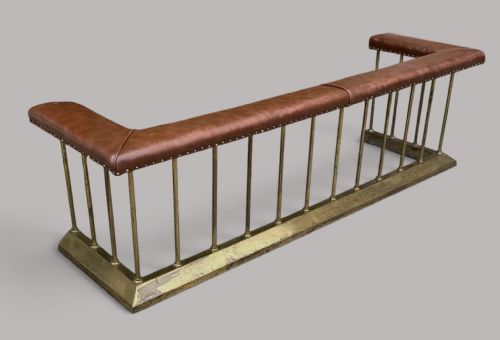

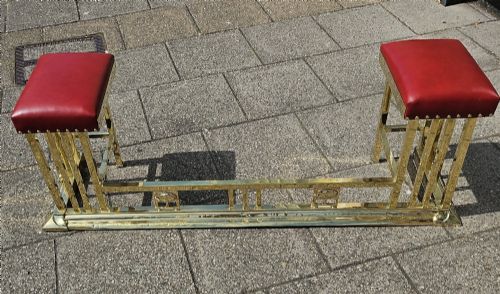
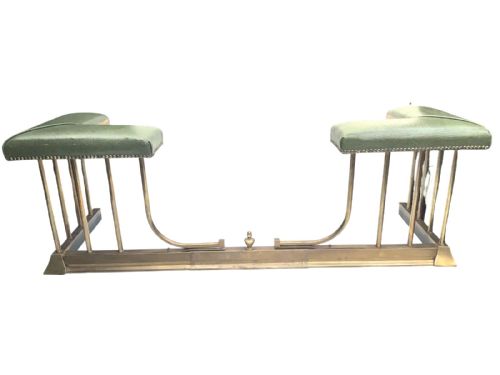
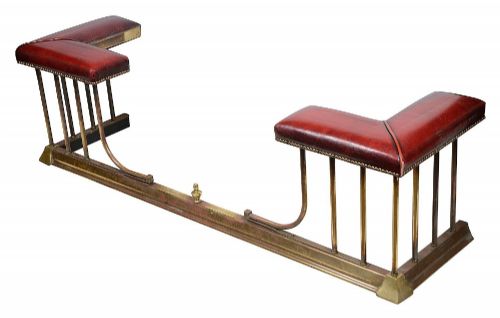


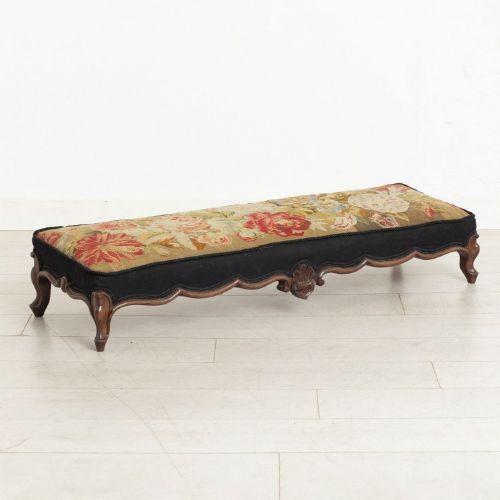
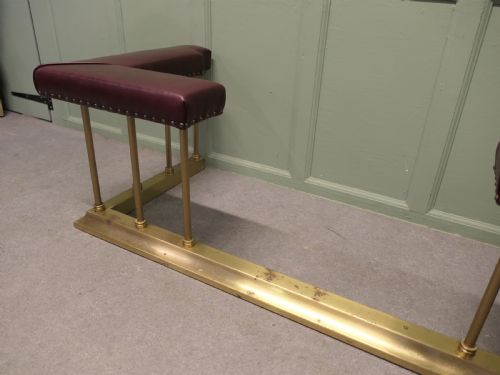


Padded Fireplace Fender
A padded fireplace fender combines hearthside seating with solid metal framing, offering a practical seat close to the fire.
What a padded fireplace fender is
A padded fireplace fender provides a low upholstered seat surrounding the hearth, built to bring people closer to the warmth of an open fire. These pieces combine metal frames with cushioned tops designed for sitting.
The versions met on this page span Victorian, Edwardian, and 1920s periods, taking forms such as club fenders, fireside benches, and fender stools. They originate from British domestic settings, particularly English country houses.
Materials range from polished brass and copper to wrought iron frames fitted with leather, textile, or walnut bases. Marquetry inlay sometimes appears on the wooden components of these fireside accessories.
How they were made
Makers constructed the structural frames from solid brass, copper, or wrought iron, often shaping the metal through casting and joining techniques. Walnut and other timbers were utilised for base sections and occasional marquetry details.
The top rails were fitted with upholstery using leather or durable textiles padded for fireside seating. Traditional stuffing methods provided firm support suitable for regular use in domestic hearths.
Retail Price Guide 2026
Typical UK retail prices for padded fireplace fender, calculated from the Sellingantiques database of over a million retail prices indexed since 2003. This retail price guide relies exclusively on Sellingantiques data; no external sources or auction records are used, so the figures do not describe the wider market.
Listings feature brass, copper, and wrought iron combined with leather, textile, and walnut across the Edwardian and Victorian periods.
What varies in quality
The substance of the metal frame dictates much of the quality, separating heavy, substantial brass constructions from lighter alternatives. Heavier gauge metalwork provides greater structural rigidity around the hearth.
Upholstery finish and the precision of the joinery mark the upper tier of production, particularly where walnut timber or marquetry inlay is integrated. Finer examples display careful attention to the proportions of the cushioned seat relative to the metal base.
The Padded Fireplace Fender Glossary
- Club Fender
- A low fireside seat with an open metal frame and a padded top running around three sides of the hearth. This form allowed sitters to warm themselves directly in front of the fire.
- Fender Stool
- A low stool designed to fit the hearth area, often constructed from walnut with upholstered seating. These pieces share the domestic purpose of fireside seating.
- Marquetry Inlay
- Decorative woodwork where small pieces of veneer are fitted into a solid timber base to form patterns. This technique appears on specific wooden components of hearth accessories.
- Wrought Iron
- Iron heated and hammered into shape by a blacksmith to form sturdy structural frames. This material provides robust support for traditional fireplace furniture.
Frequently Asked Questions
What is a club fender?
A club fender is a specialised fireside seat featuring a metal structure with upholstered top rails. It sits directly around the hearth to provide comfortable seating close to the fire.
These pieces were common fixtures in large reception rooms and country houses, combining metalwork and upholstery for daily use.
How do I date a brass fender?
Dating relies on stylistic markers, construction techniques, and materials associated with specific decades. Pieces from the Victorian era often show heavier brass work, while Edwardian and 1920s examples introduce different proportions and decorative details.
Examining the underlying timber, upholstery style, and metal casting methods helps place the piece within its historical period.
Are these fenders comfortable to sit on?
Padded fireplace fenders were specifically built to serve as functional seats around the hearth. The upholstered top rails use traditional padding designed to support an adult sitting close to the fire.
The height and depth of the cushion vary between individual club fenders and fireside benches.
What materials were used for frames?
Makers predominantly used brass and copper for the structural framework of these hearth accessories. Wrought iron also appears in certain examples, providing a darker, heavier metal finish.
Some designs incorporate walnut bases beneath the metalwork, occasionally featuring marquetry inlay.