



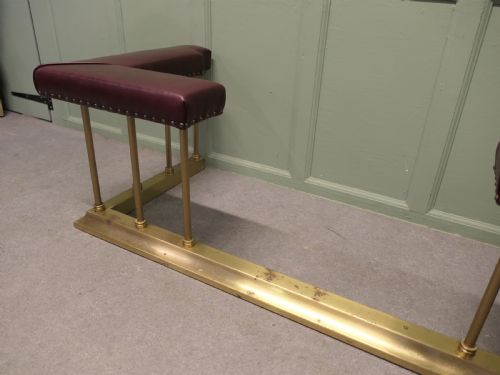


Brass Hearth Seat
A brass hearth seat offers low fireside perching, bringing polished metal and padded leather together around the hearth.
Brass Hearth Seat
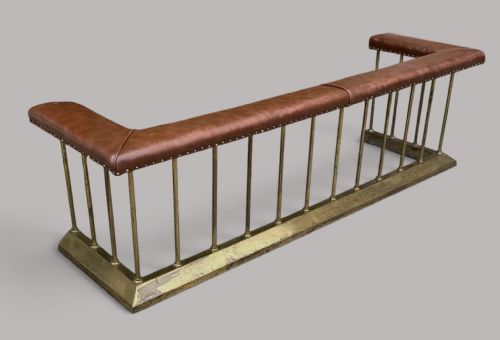
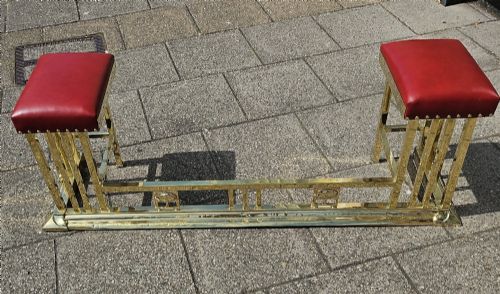
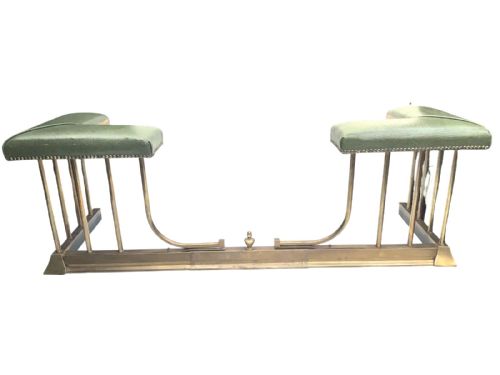
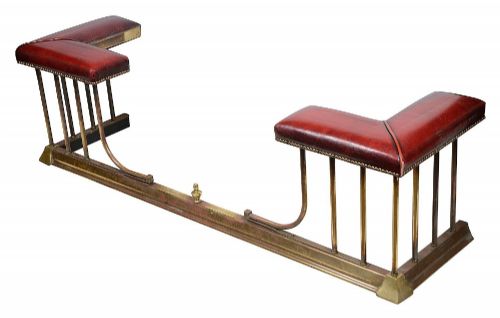
A brass hearth seat, commonly known as a club fender, combines a sturdy metal frame with a low upholstered bench designed to sit directly around an open fireplace.
The selections span the nineteenth century, the Edwardian era, and the Art Deco period, offering low-slung seating traditionally used for warming oneself near the fire.
Makers utilised brass as the primary metal, often pairing it with iron, steel, or copper elements to create the characteristic corner framework of the fireside seat.
Materials and construction
Frames are constructed from solid brass tubing or cast steel, sometimes accented with copper, iron, or silvered finishes to add visual depth to the hearth.
Seats are upholstered in durable materials such as mature tan leather, green leather, velvet, and traditional fabric, often finished in Chesterfield styles with buttoning.
Originally designed so gentlemen could converse and warm their shins without blocking the entire fire.
Judging quality and proportion
The substance of the metalwork defines the piece, distinguishing heavy, substantial cast and tubular brass frames from lighter modern reproductions.
The quality of the upholstery and the integrity of the leather seating pads separate utilitarian frames from finer domestic examples.
The Brass Hearth Seat Glossary
- Club fender
- A low, padded fireside seat built around an open hearth. It provides extra seating directly in front of the fire.
- Chesterfield seat
- A style of deep-buttoned upholstery commonly applied to leather fireside benches. This technique secures the padding and creates a distinctive tufted pattern.
- Cast steel
- An alloy poured into moulds to create strong structural frames. It offers a darker, industrial alternative to polished brass.
Brass Hearth Seat: Frequently Asked Questions
How do I place a brass hearth seat?
Position the metal frame directly in front of the fireplace opening, ensuring sufficient clearance for tending the fire.
Allow enough space on the hearth for the padded seat to function comfortably as a low bench.
Are these seats comfortable?
The upholstered leather or velvet top provides a firm, low perching spot close to the warmth of the hearth.
They are designed for short periods of sitting near the fire rather than lounging.
How do I clean brass and leather?
Polish the metal frame gently with a suitable brass cleaner to maintain its shine without damaging adjacent upholstery.
Treat the leather seat with a appropriate conditioner to keep the hide supple over time.
What periods do these pieces come from?
The selection includes pieces originating from the nineteenth century, the Edwardian era, and the Art Deco period.
Victorian and Edwardian examples make up the majority of the available hearth seating.