





Fireplace Seating Bench
A fireplace seating bench brings fireside comfort into the room, offering low, padded seating built directly around the hearth.
Fireplace Seating Bench
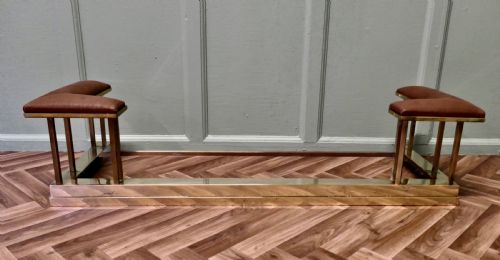
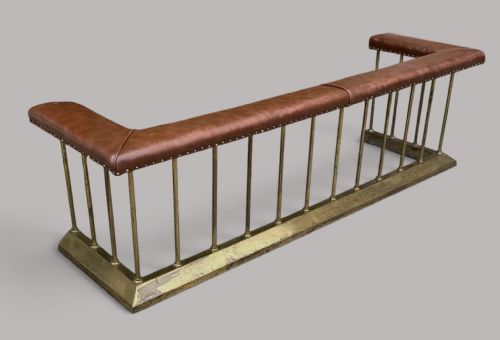
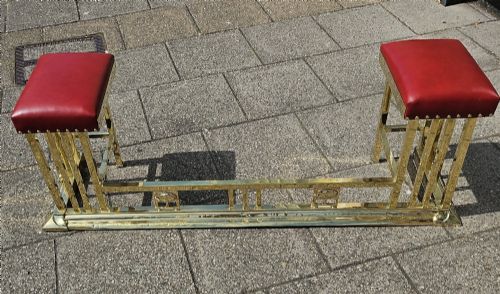
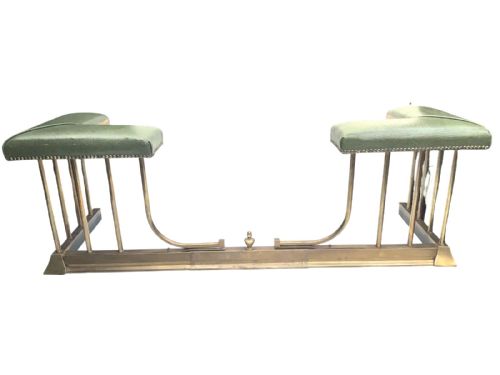
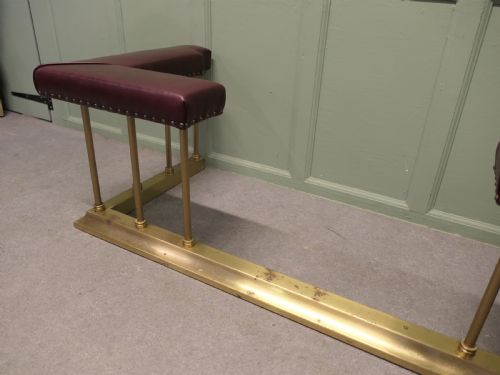
A fireplace seating bench most commonly appears in the form of a club fender, combining a low metal frame with a padded leather top designed for sitting right by the fire. These pieces emerge across the nineteenth and twentieth centuries, spanning Victorian, Edwardian, and Art Deco periods.
The form developed to provide comfortable seating at hearth height without blocking the warmth of the fire. Most examples meet the buyer as brass or steel frames paired with buttoned or plain leather upholstery.
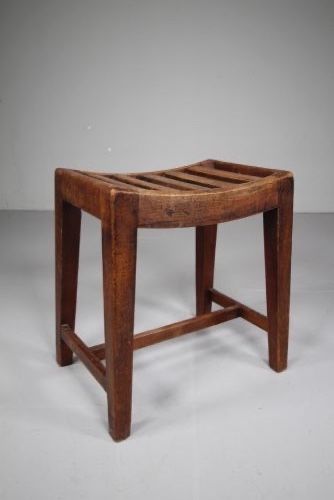
Alongside dedicated club fenders, the selection includes related fireside forms such as mahogany stools, oak settles, and wrought iron benches. These variations share a practical purpose of organising and inhabiting the space immediately surrounding the fireplace.
Materials and construction
Makers built the structural frames using heavy metals like brass, steel, iron, and copper, often combining them with substantial timber bases in oak or mahogany. These materials provided the necessary weight and stability for daily seating close to the heat of the hearth.
Upholstery relied on durable leather, frequently styled in the manner of Chesterfield buttoning or finished in mature tan and green shades, though textile coverings like Kilim also appear. Metal components were cast, polished, or left with the character of wrought iron and steel.
One robust nineteenth-century steel club fender arrived directly from the distinguished gentlemen's retreat known as The In & Out Club.
Distinctions in quality
Quality rests in the substantial weight of the metal frame and the integrity of the original construction, distinguishing heavy cast brass and steel from lighter or later reproductions. Substantial proportions and well-cast spindles show a higher degree of workshop skill.
The finish of the leather and the depth of its patina elevate the piece, particularly where original upholstery survives in sound condition. Superior examples balance robust engineering with refined details such as shaped corners and silvered or polished metal surfaces.
William Birch
The Fireplace Seating Bench Glossary
- Club Fender
- A low-framed seat surrounding a fireplace, constructed with a metal base and an upholstered top. This form allows people to sit level with the hearth.
- Chesterfield Seat
- Deeply buttoned leather upholstery traditionally featuring tufting. It provides firm yet cushioned support on fireside benches.
- Settle
- A wooden wooden bench with high backs and arms designed to block draughts. Early examples often feature panelled construction and concave barrel shapes.
- Kilim
- A flat-woven textile used historically for upholstery. It brings patterned colour to nineteenth-century footstools and seating.
Fireplace Seating Bench: Frequently Asked Questions
What is a club fender?
A club fender is a specialised fireside bench with a metal frame and a padded leather seat that surrounds the hearth. It creates practical seating right where the warmth gathers.
Originating in grand English houses, these pieces allowed family and guests to sit close to the fire during colder months without obstructing the opening.
How do I date a brass fender?
Dating relies on examining the metal casting techniques, the style of the frame, and the wear on the leather upholstery. Victorian and Edwardian examples often display heavier brass work and specific corner joints.
Later interpretations from the Art Deco period introduce sleeker lines or heavier iron components while retaining the traditional low seating format.
Can these benches fit any fireplace?
These benches come in various dimensions, so measuring the hearth width and depth is essential before placing one. They are designed to sit around the protruding hearth stone rather than inside the fireplace recess.
Careful consideration of the clearance needed for fire tools and guards ensures the bench integrates safely into the room.
How do I care for leather seats?
Leather upholstery benefits from regular dusting and occasional treatment with appropriate conditioning balms to prevent drying out near the heat of a fire. Keeping the leather nourished preserves its texture and natural patina.
Avoiding direct, intense heat and placement too close to active flames protects both the leather hide and the underlying padding.