
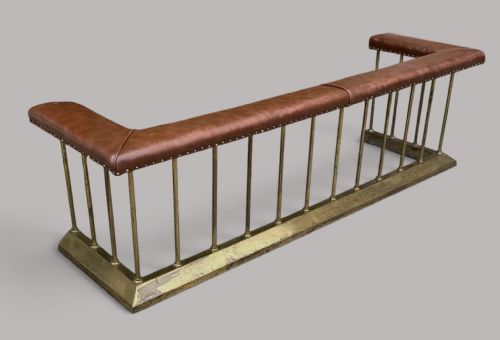

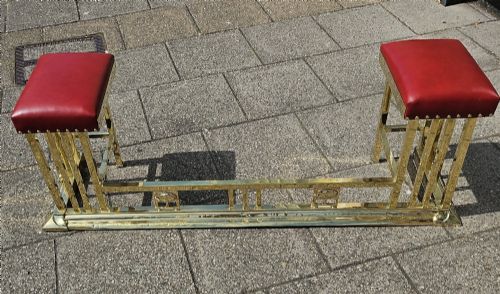
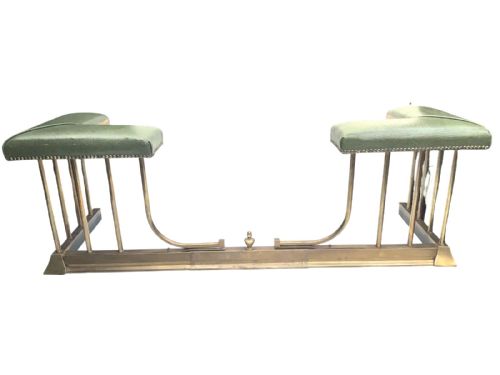
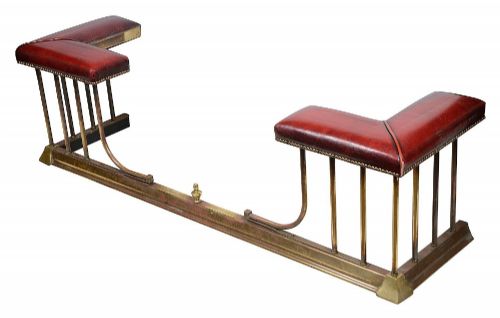


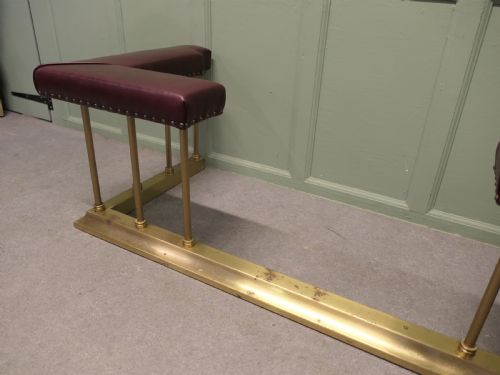


Padded Hearth Fender
A padded hearth fender brings warmth and low seating right to the fire, combining sturdy metal framework with a comfortable upholstered top.
Padded Hearth Fender
A padded hearth fender is a substantial fireside accessory that doubles as a low seat around the hearth. The form centres on a sturdy metal frame, most frequently fashioned from brass, steel, or wrought iron, which surrounds the fireplace opening.
On this page, the version you are most likely to meet is the Victorian or Edwardian club fender, often featuring a polished brass base fitted with a tan leather or velvet top. These pieces date principally from the nineteenth and early twentieth centuries, spanning the Victorian and Edwardian eras alongside later Art Deco interpretations.
Originating in English country houses and gentlemen's clubs, these fenders offered a practical way to sit close to the fire. Today, they survive in various configurations, including long foot stools and brass extenders designed to fit diverse hearth dimensions.
How they were made
The construction relies on combining robust structural metals with traditional upholstery techniques. Frameworks utilise cast steel, wrought iron, brass, and sometimes copper, shaped to form the protective barrier and seating support.
The top rail is padded and covered in durable materials such as leather, velvet, or fabric. Craftsmen secured these coverings over firm stuffing to withstand the heat and heavy daily use associated with the hearth.
Listings span the Victorian and Edwardian periods, stretching into the nineteen-thirties with Art Deco designs.
What varies in quality
Quality in these pieces rests upon the substance of the metalwork and the integrity of the frame. Heavier gauges of brass and solid cast steel indicate superior manufacture compared to lighter, more decorative alternatives.
The finer examples display careful attention to structural proportion and secure joinery. Furthermore, the quality of the hide used for the upholstery and the precision of the buttoning distinguish higher-grade pieces from simpler domestic versions.
The Padded Hearth Fender Glossary
- Club fender
- A low, padded seat built around a fireplace hearth. It originated in Victorian gentlemen's clubs to maximise warmth.
- Extender
- A section of a fender designed to adjust the overall length. This allowed the metal barrier to fit various fireplace dimensions.
- Fender stool
- A low footstool styled to sit upon or match a hearth enclosure. These often mirror the proportions of traditional club fenders.
- Wrought iron
- Iron beaten into shape by hand while hot. This material provides strong, fibrous structural support for fireside metalwork.
Padded Hearth Fender: Frequently Asked Questions
What is a club fender?
A club fender is a low, U-shaped seat that surrounds a fireplace hearth. It combines a metal frame with padded leather upholstery.
Originally designed for gentlemen's clubs and country houses, it allowed people to sit directly beside the fire for warmth.
How do I date a fender?
Dating relies on examining the materials, construction methods, and prevailing design styles of the period. Victorian and Edwardian examples often feature heavy brass or cast iron frames combined with buttoned leather.
Later pieces from the Art Deco period introduce sleeker lines and heavier ironwork. Makers also sometimes stamped production details into the metal base.
Can these fenders be resized?
Many traditional club fenders were built to fit specific hearth dimensions, and altering them requires specialist metalworking skills. Some period examples feature built-in extenders designed to adjust the overall length.
Professional intervention ensures that any structural modification maintains the balance and stability of the original metal frame.
How do I care for the leather?
Leather upholstery requires regular dusting and occasional treatment with appropriate conditioning balms to prevent drying out. Keeping the hide nourished helps maintain its suppleness.
Positioning the fender at a sensible distance from excessive direct heat also protects the leather and the padding beneath from premature degradation.