

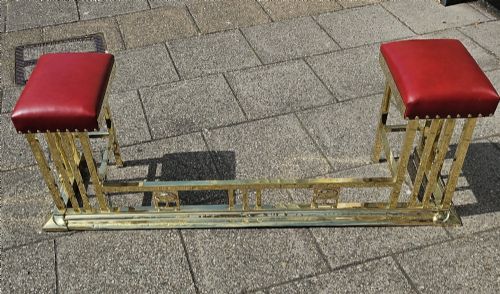


Upholstered Fireplace Fender
An upholstered fireplace fender brings low corner seating directly to the hearth, combining metal or wood frames with padded leather or textile tops.
Upholstered Fireplace Fender
An upholstered fireplace fender forms a low seating barrier around the hearth, appearing in Victorian, Edwardian, and Art Deco designs. These pieces function as both a guard and a seat, often taking the form of a club fender with padded top rails.
The materials span brass, cast steel, iron, mahogany, and walnut paired with leather, velvet, and various textiles. Buyers on this page most frequently encounter brass frames fitted with leather seats dating from the late nineteenth and early twentieth centuries.
How they were made
Makers constructed the structural frames using heavy cast iron, steel, or polished brass, occasionally employing mahogany, walnut, or oak for timber versions. These rigid skeletons provided the necessary weight and durability to withstand daily use near the fire.
Seating surfaces utilised traditional upholstery methods, combining durable textiles, velvet, or leather with internal padding. Studded leather and buttoned Chesterfield finishes secured the upholstery firmly to the metal or wooden top rails.
Upholstered Fireplace Fender Retail Price Guide 2026
Typical asking prices for upholstered fireplace fender among the pieces listed under this phrase on Sellingantiques today, from the lower quarter to the upper quarter. They describe what is for sale here now, not the wider market.
Listings feature periods ranging from the nineteenth century through the nineteen-thirties, spanning Victorian, Edwardian, and Art Deco styles.
What varies in quality
The substance of the metal frame dictates the overall quality, with heavy cast brass or steel offering greater solidity than lighter alternatives. Substantial weight ensures the structure remains stable against the hearth without shifting.
The choice of covering material and the precision of the joinery set finer examples apart from standard utility items. Premium hides, dense internal padding, and specialist framing indicate superior craftsmanship.
William Birch
The Upholstered Fireplace Fender Glossary
- Club Fender
- A low upholstered hearth seat with a metal or wooden frame, designed so people can sit directly beside the fire.
- Cast Steel
- An alloy melted in a crucible and poured into moulds, yielding strong, heavy structural components for Victorian and later frames.
- Chesterfield
- A deep-buttoned upholstery style often utilised on leather seat tops to create a patterned, padded surface.
- Arts and Crafts
- A design movement valuing honest construction and traditional materials, seen in specific heavy oak club fenders from the early twentieth century.
Upholstered Fireplace Fender: Frequently Asked Questions
What is a club fender?
A club fender is a hearth guard featuring built-in upholstered seats along the top rail. It allows people to sit close to the fire while containing stray embers.
Originating in gentlemen's clubs and large country houses, these pieces combined metal framework with comfortable leather tops for functional fireside seating.
How do I date a brass fender?
Dating relies on examining the weight of the brass, the style of the corner supports, and the specific manufacturing techniques used in the metalwork. Victorian examples often display heavier cast components, whereas Edwardian versions can incorporate slimmer profiles.
Comparing the upholstery style and any associated timber framing also helps narrow down the period of manufacture between the late nineteenth and early twentieth centuries.
Can these fenders fit modern fireplaces?
Many historical fenders fit standard hearth dimensions, but exact measurements of the inner and outer clearance are essential before placing one in a room. Because sizes varied widely during the Victorian and Edwardian periods, checking the depth and width prevents fitting issues.
Adjusting the hearth surround or choosing a custom-proportioned piece sometimes proves necessary for non-standard fireplaces.
What materials were used for seats?
Leather served as the primary covering for club fenders due to its durability and resistance to sparks, often appearing in tan, castle green, or dark shades. Velvet and heavy woven textiles were also utilised on specific footstool variants and decorative hearth seats.
Internal padding provided firm support for sitting, secured with decorative brass studs along the wooden or metal foundation.