




Vintage Club Fender
A vintage club fender brings fireside seating and solid brass, steel or oak framework straight into the hearth of a room.
Vintage Club Fender
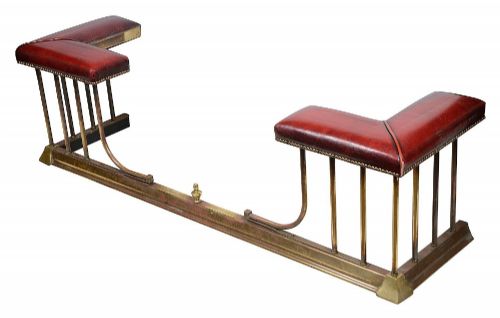
A vintage club fender combines a low fireside seat with a protective hearth barrier, offering an upright stance that frames an open grate. These pieces emerged to keep the chill away from the fire while providing convenient low benches for warming feet.
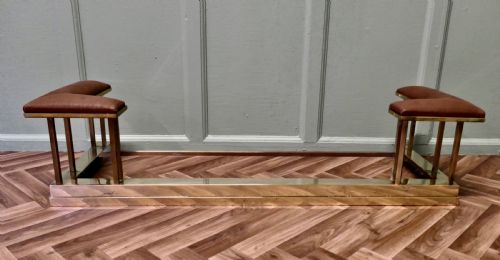
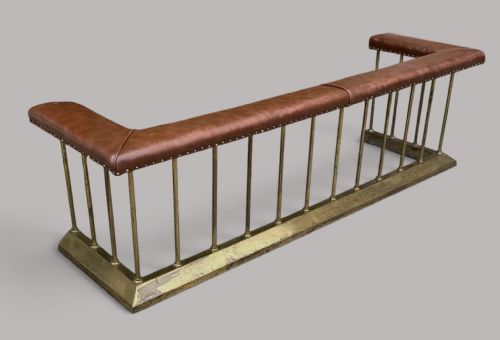
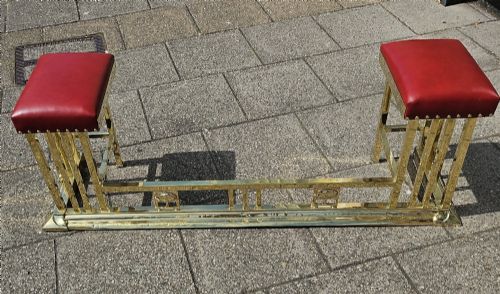
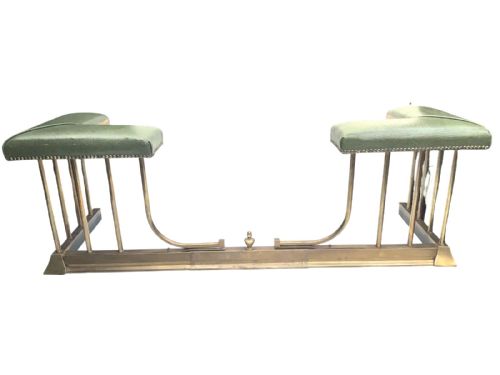
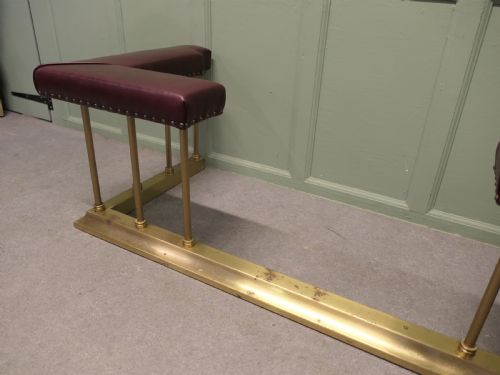
The most common examples encountered on this page date from the Victorian and Edwardian eras through to the Art Deco period. They typically feature tubular metal frames fitted with leather upholstered top rails for seating.
Makers utilised sturdy materials to withstand daily hearth use, resulting in substantial constructions of brass, steel, iron and occasionally carved oak. Such designs suit period fireplaces and modern hearths alike, anchoring the room with functional period presence.
Materials and construction
Metalwork forms the backbone of these pieces, utilising polished or patinated brass, heavy iron and structural steel for the main frame. Joinery relies on secure mechanical fixings and solid corner brackets to bear the weight of sitters.
Upholstered top rails employ durable leather, such as tan or green hides, stretched over firm padding and secured with traditional studding. Oak and wrought iron elements appear in specific Arts and Crafts variants, introducing carved timber details and heavier forged components.
Current listings span the nineteenth century through to the 1940s, featuring brass, steel, iron, oak and leather materials.
Distinctions in quality
Substantial gauge metal distinguishes robust examples from lighter frames, ensuring the structure remains rigid under regular use. Heavy brass tubing and thick steel profiles indicate superior workshop production.
Leather upholstery quality and the integrity of the internal padding separate standard production from finer bespoke commissions. Premium pieces feature carefully stitched hides and dense stuffing that retains its supportive shape over decades.
William Birch
The Vintage Club Fender Glossary
- Club fender
- A low fireside seat built around three sides of a fireplace hearth. It typically includes upholstered top rails for seating and an open metal base.
- Chesterfield seat
- A style of deep-buttoned or plain leather upholstery commonly applied to the top rails of a fender. This provides a cushioned bench surface for sitting close to the grate.
- Art Deco
- A design style spanning the 1920s and 1930s characterised by geometric lines and streamlined forms. Pieces from this era often pair heavy iron or brass with sleek leather finishes.
- Arts and Crafts
- A movement prioritising traditional craftsmanship and visible construction methods. Fenders from this tradition often incorporate carved oak timber and wrought iron work.
- Extender
- A mechanical feature allowing the width of the fender to be adjusted to fit different hearth dimensions. This mechanism requires precise engineering to maintain stability.
Vintage Club Fender: Frequently Asked Questions
How do I choose the right size fender?
Measure the width and depth of your hearth stone carefully before selecting a fender. Ensure there is adequate clearance between the metal frame and the fireplace opening for safety.
Account for the thickness of the upholstered rails when checking furniture placement around the chimney breast. Adjustable variants offer flexibility if your hearth dimensions are non-standard.
Can these fenders be adjusted in width?
Some specific models feature sliding extension mechanisms designed to fit varying fireplace widths. Check the individual listing details to confirm if an adjustable frame is present.
Fixed-size models require exact measurements of your hearth space to ensure correct proportion and fit. Altering a fixed metal frame requires specialist metalwork intervention.
How should I clean the leather seats?
Wipe the leather surfaces gently with a soft, damp cloth to remove dust and surface debris. Avoid harsh chemical cleaners that can dry out mature hide.
Apply a suitable leather balm periodically to maintain suppleness and preserve the natural tone of the leather. Protect the hide from direct, intense heat sources to prevent cracking.
What metal maintenance is required?
Polished brass and steel benefit from occasional wiping with a dry microfiber cloth to maintain their sheen. Avoid abrasive scouring pads that can scratch the protective surface metal.
Let patinated brass age naturally if you prefer a deeper, darker historical finish rather than a bright shine. Ensure the metal remains dry to prevent oxidation in damp rooms.