



Bronze Hearth Fender
A bronze hearth fender frames the hearth with weight and polish, protecting the room and completing the fireplace scheme.
Bronze Hearth Fender
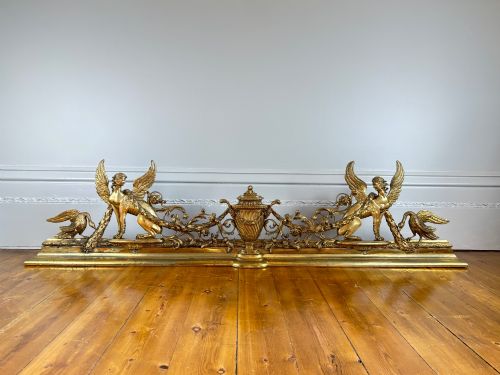
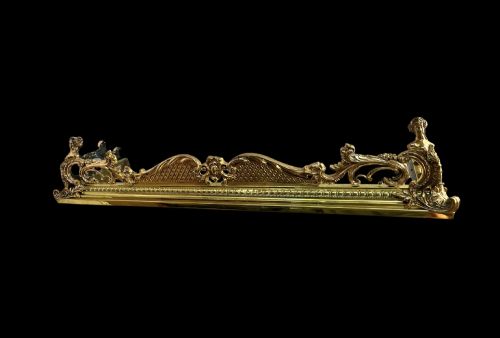
When you search for a bronze hearth fender, you are looking at heavy metal surrounds designed to contain embers and anchor the fireplace. The pieces on this page span the nineteenth century, including Victorian examples alongside French Rococo Revival and Neoclassical Revival forms.
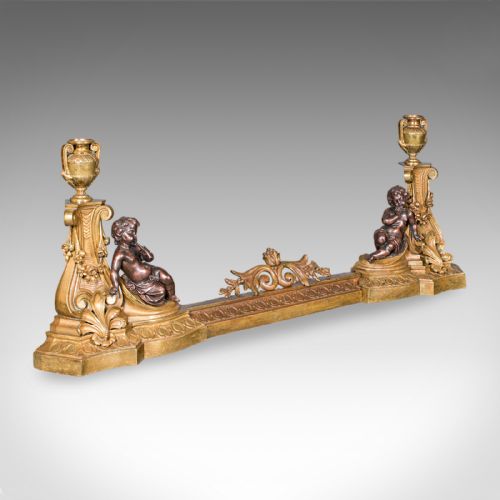
Most entries combine bronze with iron, brass, or polished steel, frequently taking adjustable formats or incorporating chenets and fire guards. You will encounter straightforward English fire kerbs alongside ornate continental designs featuring parcel gilt and ormolu finishes.
The domestic role of these objects remained consistent throughout the nineteenth century, serving as both a practical barrier and a decorative centrepiece for the hearth. Their survival depends on robust metal construction and enduring utility within the domestic interior.
What varies in quality
Quality rests upon the crispness of the cast ornament and the depth of the metal finishing. Superior examples display sharp chasing and secure joints, whereas lesser pieces show softer surface detail and simpler assembly.
The choice of materials also dictates standing, with heavy gilt bronze and ormolu commanding greater presence than mixed brass and iron alternatives. Ingenuity of mechanism in adjustable models further separates standard production from finer workshop output.
Bronze Hearth Fender Retail Price Guide 2026
Typical asking prices for bronze hearth fender among the pieces listed under this phrase on Sellingantiques today, from the lower quarter to the upper quarter. They describe what is for sale here now, not the wider market.
Some nineteenth-century hearth guards include sliding expansion joints so servants could resize them after sweeping.
E F Caldwell New York
The Bronze Hearth Fender Glossary
- Ormolu
- Gilded bronze produced by applying a mercury and gold amalgam to a bronze base and heating it until the mercury vaporised. This technique creates a rich, durable golden surface seen on finer nineteenth-century furnishings.
- Chenet
- A French term for an andiron placed at the front of a hearth to support logs. These metal supports often match or accompany the design of the main fender.
- Kerb
- A low enclosing barrier around a fireplace opening. The term frequently describes simpler, linear fender designs of English manufacture.
- Patinated Bronze
- Bronze that has developed a surface colour through age or chemical treatment. This finish emphasises the underlying metal texture without heavy gilding.
Bronze Hearth Fender: Frequently Asked Questions
What is a bronze hearth fender?
A bronze hearth fender is a metal barrier placed on the floor around a fireplace opening. Its primary role is to contain ash and embers while framing the hearth.
These pieces range from plain nineteenth-century iron and bronze kerbs to elaborate French Rococo Revival surrounds with adjustable widths.
How do I choose the right size?
You measure the width of your fireplace opening and hearth stone to ensure the fender sits correctly in the space. Many nineteenth-century examples feature adjustable frames that allow you to expand or contract the width to fit.
Check whether the listed dimensions apply to the minimum or maximum extension before placing the piece.
Were these fenders used with andirons?
Some fender sets include matching chenets or andirons designed to sit within or alongside the metal guard. These paired items supported firewood while the outer surround caught falling debris.
French nineteenth-century examples frequently combine adjustable fender surrounds with decorative parcel gilt chenets.
How do I care for bronze and ormolu?
You maintain bronze and ormolu by dusting gently with a dry, soft cloth to prevent grime accumulation. Avoid harsh commercial metal polishes, which can strip away historic gilding and patination.
Gentle cleaning preserves the original surface finish achieved by nineteenth-century metalworkers.