

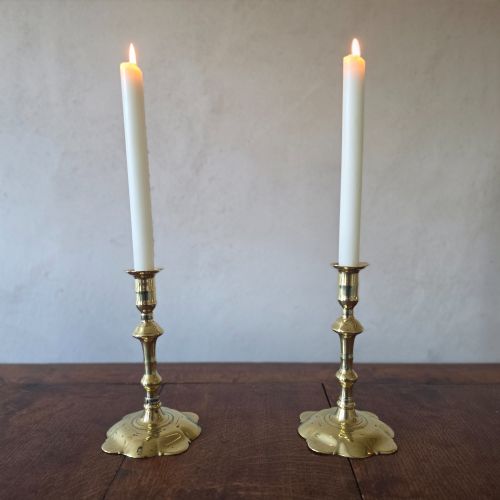
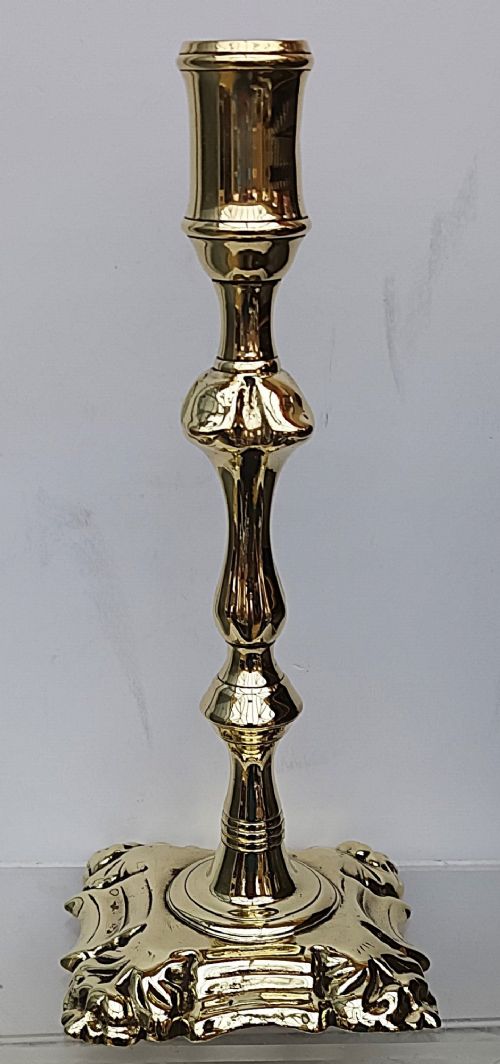

Cast Brass Candle Holders
Cast brass candle holders bring weight and warmth to a room, spanning plain Georgian forms to ornate Victorian designs.
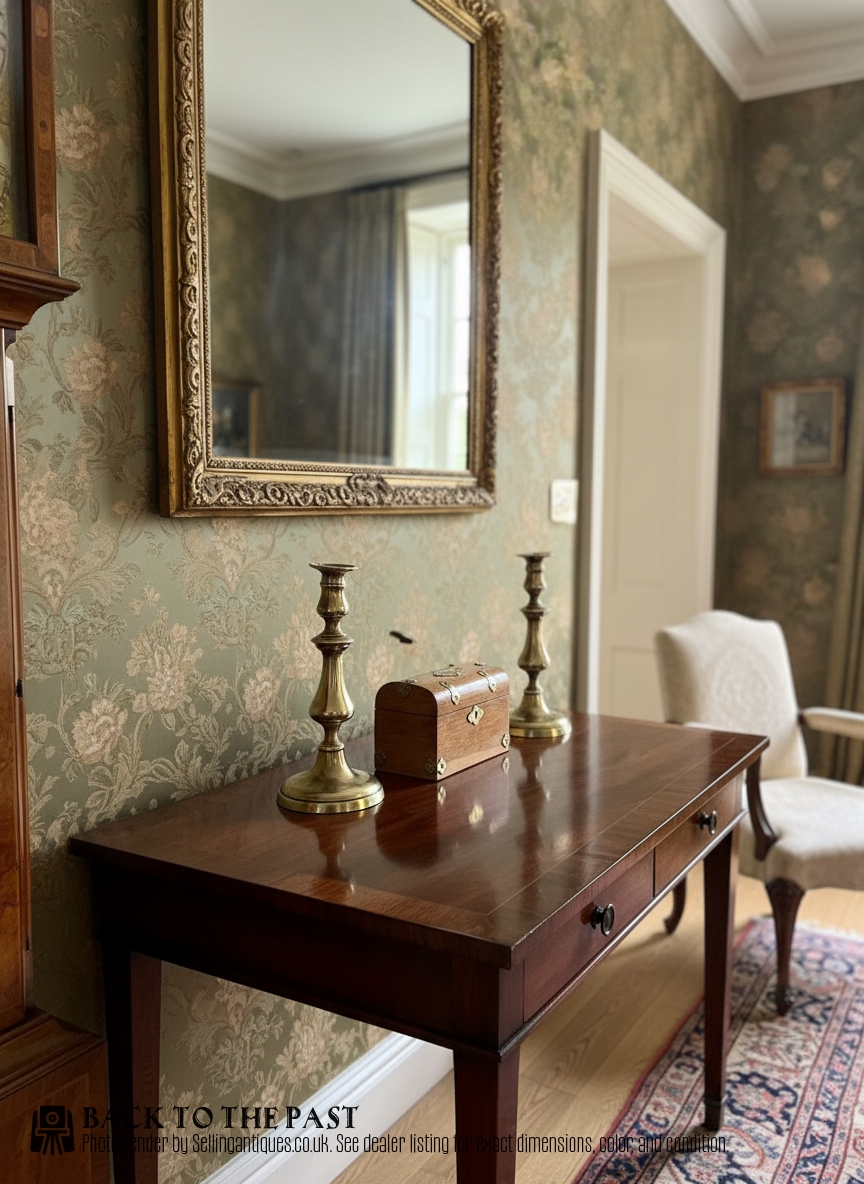
Cast Brass Candle Holders
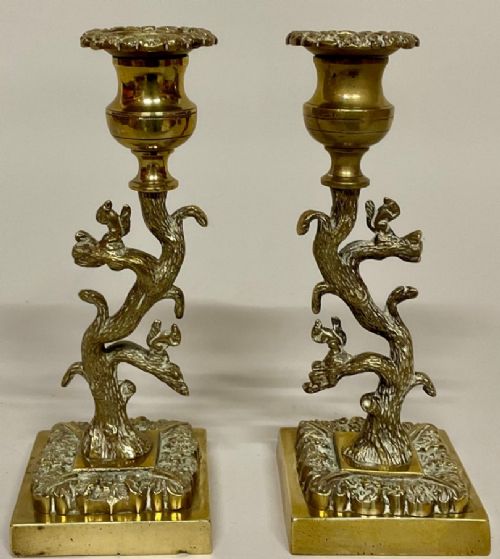
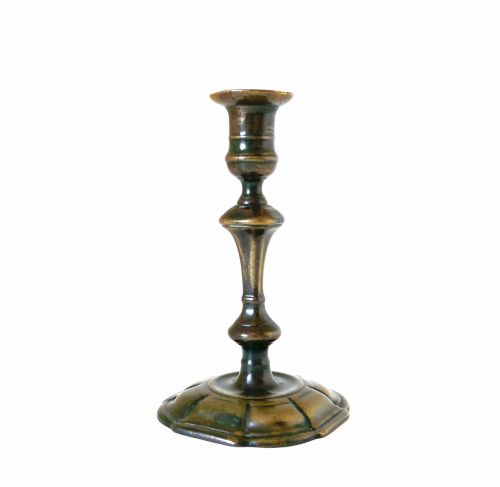
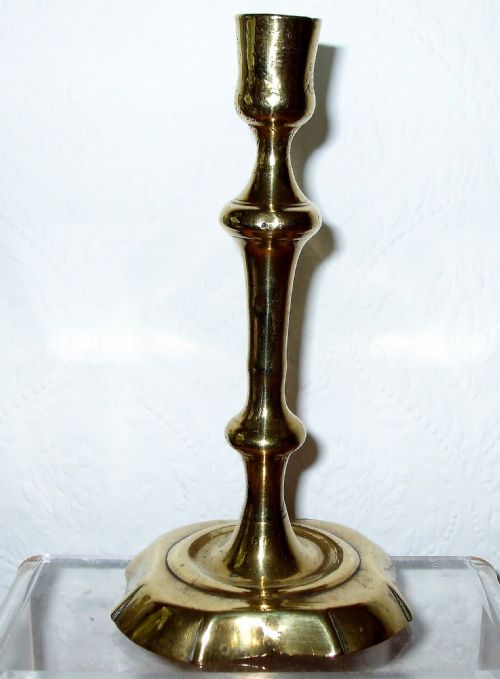
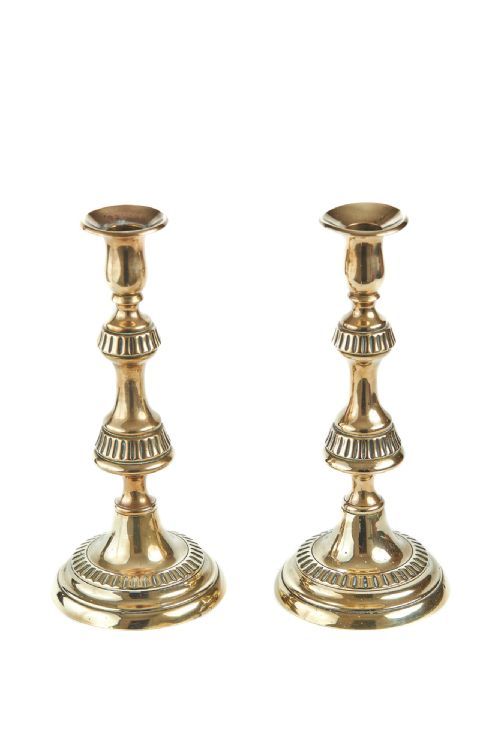
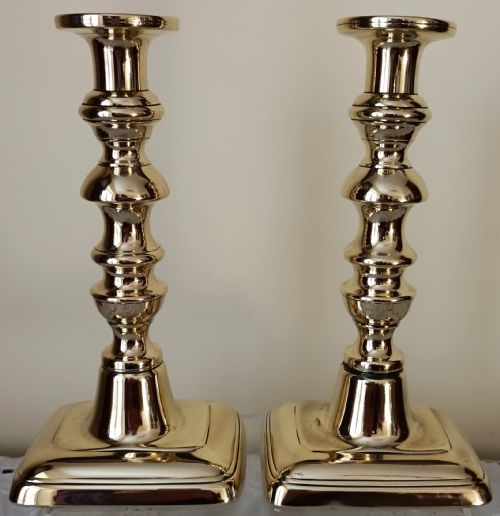
Cast brass candle holders are solid lighting fixtures produced in various periods from the eighteenth century through to the early twentieth century. Buyers seeking cast brass candle holders will find everything from simple Georgian single sticks to elaborate Victorian and Regency pairs.
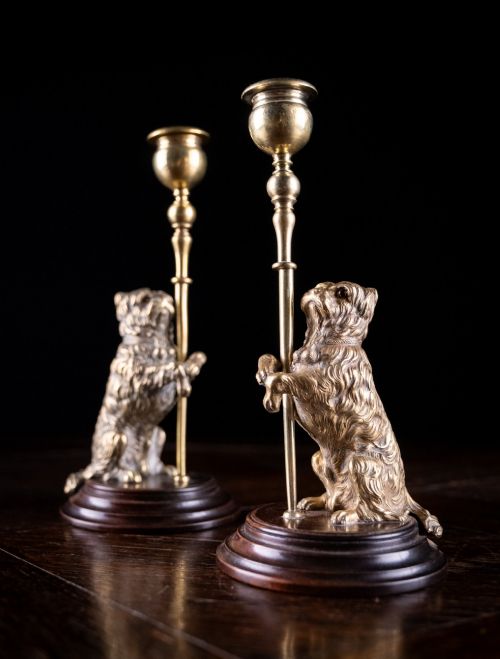
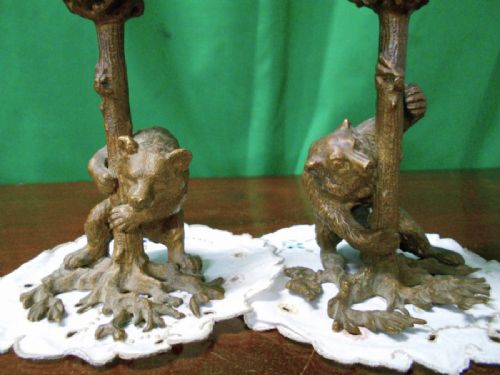
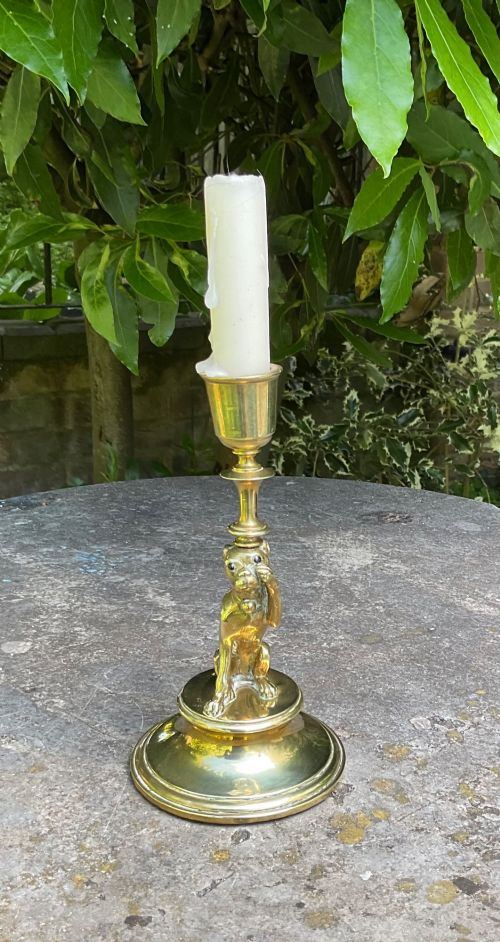
The selection here encompasses several distinct forms, including chambersticks, wall sconces, candelabra, and sculptural animal figures like dogs and bears. Most examples date from the eighteenth and nineteenth centuries, reflecting domestic lighting needs of those eras.
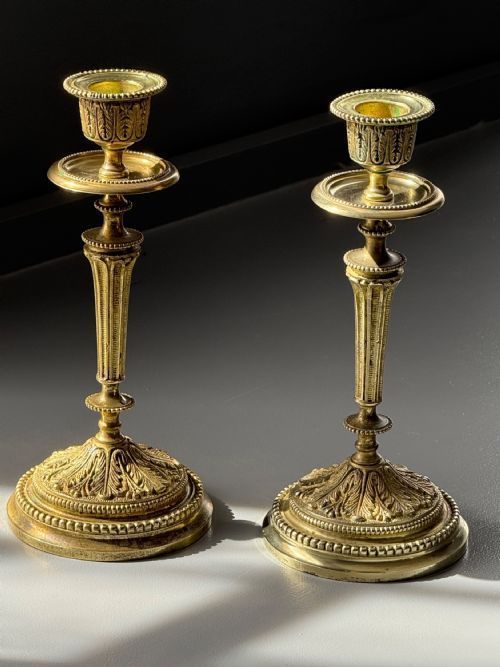
Origin and style vary widely, spanning English Georgian production, French Louis XVI and Louis XV gilt bronze, and later Aesthetic Movement pieces. Pairs predominate, though single examples and travelling chambersticks also appear.
How they were made
The primary material across these listings is brass, alongside cast bronze, gilt bronze, ormolu, and paktong, sometimes combined with porcelain or wood components. Metal is poured into moulds to create solid forms, a technique that allows for sharp detail in cast brass candle holders.
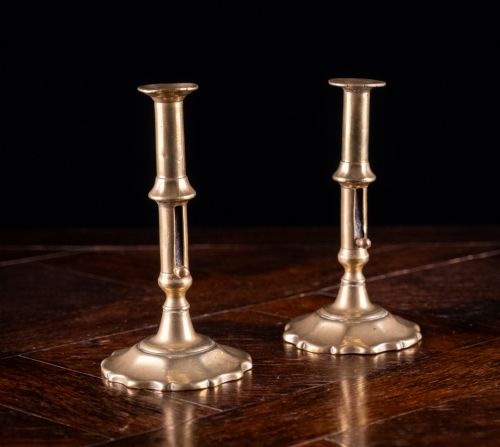
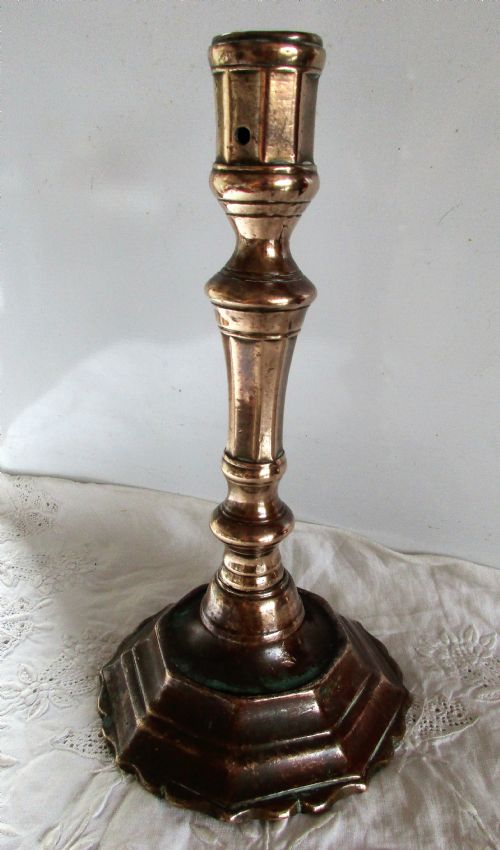
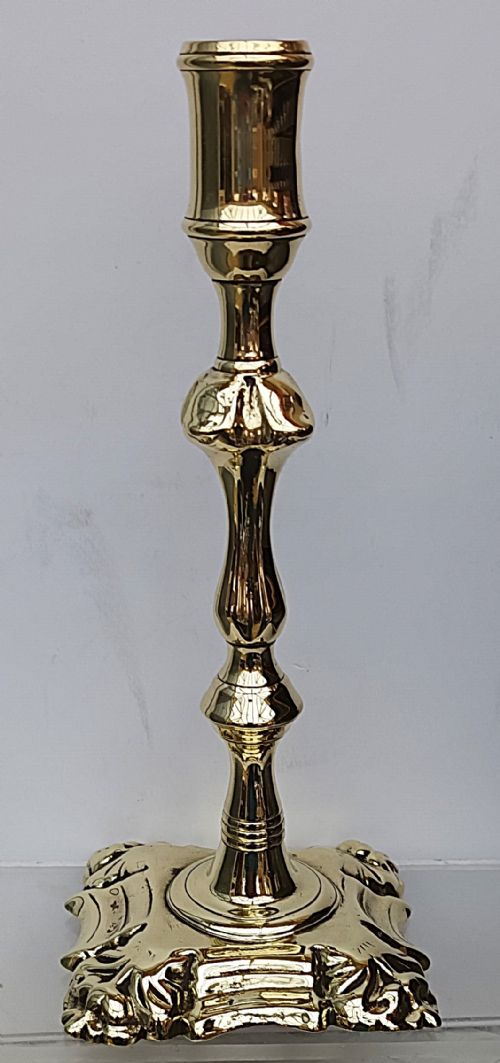
Components of eighteenth-century sticks are often seamed or cast in sections before being joined together. Surface finishes range from patinated and polished brass to fire gilding on bronze and ormolu pieces.
Cast Brass Candle Holders Retail Price Guide 2026
Typical asking prices for cast brass candle holders among the pieces listed under this phrase on Sellingantiques today, from the lower quarter to the upper quarter. They describe what is for sale here now, not the wider market.
Dogs make unexpected appearances as support, including standing terriers and pugs cast in brass.
What varies in quality
The distinction between standard utility items and finer pieces lies in the crispness of the casting and the ambition of the design. Sharply defined details on figural elements, architectural columns, and foliate motifs mark out superior examples.
J.T. & Co·Wm. Tonks & Sons·Liberty
The Cast Brass Candle Holders Glossary
- Ejector
- A concealed internal mechanism used to push the candle stub out of the socket. This device is commonly found in mid-eighteenth-century brass examples.
- Campana
- A vase-shaped candle socket resembling a classical bell or inverted flower. It is frequently seen on Regency and nineteenth-century pieces.
- Chamberstick
- A low-profile candle holder fitted with a shallow drip pan and a loop handle for carrying from room to room. Some variations are known as Brighton buns.
- Paktong
- A copper-nickel-zinc alloy originating from China, prized for its bright, silvery appearance and used for eighteenth-century candlesticks.
- Ormolu
- Finely cast bronze that has been gilded with a layer of finely ground gold amalgamated with mercury. This finish is typical of French decorative pieces.
Cast Brass Candle Holders: Frequently Asked Questions
How do I clean cast brass candle holders?
Dust gently with a soft cloth to maintain the surface. Avoid harsh chemical polishes that strip away age and desirable patination.
Leaving them unpolished allows a dark, rich oxidation to develop naturally over time. If cleaning is necessary, mild soap and warm water are safest.
What is a chamberstick used for?
Chambersticks were designed for domestic illumination while moving through dark hallways or retiring to bed. The wide base and drip pan caught any falling wax.
Many featured a small metal snuffer resting in the tray to safely extinguish the flame. They were standard household items before the introduction of gas and electric lighting.
How can I tell an 18th-century candlestick apart from a later copy?
Eighteenth-century examples often show construction methods such as seaming or multi-part casting rather than single-piece modern production. The weight, wear patterns, and surface texture provide clear clues to age.
Base construction is particularly telling, as early pieces feature distinct turnings and square or petal footprints. Examining the interior of the socket often reveals tool marks consistent with period manufacturing.
Are these candle holders safe to use with modern candles?
Most period sockets accommodate standard taper candles, though minor variations in diameter occur across different centuries. Using beeswax or dripless candles helps prevent wax overflow.
Ensure the candle sits firmly in the nozzle before lighting. Placing a small card or paper disc inside the socket can stabilize a loose taper.