
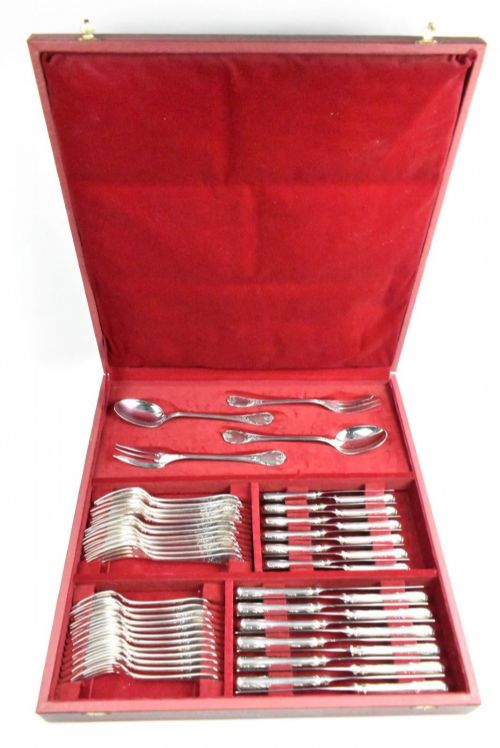


Cased Cutlery Set
A cased cutlery set brings together matched utensils and fitted housing, preserving fine silver and plated services for formal dining and gift giving.
Cased Cutlery Set
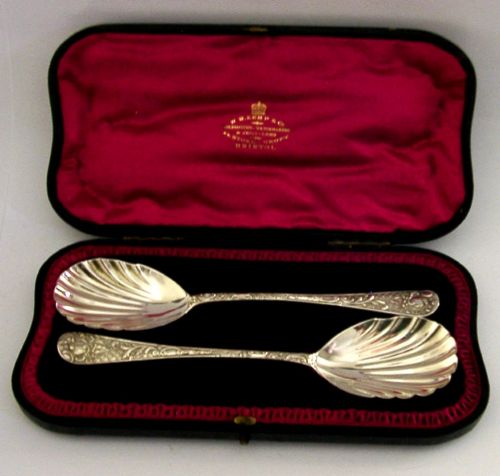
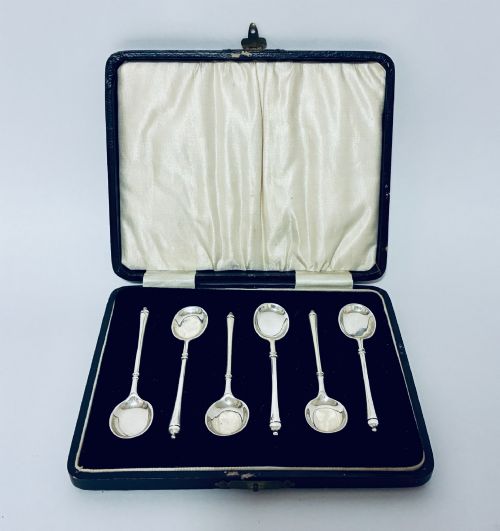
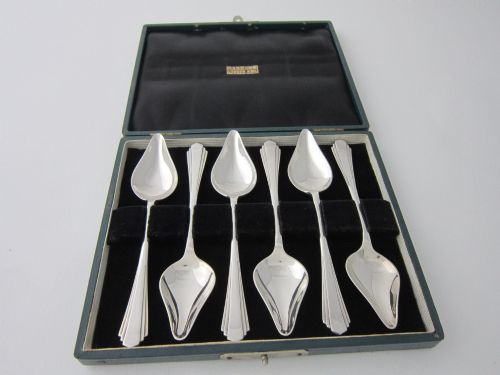
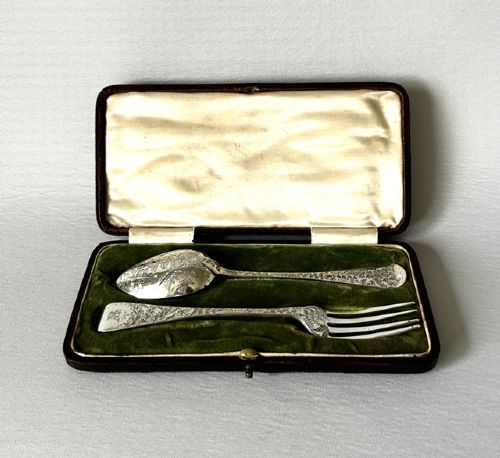
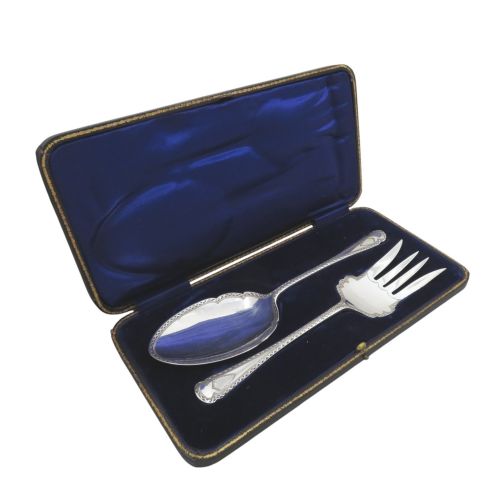
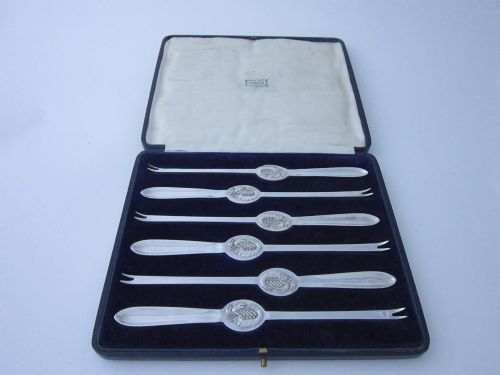
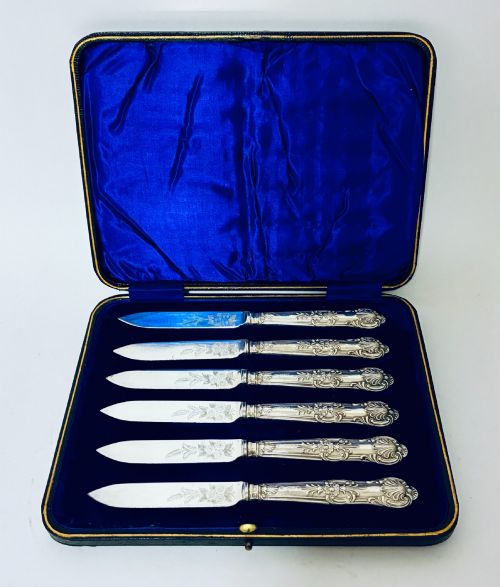
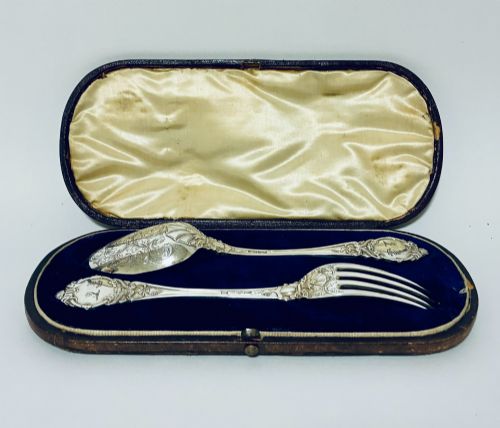
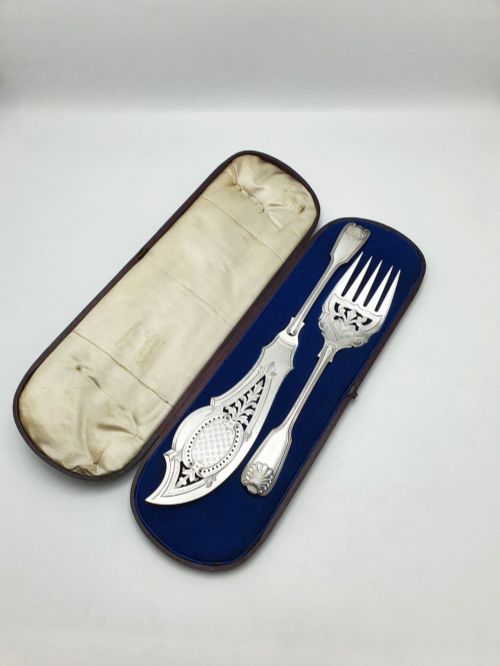
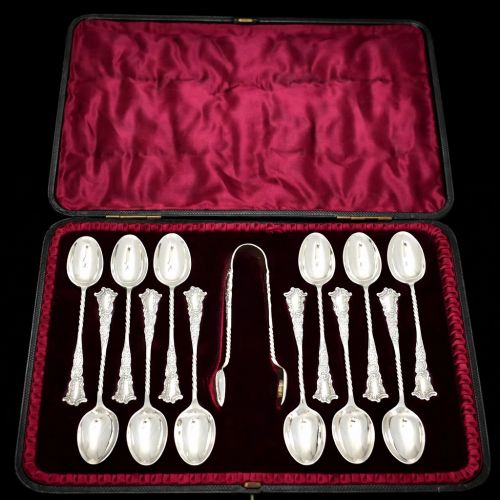
A cased cutlery set gathers specialised eating or serving implements inside a custom fitted box, keeping the contents orderly and protected from tarnish when not in use. These groupings range from modest sets of teaspoons or butter knives to large dining canteens containing settings for multiple guests.
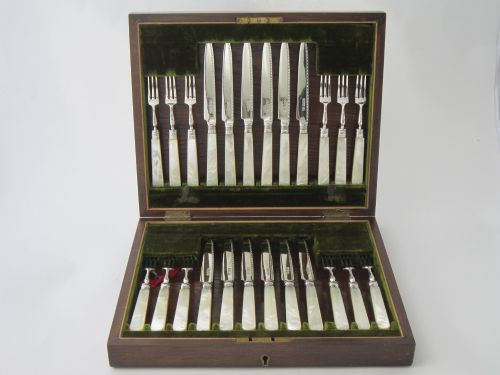
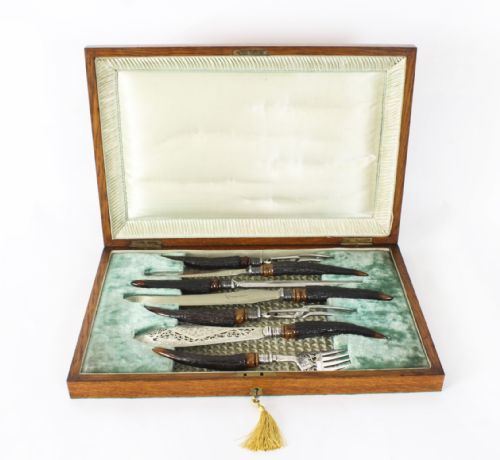
The variants most frequently met on this page span the Victorian, Edwardian, and Art Deco periods, housing sterling silver or silver plate alongside secondary elements like mother of pearl, enamel, and antler horn. Common forms include christening sets, fish servers, fruit knives, and lobster picks nestled in velvet or satin lined compartments.
Boxes are constructed from sturdy timbers such as oak and walnut, or fashioned from lighter frames covered in leatherette. Inside, recessed channels and retaining ribbons secure each fork, spoon, or knife in its designated slot.
How they were made
Utensils were shaped from sterling silver or formed via silver plating over a base metal, frequently incorporating handles carved from mother of pearl or antler horn. Goldsmiths and silversmiths utilised traditional techniques of casting, hammering, piercing, and precise hand engraving to decorate the bowls of spoons and the blades of knives.
Enamel work and parcel gilt finishes appear on specific presentation pieces from the Edwardian and Art Deco eras, adding colour and contrast to the metalwork. Cases were constructed by specialist box makers using hardwoods or veneered carcasses lined with tactile textiles like silk, satin, and velvet.
Hinges, clasps, and escutcheons made from brass or other durable metals were fitted to secure the case lid and protect the delicate contents during transport or storage.
What varies in quality
Quality rests upon the weight and purity of the metal, the crispness of any hand engraving, and the structural integrity of the fitted case. Superior pieces display deep, clear hallmarks, substantial gauge silver, and securely pinned handles that show no looseness against the tang.
The interior fit and lining materials also indicate standard; finer sets feature custom moulded wooden inserts covered in unblemished silk or velvet, whereas simpler boxes use basic card partitions and thin textiles. Complete matching complements without replacement utensils represent a higher grade of preservation than assembled services.
Christofle·Suckling Ltd·Harrods·David Andersen·Souche Lapparra·John Locker·P A W Bateman·Carrington
The Cased Cutlery Set Glossary
- Hallmark
- An official stamp applied to precious metals indicating the standard of purity, the assay office, and the date of manufacture. These small stamped impressions allow historians to trace a piece to a specific city and year.
- Sterling silver
- An alloy containing 92.5 percent silver by mass, with the remainder usually consisting of copper. This standard provides the durability required for functional cutlery while maintaining a high precious metal content.
- Silver plate
- A base metal substrate covered with a thin layer of pure silver through electroplating or older fusion methods. It offered an accessible alternative to solid silver for large dining canteens.
- Parcel gilt
- Silver objects that are partially gilded with a thin layer of gold on specific areas, such as the inside of spoon bowls. This technique creates a striking two tone visual effect.
- Escutcheon
- A small protective plate surrounding a keyhole on the exterior of a cutlery box. It is typically fashioned from brass or silver and often bears engraved monograms.
Cased Cutlery Set: Frequently Asked Questions
What is inside a cased cutlery set?
These sets contain coordinated dining utensils such as teaspoons, fish servers, fruit knives, or full place settings housed securely within a lined box.
The specific composition depends on the intended use, varying from small Christening bundles to extensive dining canteens.
How do I clean tarnished silver cutlery?
Cleaning requires a soft cloth and a specialised silver polish formulated to remove oxidation without wearing away thin plating or delicate hand engravings.
Harsh chemical dips should be avoided, especially on pieces featuring mother of pearl handles, enamel work, or textile linings.
How can I tell the age of a set?
Solid silver pieces usually feature stamped hallmarks that identify the assay office, standard, and specific year of production. Stylistic elements like Art Deco geometry or Victorian floral engraving also provide clear chronological clues.
Are these sets safe to use today?
Most solid silver and silver plated pieces are entirely functional and suitable for regular dining or special occasions.
Utensils with organic handles like mother of pearl or delicate materials such as enamel require gentle hand washing rather than immersion in automated dishwashers.