



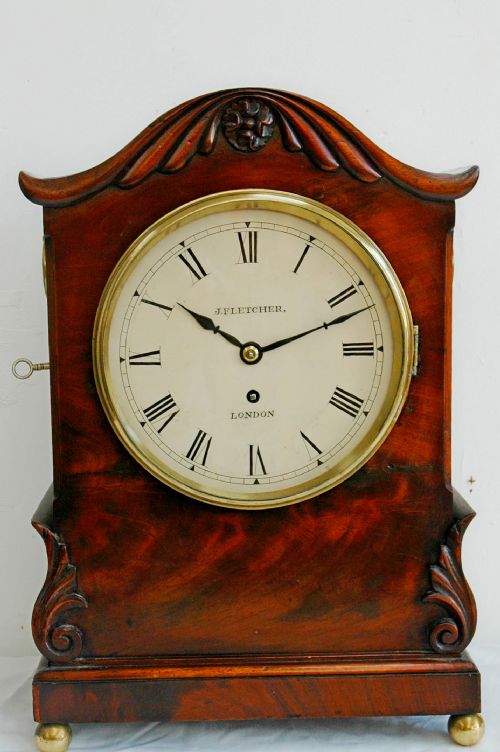


Carved Wooden Table Clock
A carved wooden table clock brings mechanical precision and rich cabinet-making into domestic rooms, offering both timekeeping and architectural presence.
Carved Wooden Table Clock
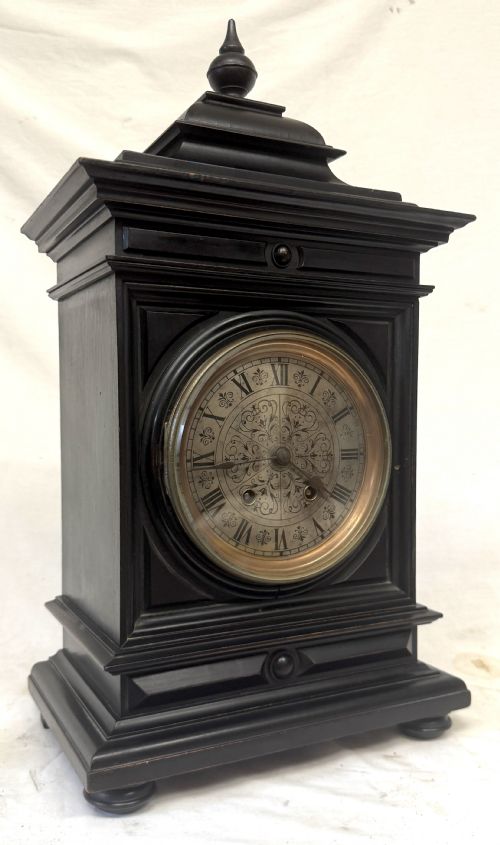
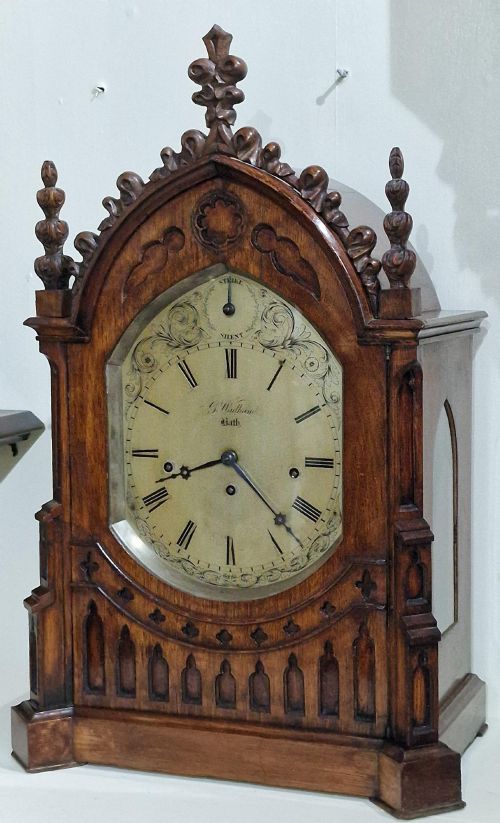
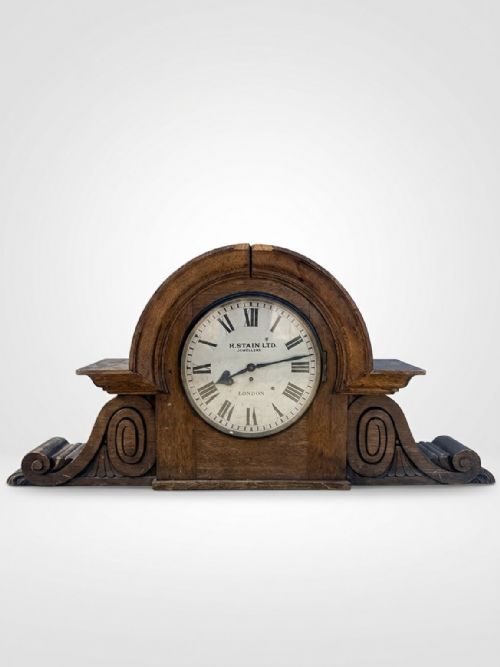
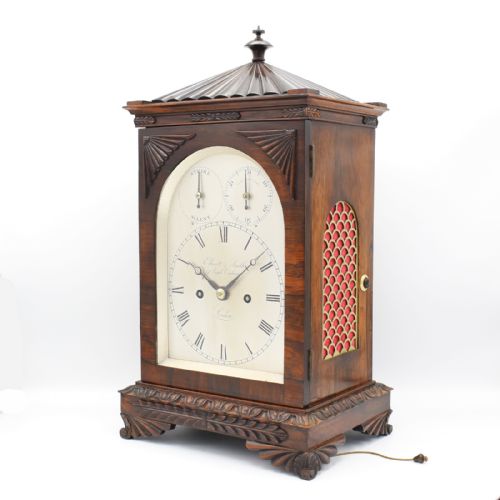
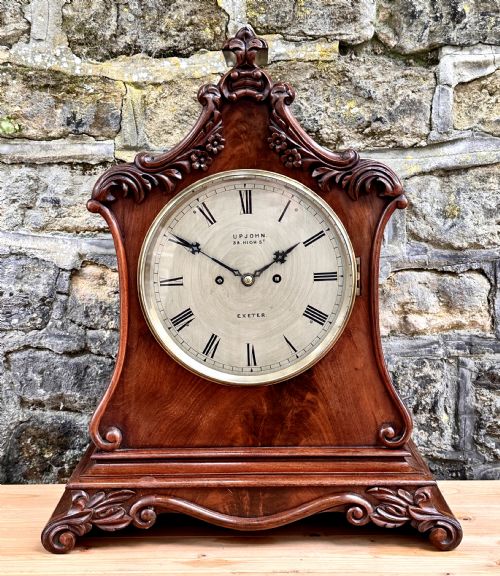
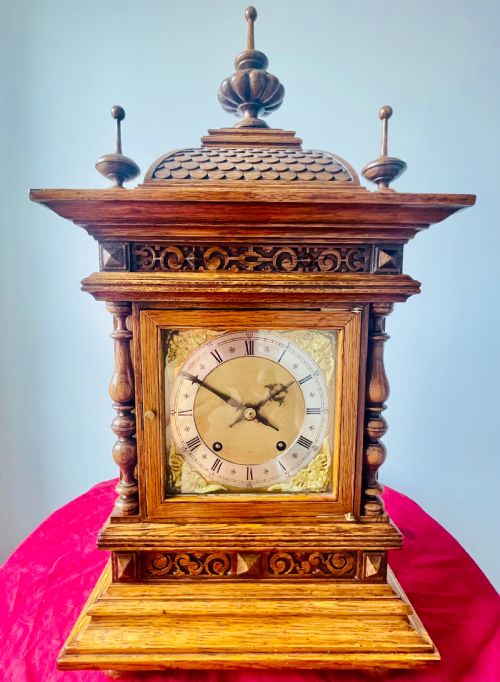
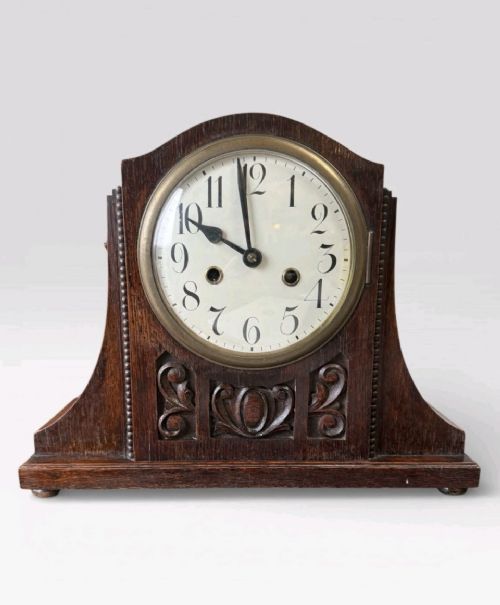
A carved wooden table clock represents a diverse grouping of mantel, bracket and library timepieces designed to sit securely on furniture surfaces rather than hang upon walls. When exploring carved wooden table clocks, buyers frequently encounter pieces originating from the nineteenth century, including specific decades such as eighteen eighty and nineteen hundred, alongside Regency and Georgian examples.
The physical forms range from architectural mahogany cases to whimsical Black Forest carvings in walnut and linden wood. Makers across Britain and continental Europe housed intricate mechanical movements inside these wooden housings, combining utility with decorative cabinet work.
Materials and construction methods
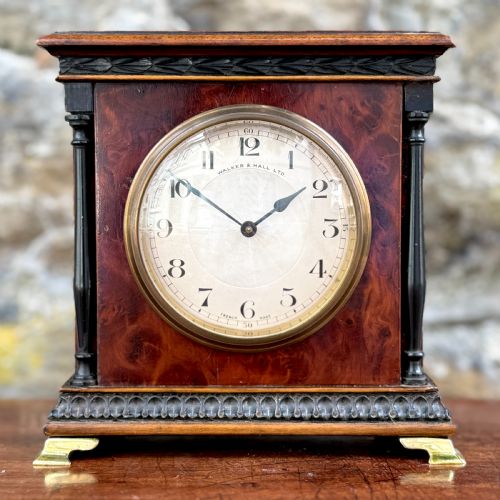
Cabinet makers utilised dense hardwoods such as mahogany, oak, walnut and burr walnut to construct robust cases capable of housing heavy brass clock movements. These timbers were often hand-carved, ebonised or inlaid, providing a stable frame for glass panels and silvered or enamelled dials.
German and British workshops integrated complex gear trains, fusee movements and striking mechanisms within the wooden carcases. Artisans relied on traditional joinery to ensure the timber housings withstood the constant vibration and tension of mechanical springs.
Listings feature eighteenth-century Georgian pieces alongside nineteenth-century Victorian works, utilising mahogany, oak, walnut and brass.
Assessing craftsmanship and execution
The distinction between standard production and exceptional work lies in the crispness of the wood carving and the refinement of the interior movement. Superior examples exhibit deeply sculpted foliage, well-proportioned architectural details and signed brass movements by established makers.
Winterhalder and Hofmeier·Lenzkirch·Walker and Hall·Mappin and Webb
The Carved Wooden Table Clock Glossary
- Fusee
- A conical pulley used in spring-driven clocks to maintain even power delivery as the mainspring unwinds. This mechanism helps the clock maintain consistent timekeeping accuracy.
- Bracket clock
- A portable timekeeper originally designed to sit upon a matching wall bracket or table. These pieces often feature carrying handles and sophisticated striking mechanisms.
- Dial
- The visible face of the clock where hours and minutes are indicated. Enamelled, silvered or brass chapter rings are typical on these wooden cases.
- Mantel clock
- A domestic clock designed to sit specifically on the mantelpiece above a fireplace. They developed diverse stylistic forms throughout the Victorian and Edwardian eras.
- Movements
- The internal mechanical assembly of gears, springs and escapements that drive the hands and striking trains. Brass forms the primary material for these intricate components.
Carved Wooden Table Clock: Frequently Asked Questions
How do I wind a mechanical table clock?
Winding requires using the appropriate key on the designated arbors located on the dial face or movement backplate. Turn gently until resistance is felt, avoiding over-winding to protect the mainspring.
Different trains control timekeeping, striking and chiming functions, each requiring regular attention depending on whether the movement runs for eight days or fourteen days.
How do I identify the period of my clock?
Dating relies on examining stylistic clues such as the cabinet wood, dial layout, carving motifs and any maker signatures engraved on the movement plates. Regency and Georgian pieces often display restrained classical lines, whereas Victorian and Edwardian examples lean toward heavier carving or Gothic Revival influences.
Comparing the movement architecture with known workshop production periods helps narrow down the decade of manufacture.
What is the difference between a mantel clock and a bracket clock?
Bracket clocks historically originated as portable spring-driven clocks equipped with handles for carrying between rooms. Mantel clocks emerged later as dedicated ornaments designed primarily for domestic hearths.
Both forms utilise wooden cases, but bracket clocks frequently incorporate more complex fusee movements and architectural proportions.