



Carved Wooden Pew
A carved wooden pew brings centuries of ecclesiastical and domestic craft into a modern hall, offering solid timber seating rooted in architectural history.
Carved Wooden Pew
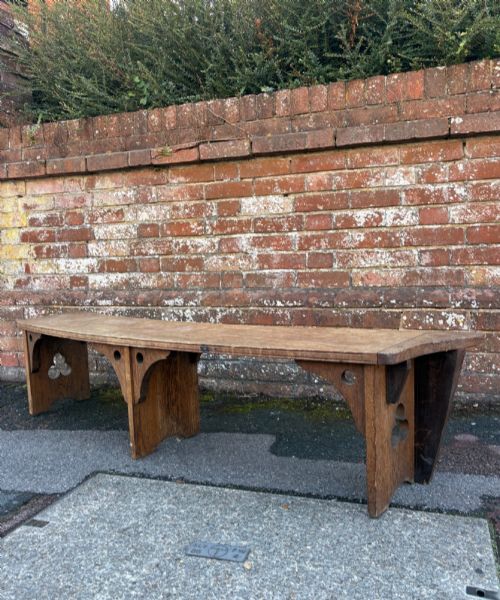
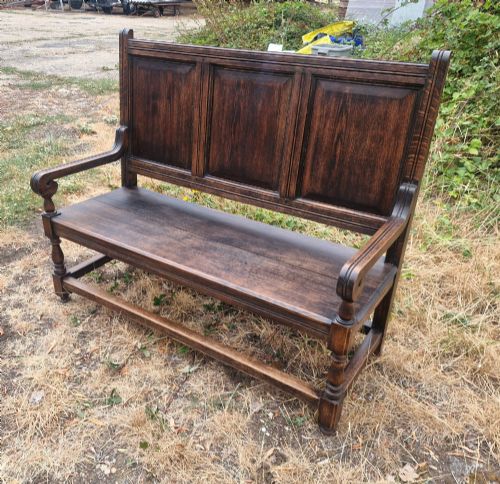
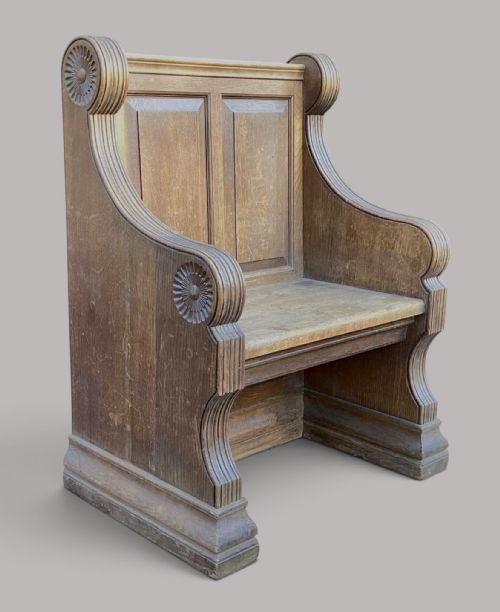
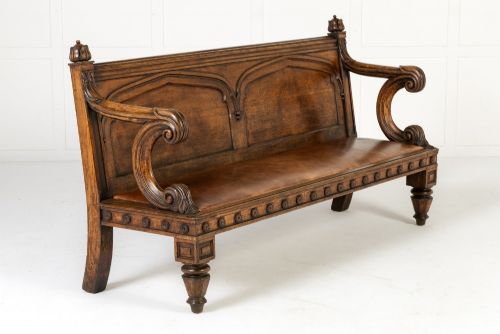
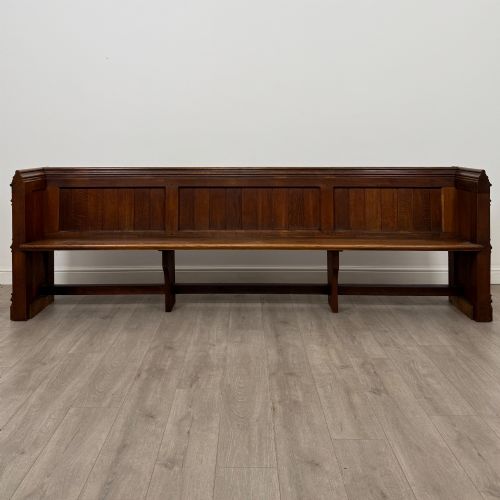
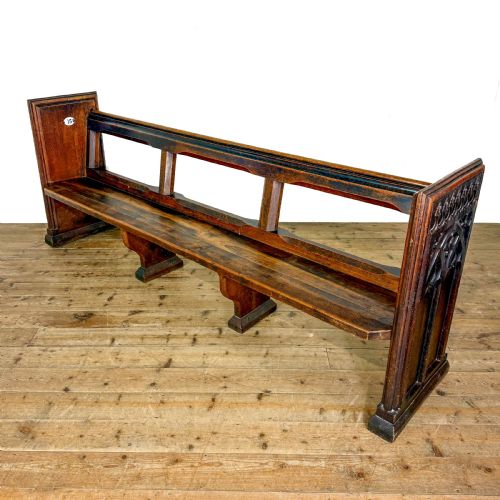
When you search for a carved wooden pew, you examine long timber benches originating from churches, country houses, and vernacular settings, spanning the eighteenth, nineteenth, and early twentieth centuries. These forms include architectural hall benches, high-back settles, and Gothic revival church pews featuring carved supports, panelled backs, and trefoil details.
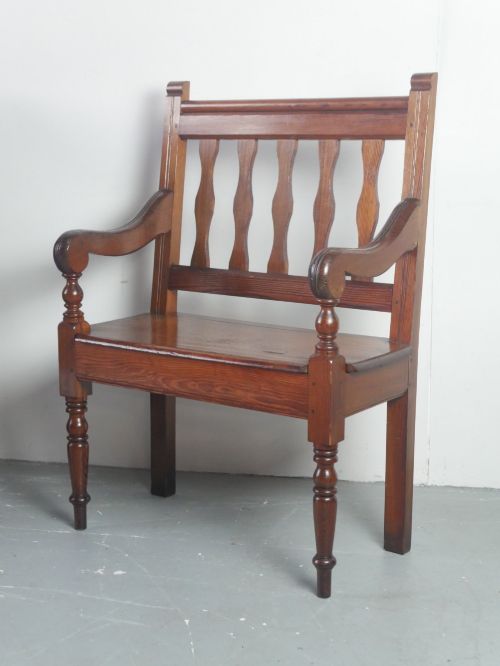
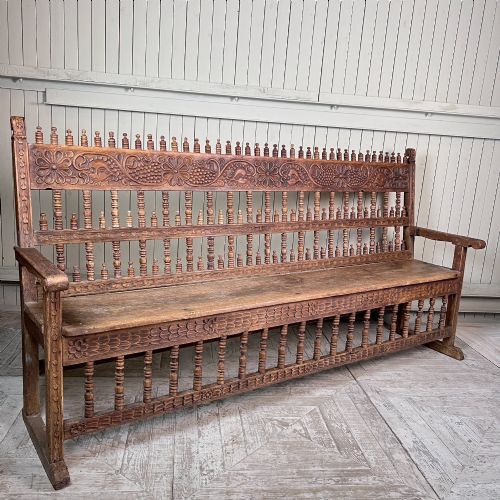
The pieces listed here appear in solid oak, pine, walnut, pitch pine, chestnut, and hardwood, often displaying heavy revival styles such as Victorian Gothic and Jacobean. You encounter curved benches, canopied folk art settles, and substantial high-back seating designed originally for communal gathering or domestic warmth.
How they were made
Joinery relies on solid timber construction using heavy planks of oak, pine, and walnut, often shaped with hand tools and held together by traditional framing methods. Carvers applied relief work, trefoil motifs, and architectural tracery directly into the structural wood of the backrests and end supports.
Finishes range from raw waxed surfaces to original painted coats on continental pine and folk art settles. Cabinet makers and rural joiners utilised local hardwoods, incorporating pegged mortise and tenon joints to bear the substantial weight of high backs and long bench seats.
Some pews carry the literal weight of history, having spent centuries anchored to the floor of St. Paul's Church in Tiverton.
What varies in quality
Quality rests upon the integrity of the timber selection and the ambition of the architectural carving, distinguishing simple utilitarian pine seating from elaborate Gothic revival commissions. The depth and sharpness of hand-carved details on arm supports and high panels reveal the hand of a skilled maker.
Proportion and structural survival dictate the standing of a piece, particularly how well high-back settles and long pews retain their original grounding feet and joined stretchers. The presence of uncompromised original timber surfaces without excessive later intervention separates ordinary utility benches from significant decorative examples.
The Carved Wooden Pew Glossary
- Settle
- A wooden bench with a high back, solid arms, and often a box base or enclosed lower section designed to block draughts in domestic interiors.
- Tracery
- Architectural stone-inspired openwork or relief carving applied to wooden panels, frequently seen in Gothic revival church furnishings.
- Trefoil
- A three-lobed ornamental design resembling clover leaves, commonly pierced or carved into the wooden supports of nineteenth-century benches.
- Pitch pine
- A resinous softwood utilised for robust nineteenth-century church seating due to its durable grain and structural strength.
- Panelling
- Flat wooden sections framed by stiles and rails, used extensively on the backs of architectural hall seats and church pews.
Carved Wooden Pew: Frequently Asked Questions
Where were carved wooden pews originally used?
These benches served inside parish churches, chapels, and large domestic halls, functioning as communal seating or draught-excluding settles.
Religious examples often came from specific ecclesiastical buildings, while country house variants sat in grand entrance halls to receive visitors.
How do I identify a Gothic revival pew?
Gothic revival pieces display architectural elements derived from medieval stone buildings, such as pointed arches, trefoil carvings, and heavy tracery.
Nineteenth-century makers frequently incorporated these pointed forms into church pews and hall benches to evoke an older, medieval aesthetic.
What woods were used for these benches?
Joiners primarily utilised native oak, pine, and walnut, alongside pitch pine, chestnut, and regional hardwoods depending on local availability.
English and Welsh pieces heavily favoured solid oak, whereas continental European examples often utilised pine, walnut, or mixed hardwoods.
How do settle benches differ from pews?
Settles typically feature high panelled backs and enclosed lower bases or solid arms designed specifically to keep out cold draughts in domestic rooms.
Pews are generally longer, open-backed benches made for rows in churches, though nineteenth-century makers blurred these distinctions in domestic halls.