
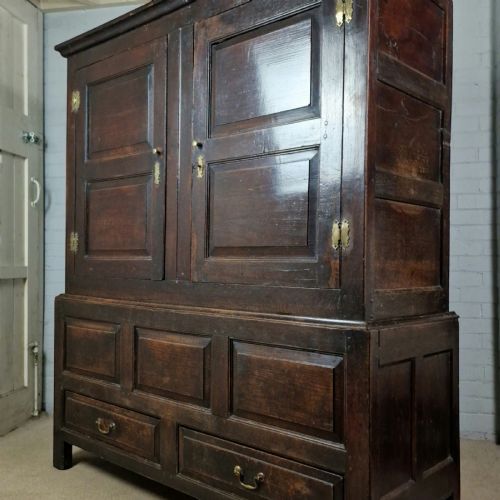
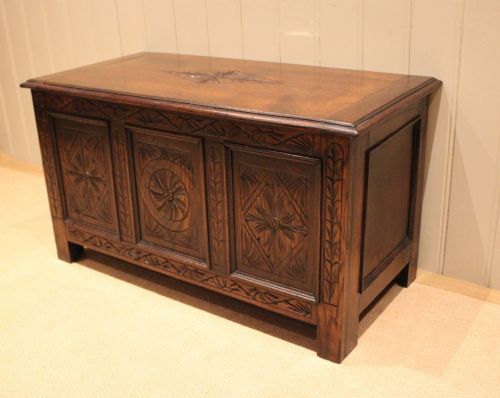
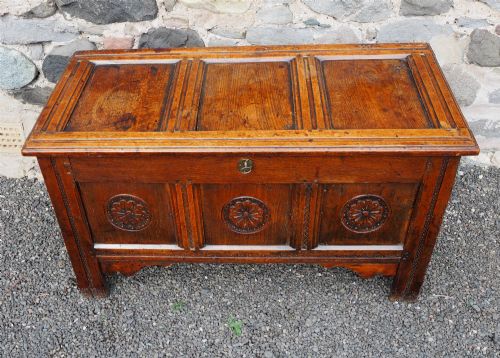
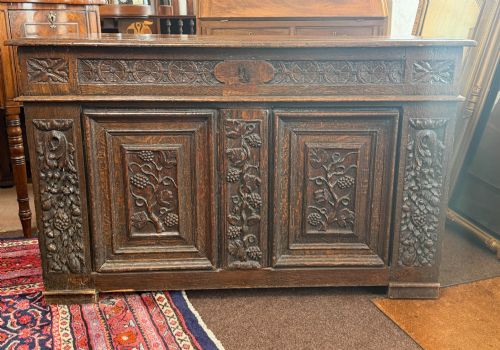

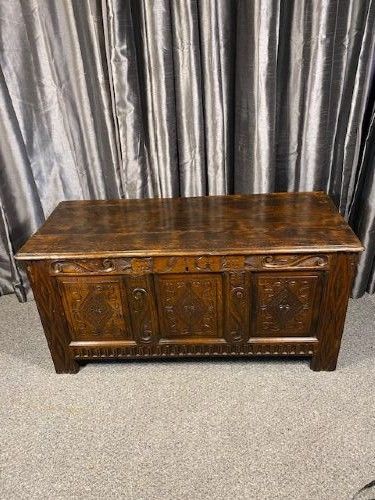
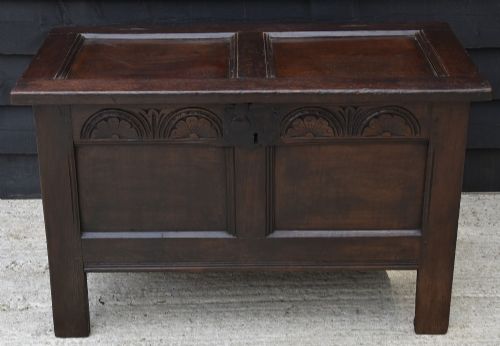
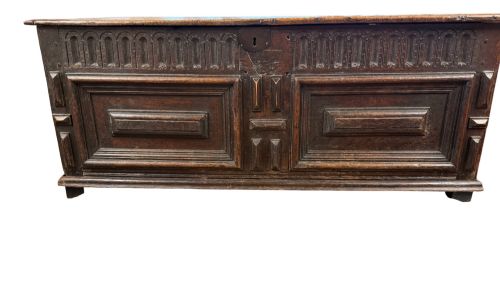
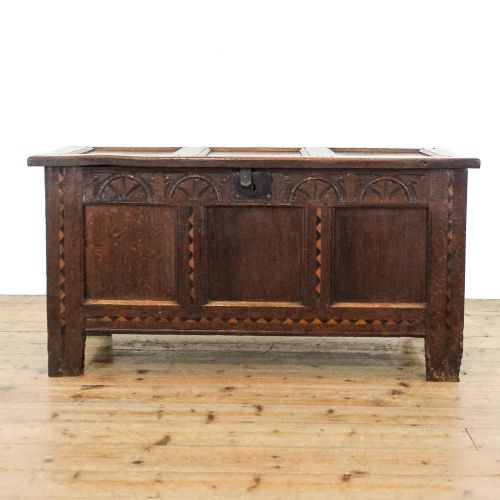
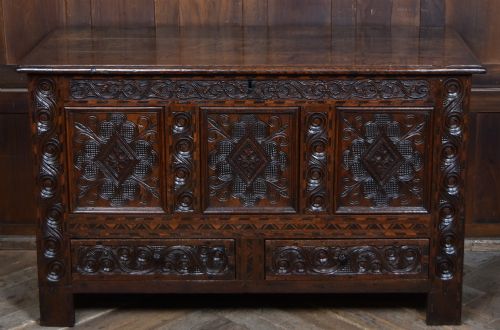
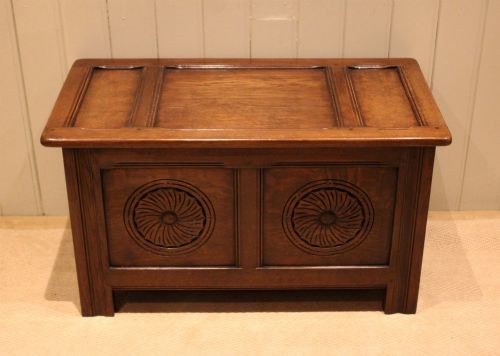
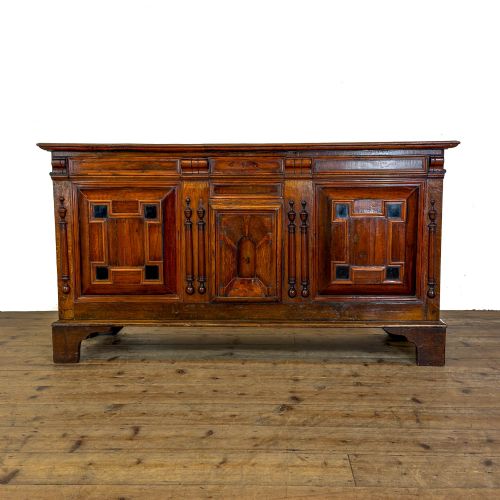
Carved Wooden Mule Chest
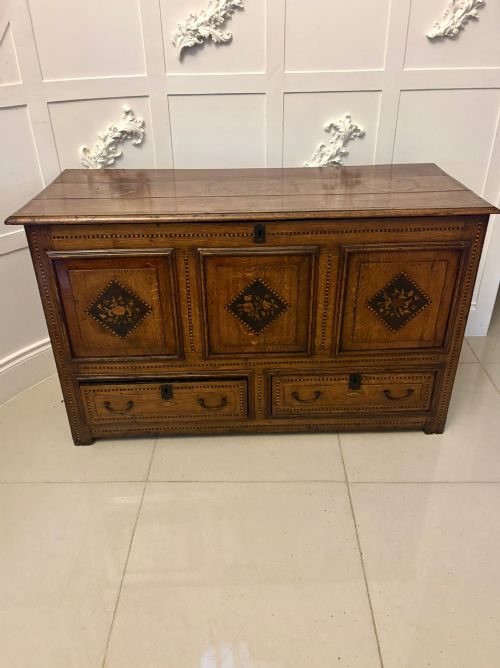
A carved wooden mule chest combines deep storage with a lower drawer, bridging the gap between a standard coffer and a proper chest of drawers.
Carved Wooden Mule Chest
A carved wooden mule chest serves as a practical storage trunk fitted with at least one drawer beneath the main compartment. When exploring these selections, you encounter forms that evolved from simple boarded boxes into panelled masterpieces of domestic utility.
Most examples you meet on this page hail from the seventeenth and eighteenth centuries, constructed primarily by regional craftsmen across the British Isles. Alongside traditional oak mule chests, the inventory brings forth variations incorporating pine, burr elm panels, and painted finishes from Georgian periods.
Mule chests sit comfortably in hallways, living rooms, or bedrooms, offering immense capacity for blankets and linens while providing flat top surfaces. Their dual nature makes them indispensable for practical storage without sacrificing period character.
How they were made
Makers relied heavily on solid oak joined by mortise and tenon frames, enclosing floating panels that allowed the wood to expand and contract with seasonal humidity. Iron hinges and brass escutcheons reinforced lids and keyholes, ensuring the heavy timber withstood generations of daily lifting.
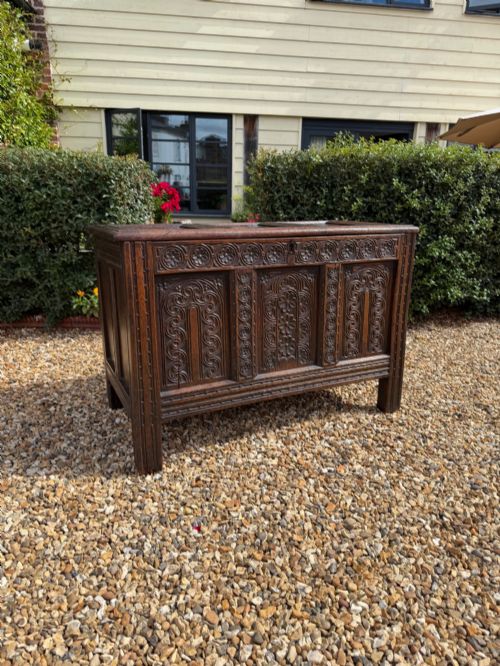
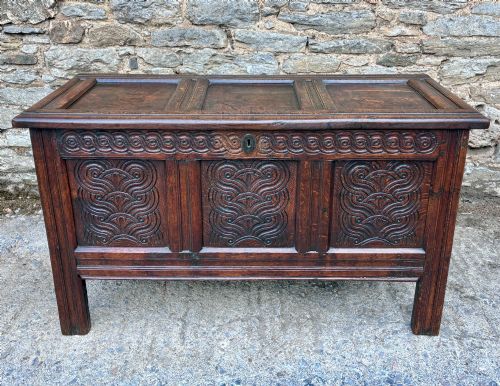
Decoration involved chip carving, gouge work, and linen fold panels, sometimes enhanced by marquetry inlay or contrasting burr elm timbers. Ebonised highlights and painted surfaces appeared on specific regional pieces, adding depth and colour to the hard wood.
Keep an eye out for the occasional Green Man peering through the foliage on seventeenth-century panels, keeping watch over your spare winter blankets.
What varies in quality
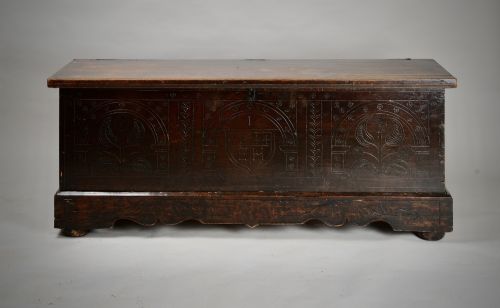
The sophistication of the carved motifs dictates much of the visual hierarchy, ranging from simple geometric punched backgrounds to intricate figural panels and Green Man carvings. Crispness of execution in the chisel work separates standard country joinery from high-status commission pieces.
Proportions and survival of original timber components define the desirability of individual chests. Retaining original floorboards, hinges, drawer bottoms, and untouched patination lifts a piece far above examples that have suffered heavy timber replacement over centuries.
The Carved Wooden Mule Chest Glossary
- Mule chest
- A storage chest featuring one or more drawers built into the base beneath the main lidded compartment. This hybrid form bridges the functional gap between a traditional coffer and a chest of drawers.
- Coffer
- A heavy wooden box with a hinged lid used originally for storing valuables, documents, or garments. Many early examples display elaborate front panel carving.
- Marquetry inlay
- The art of applying decorative veneer pieces of different woods onto a structural surface to form intricate pictures or geometric patterns. It adds significant visual richness to seventeenth-century furniture.
- Linen fold
- A style of relief carving on wooden panels designed to resemble tightly folded vertical folds of fabric. This motif appears frequently on sixteenth and seventeenth-century English church and domestic woodwork.
- Burr elm
- A distinctive timber growth featuring swirling, knotty grain patterns highly prized for decorative panels. Cabinet makers deployed it selectively to create striking visual contrast against plainer oak frames.
Carved Wooden Mule Chest: Frequently Asked Questions
What is a mule chest?
A mule chest is a storage box with a hinged lid on top and one or more drawers fitted into the base underneath. This design combines the deep compartment of a traditional coffer with the accessible drawer storage of a modern bureau.
Craftsmen developed them to make retrieving items easier without having to empty the entire contents from the top opening. They served as primary wardrobes and linen stores in historical households.
How old are these chests?
The pieces available range primarily from the sixteenth through the eighteenth centuries, with later revival pieces from the twentieth century also represented. Seventeenth-century examples often display dark patinated oak and geometric carved panels.
Eighteenth-century iterations frequently introduce burr elm accents, painted finishes, or more refined Georgian proportions. Examining the construction joints and timber shrinkage helps determine the exact period of origin.
Where should I place one?
These chests work wonderfully in large hallways, at the foot of a bed, or as a focal point in a living room. Their sturdy flat tops allow them to function as side tables or display surfaces for lamps and decorative objects.
Ensure you keep them away from direct heat sources and radiators to prevent the dry air from splitting the aged oak panels. Regular gentle waxing maintains the natural lustre of the wood.
How do I care for antique oak?
Maintaining antique oak requires feeding the dry wood periodically with a traditional beeswax polish applied sparingly with a soft cloth. Avoid modern silicone sprays or liquid cleaners that can penetrate open wood pores and ruin the patina.
Keep the environment stable regarding humidity and temperature to prevent the historic timbers from warping or cracking. Gentle dusting with a dry cloth keeps the surface grime at bay.