






Oak Bedding Chest Drawer
An oak bedding chest drawer combines top-opening storage with base drawers, offering a robust traditional solution for linen and garments.
Oak Bedding Chest Drawer
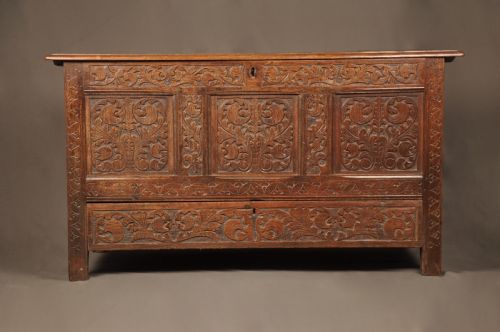
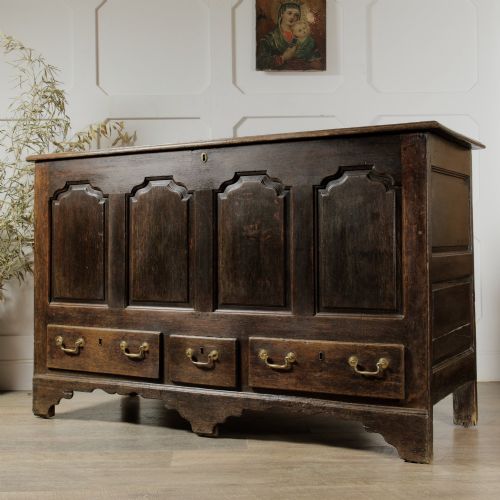
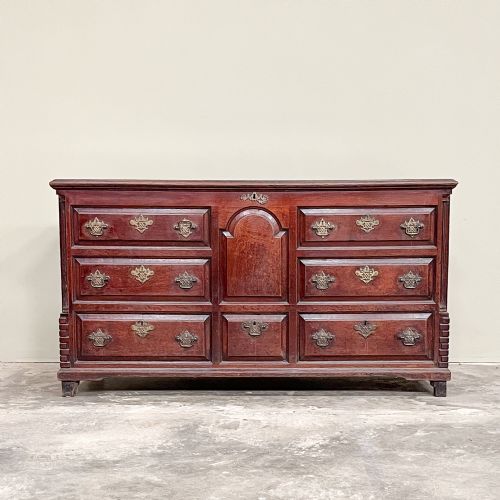
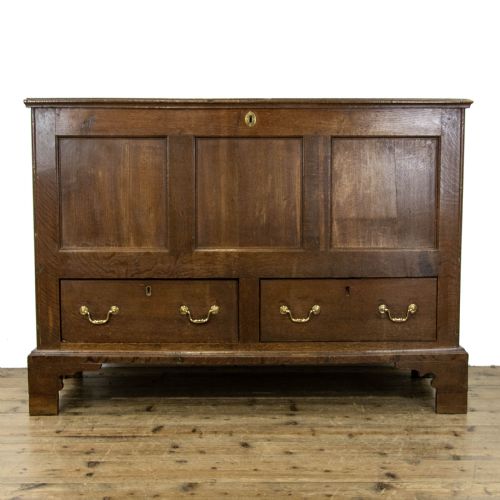
An oak bedding chest drawer is fundamentally a mule chest or coffer featuring one or more drawers beneath the main storage compartment. These pieces bridge the gap between simple blanket boxes and full chests of drawers, originating primarily in the seventeenth, eighteenth, and nineteenth centuries. British examples reflect vernacular craftsmanship from periods spanning the Jacobean era through the Georgian period.
The primary forms found here include mule chests, coffers, and kists constructed from solid timber with integrated base drawers. Makers built these items to hold bulky household textiles and bedding while keeping smaller items accessible in the lower compartments. The style nomenclature shifts between regional terms such as kist, coffer, and mule chest depending on the maker's location.
How they were made
Construction relies heavily on solid oak boards joined with traditional methods, housing iron or brass hardware such as hinges and drawer pulls. Timber preparation involved quarter-sawing or plain-sawing local oak, resulting in durable carcases designed to withstand heavy domestic use over centuries.
Joinery techniques incorporate panel-and-frame construction for lids and sides, accommodating seasonal wood movement without splitting the primary structure. Drawers utilise manual dovetailing and side-running configurations housed beneath the main coffer box.
Oak Bedding Chest Drawer Retail Price Guide 2026
Typical asking prices for oak bedding chest drawer among the pieces listed under this phrase on Sellingantiques today, from the lower quarter to the upper quarter. They describe what is for sale here now, not the wider market.
Listings feature oak as the primary material, alongside brass and iron hardware across seventeenth, eighteenth, and nineteenth-century periods.
What varies in quality
Quality differences lie in the selection of timber figure, the crispness of the original mouldings, and the integrity of the structural joinery. Finer pieces display carefully chosen oak boards with pronounced medullary rays and minimal replacement timber.
The sophistication of the drawer configuration and the retention of original brass or iron hardware distinguish superior examples from simpler provincial work. Proportion and scale also dictate value, with larger or exceptionally compact pieces commanding particular attention from collectors.
The Oak Bedding Chest Drawer Glossary
- Mule chest
- A storage chest featuring one or more drawers built into the base beneath the main compartment. This form evolved from the standard coffer during the late seventeenth century.
- Coffer
- A heavy wooden box with a hinged lid used primarily for storing valuables and textiles. Early examples rely on simple plank construction or boarded framing.
- Kist
- A regional British and Northern European term for a wooden chest or coffer. These often display distinct local woodworking traditions.
- Georgian
- The stylistic period spanning the reigns of the four British monarchs named George, characterised by classical proportions and developing cabinetmaking standards.
- Jacobean
- The early seventeenth-century style associated with the reign of James I, known for dark oak furniture and geometric raised mouldings.
Oak Bedding Chest Drawer: Frequently Asked Questions
How were these chests used historically?
Households utilised these pieces in bedrooms and halls to store heavy woolen blankets, bedding, and seasonal garments. The lower drawers held smaller folded items.
This dual arrangement allowed easy access to daily necessities without disturbing the main compartment lid.
How do I date an oak mule chest?
Dating relies on examining construction techniques, such as hand-cut dovetails, iron hinge types, and framing methods. Earlier pieces often feature pegged joints and boarded construction.
Later eighteenth-century examples adopt more refined Georgian drawer linings and standardised brass hardware.
How do I care for antique oak furniture?
Maintain stable indoor humidity levels and keep wooden pieces away from direct heat sources to prevent timber shrinkage and cracking. Periodic application of traditional wax feeds the surface.
Avoid synthetic polishes that build up sticky residues over the original patinated finish.