

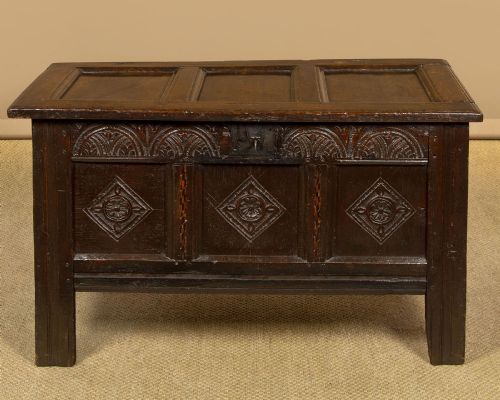
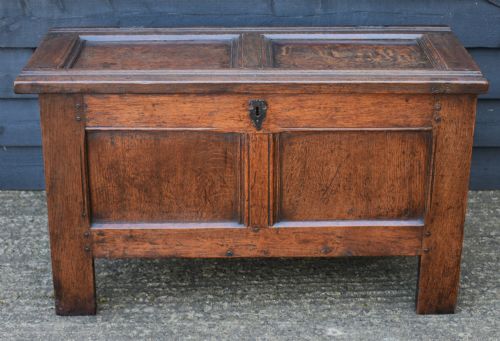
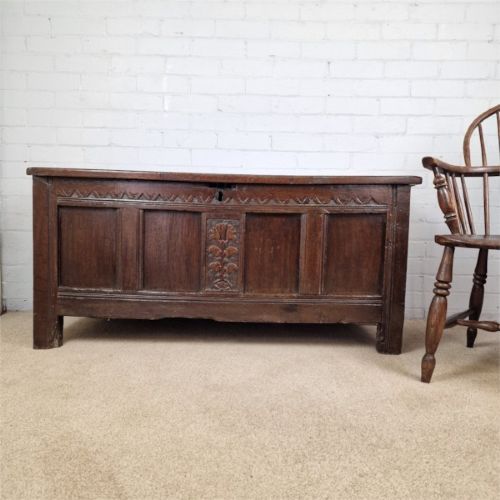
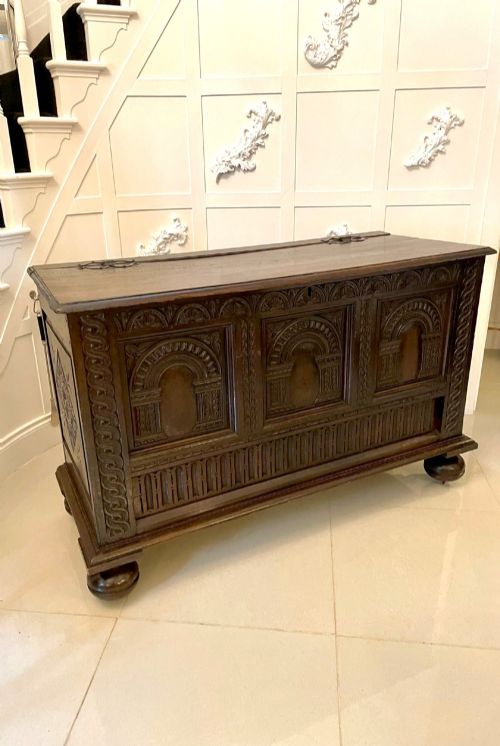
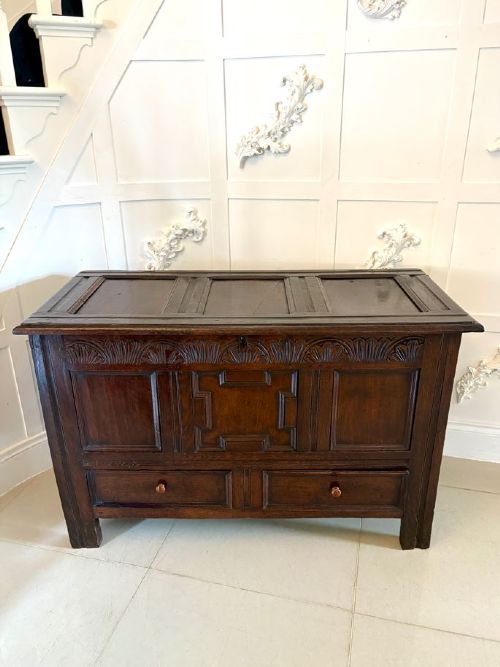
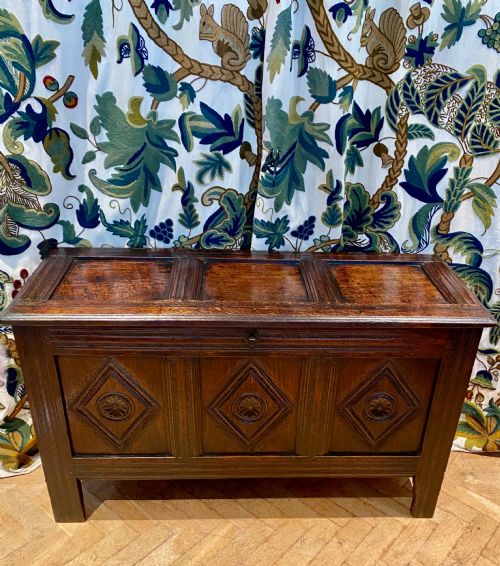
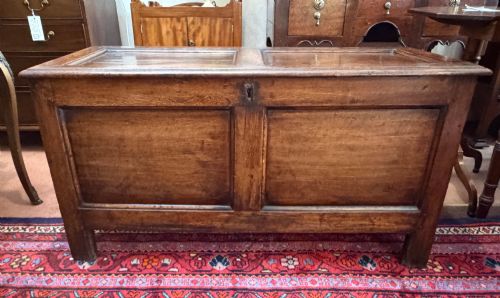
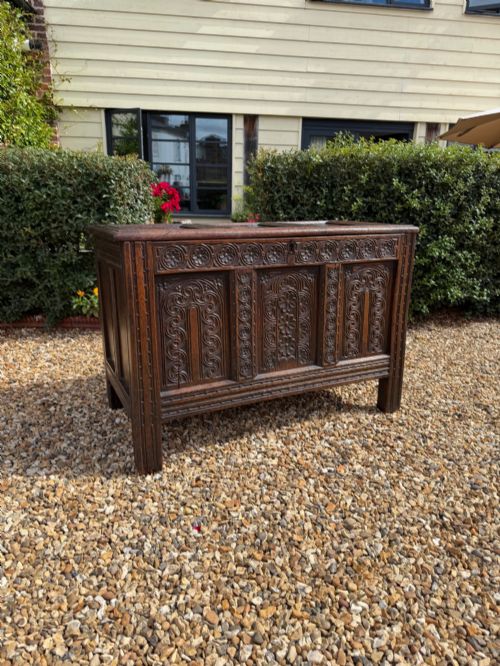
17th Century Mule Chest
A 17th century mule chest is a sturdy timber storage box fitted with drawers below, offering historic character and practical utility.
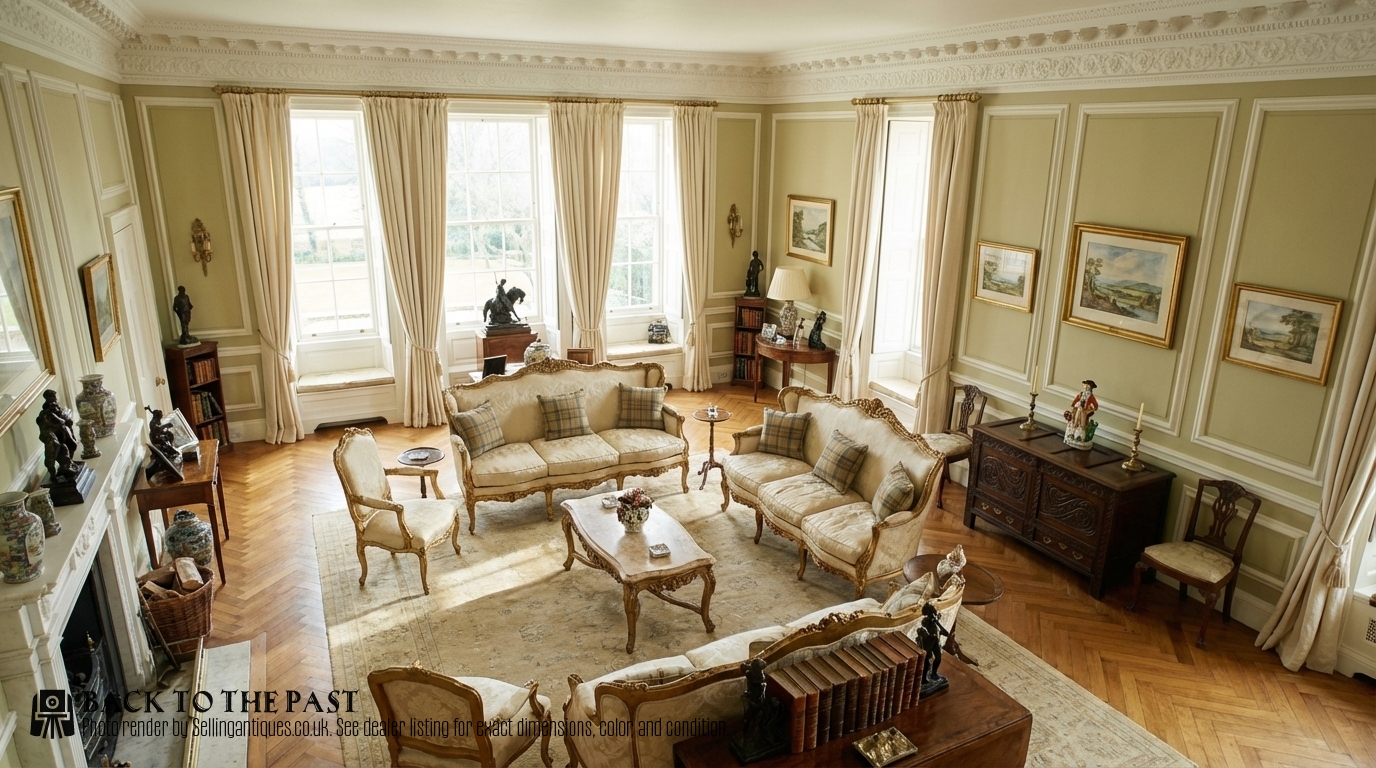
17th Century Mule Chest
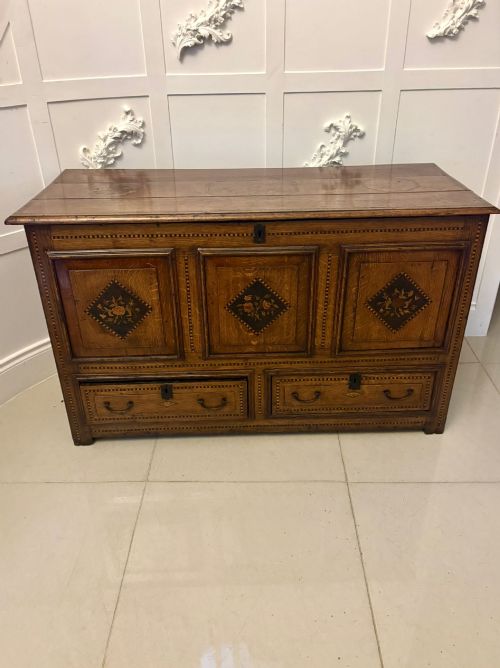
A 17th century mule chest combines the deep lid compartment of a traditional coffer with one or more base drawers, representing an important step in the evolution of domestic furniture storage. You will frequently encounter examples spanning the seventeenth century through to the Georgian era, alongside later revival pieces from the twentieth century.
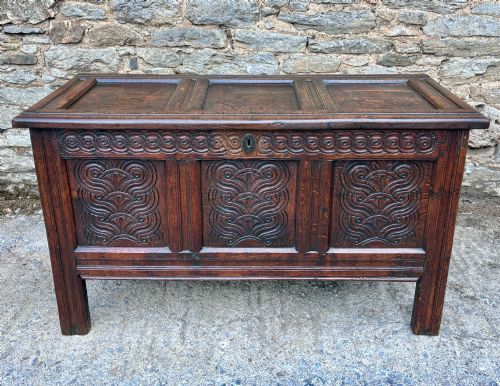
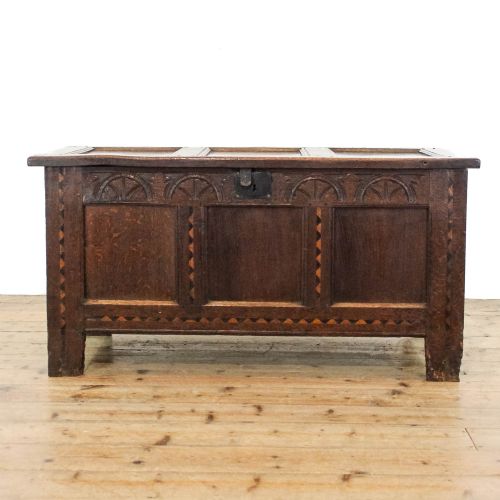
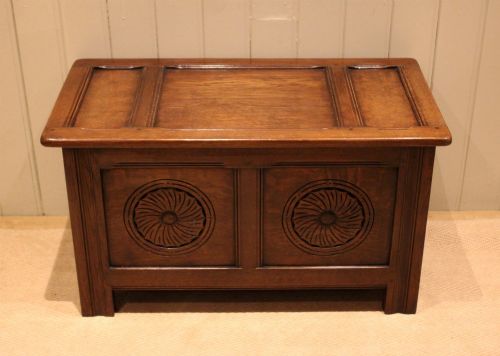
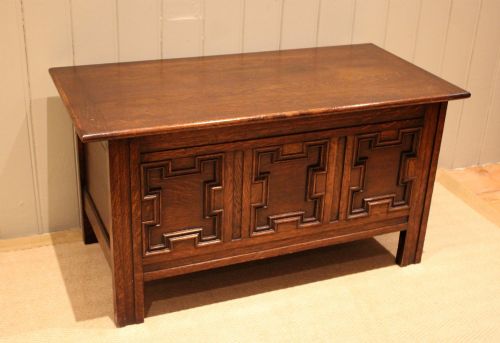
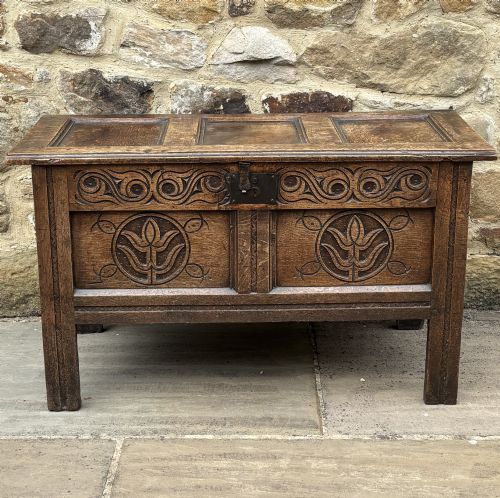
The form bridges the gap between simple blanket boxes and fully developed chests of drawers, often originating from regional English workshops in places like Lancashire, Cheshire, and Wales. Many pieces display architectural panels, geometric mouldings, or carved details characteristic of the period.
Beyond standard domestic storage, variations include grain arks, linen chests, and smaller cottage-proportion boxes suited for alcoves or window seats. The survival of original drawer configurations and timber patination largely defines the appeal of these regional items.
How they were made
Makers primarily utilised solid oak, supplemented by regional timbers such as elm and fruitwood for internal elements or secondary panels. Construction relied on heavy frame and panel techniques, joined with pegged mortise and tenon joints to accommodate seasonal wood movement.
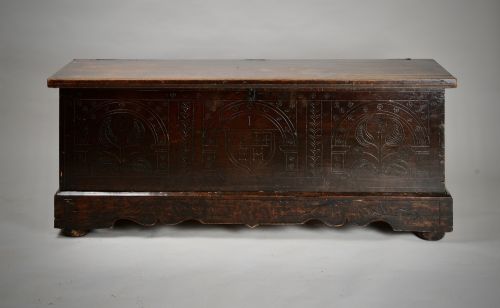
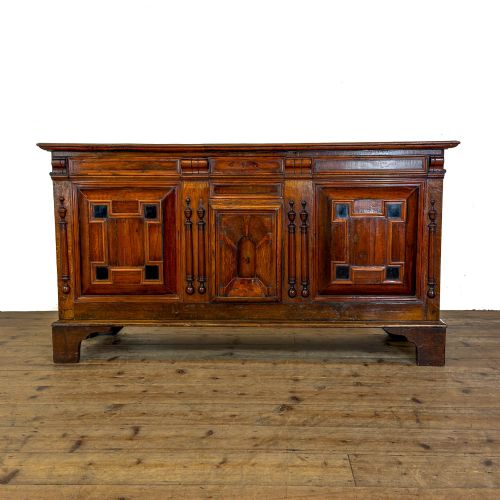
Surface ornamentation often involved chip carving, incised lettering, or elaborate marquetry inlay using contrasting woods. Hardware typically consisted of hand-forged iron hinges and brass pulls, securing heavy lids built to withstand generations of domestic use.
17th Century Mule Chest Retail Price Guide 2026
Typical asking prices for 17th century mule chest among the pieces listed under this phrase on Sellingantiques today, from the lower quarter to the upper quarter. They describe what is for sale here now, not the wider market.
Listings feature solid oak, elm, and fruitwood, incorporating decorative elements like marquetry inlay and ebonised wood across pieces dated from the seventeenth century onward.
What varies in quality
The degree of original timber preservation and the integrity of the structural joinery separate standard examples from finer pieces. Chests retaining their initial boarded lids, undisturbed floorboards, and matching drawer linings command greater interest among purists.
Carving depth and the crispness of geometric panelling indicate the skill of the original joiner, distinguishing utilitarian rural boxes from high-status regional commissions. Later alterations, such as adapted bases or replaced hardware, shift an item's standing within the historical spectrum.
The 17th Century Mule Chest Glossary
- Mule chest
- A storage chest featuring a hinged lid above one or more drawers built into the base. This hybrid form emerged when makers added drawers to traditional coffers.
- Coffer
- A heavy wooden box with a lid, used historically for storing valuables, textiles, or documents. These form the foundational body style of early mule chests.
- Marquetry inlay
- Decorative patterns formed by fitting contrasting veneers into carved recesses on the wooden surface. This technique appears on select high-status seventeenth-century pieces.
- Panel
- A flat piece of timber fitted within a grooved frame to prevent warping as the wood expands and contracts. Panelled construction defines the sides and fronts of authentic period chests.
- Ebonised wood
- Timber treated with a chemical stain or finish to imitate expensive ebony. It provides dark contrast on mouldings and applied details of the period.
17th Century Mule Chest: Frequently Asked Questions
What is the difference between a coffer and a mule chest?
A traditional coffer consists solely of a lidded storage box accessed from the top. A mule chest incorporates one or more drawers beneath the main compartment.
This addition allowed users to retrieve items without disturbing the contents piled on top of the main well.
Where were these chests made?
Mule chests were produced by local joiners and regional workshops across England and Wales. Specific regional styles often emerged from areas such as Lancashire, Cheshire, and Lakeland.
Local timber availability and distinct carving traditions frequently point to the geographic origin of a piece.
How do I care for antique oak furniture?
Maintain stable indoor humidity levels and keep wooden chests away from direct heat sources and strong sunlight. Sudden environmental shifts cause old oak and fruitwood to split.
Apply traditional beeswax occasionally to nourish the surface and preserve the historic patination without sealing the timber.
How can I tell the period of a chest?
Examine the construction methods, tool marks, and fastener types visible on the interior and underside. Hand-forged iron nails, pegged joints, and vernacular carving styles help anchor pieces to the seventeenth century or later revival periods.
Inscribed dates and maker initials occasionally provide a direct clue to the year of manufacture.