



Carved Wooden Jewellery Box
A carved wooden jewellery box holds small treasures and brings texture to a room, ranging from simple folk carvings to elaborate Victorian caskets.
Carved Wooden Jewellery Box
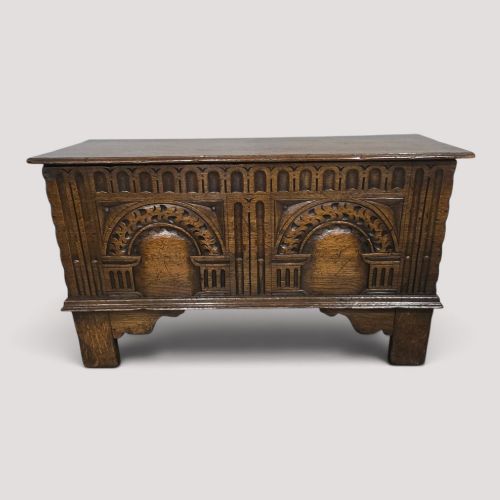
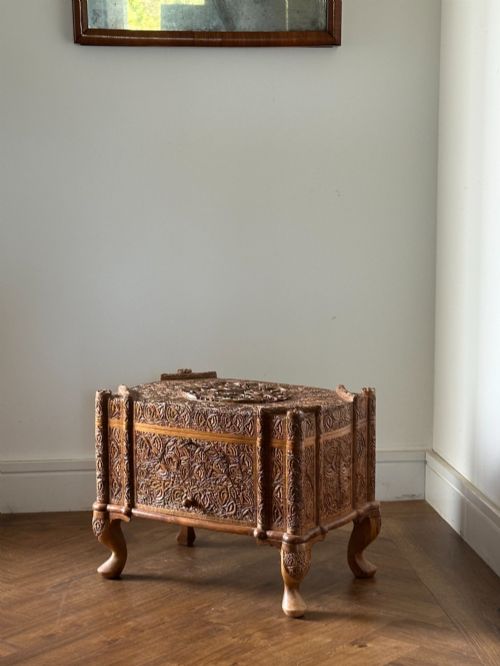
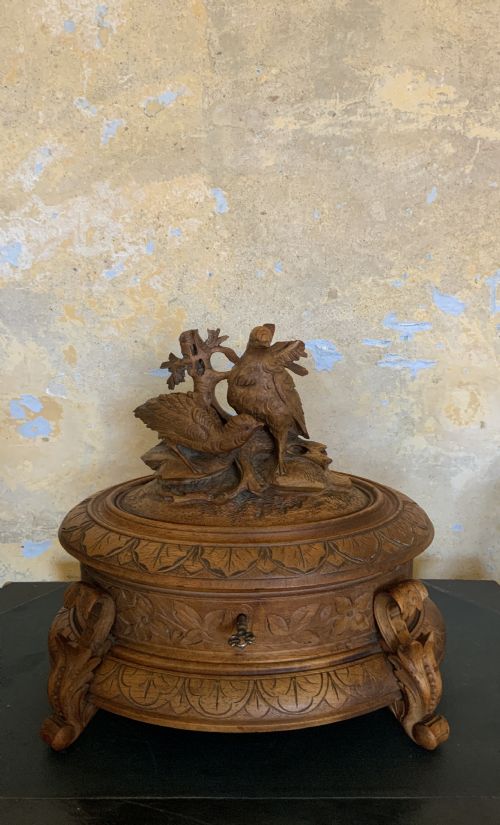
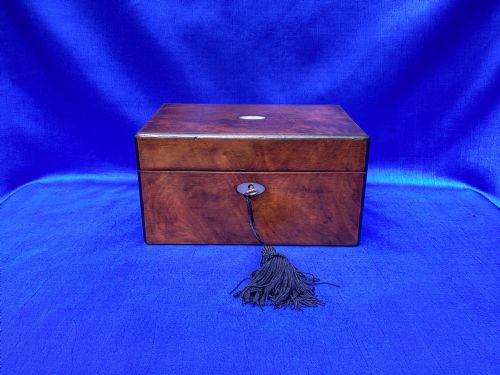
When you search for a carved wooden jewellery box, you encounter items designed to secure small valuables while displaying the craftsman's hand. The examples on this page span several centuries, including Victorian caskets, miniature chests, and work boxes.
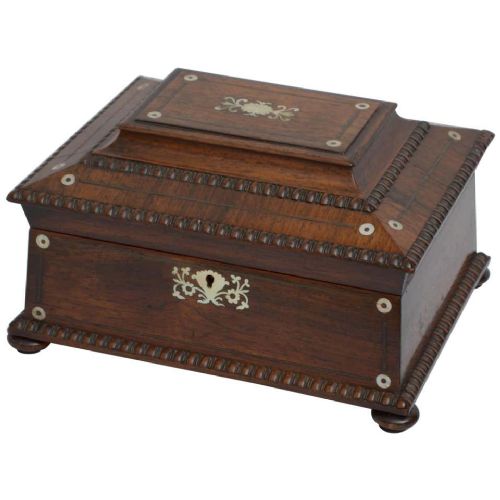
Most pieces date from the nineteenth century, utilising dense timbers and detailed surface decoration. Forms range from sarcophagus shapes to table cabinets and simple trinket boxes.
Origins vary widely across the selection, featuring English rosewood and walnut alongside Anglo-Indian sandalwood, Black Forest carvings, and Chinese hardwood.
Materials and construction
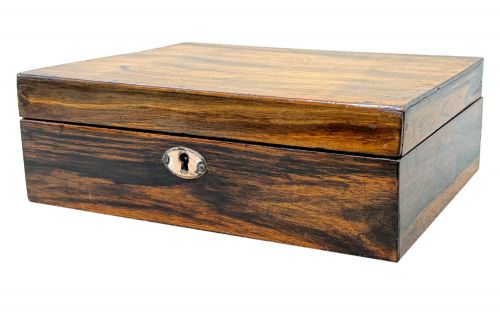
The makers relied on hardwoods such as walnut, mahogany, oak, coromandel, and ebony, often selecting them for their rich grain and durability. These timbers were carved in high relief, incised, or turned into miniature chests and caskets.
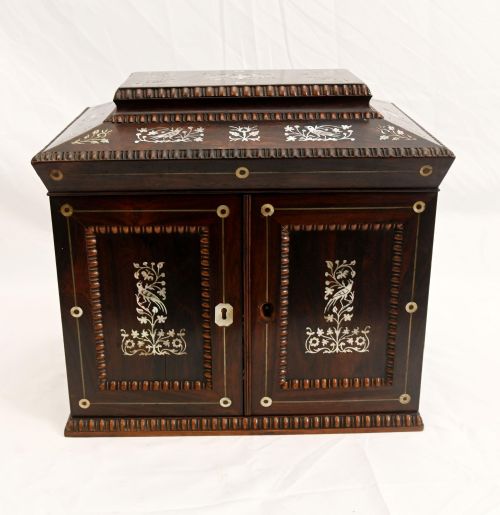
Inlay work frequently complements the carved surfaces, incorporating mother-of-pearl, brass, and contrasting woods in geometric or floral motifs. Interiors are typically lined to protect delicate items, using paper or textiles.
Judging the range
Quality rests upon the depth and precision of the carving, where sharply defined motifs and balanced compositions separate skilled work from simpler execution. The choice of timber also dictates standing, with dense exotic woods like coromandel and ebony holding higher regard than standard softwoods.
Integration of decorative elements such as brass mounts, mother-of-pearl inlay, and fitted internal compartments distinguishes elaborate table cabinets and sarcophagus caskets from plain utility boxes.
The Carved Wooden Jewellery Box Glossary
- Sarcophagus-shaped
- A container featuring a sloping lid and a stepped profile resembling an ancient stone coffin. This form became popular for large Victorian jewellery caskets.
- Tramp art
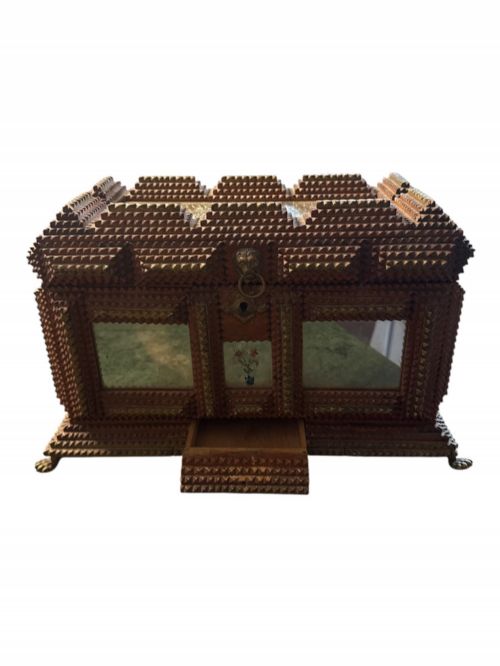
- A style of woodworking where small items are constructed from discarded wood, such as cigar boxes, using chip-carving and notch-cutting techniques.
- Coromandel
- A heavy, dense exotic timber from Asia featuring dark brown grain with dramatic black stripes. It was heavily utilised for high-end nineteenth-century work boxes.
- Tunbridge Ware
- A type of woodworking characterised by mosaic tile patterns formed from thousands of tiny wood blocks. These create pictorial scenes on box lids.
- Black Forest
- A style of deep, naturalistic wood carving originating from the mountain region of Germany. Pieces often depict animals, foliage, and rustic scenes.
Carved Wooden Jewellery Box: Frequently Asked Questions
What is a carved wooden jewellery box?
A carved wooden jewellery box is a small lidded container or miniature cabinet designed for storing personal ornaments. These pieces utilise carved timber surfaces and decorated interiors to secure rings, necklaces, and trinkets.
Examples on this page include Victorian walnut chests, Anglo-Indian sandalwood caskets, and Swiss Black Forest carvings. They combine practical storage with decorative arts.
How were these boxes used?
Historically, these containers sat upon dressing tables, writing desks, or commodes to hold daily jewellery and keepsakes. Many contained compartmentalised trays and lined wells for specific items like watches and rings.
Larger specimens functioned as work boxes for sewing supplies or travel caskets for gentlemen and ladies. Their secure lids kept contents safe from dust and casual view.
How do I care for a wooden box?
Keep wooden boxes out of direct sunlight and away from rapid temperature changes to prevent the timber from splitting. Dust them gently with a dry, soft cloth and avoid chemical polishes that damage antique finishes.
Check internal linings carefully and avoid placing damp items inside. Proper placement preserves both the carved exterior and the fragile interior compartments.
How can I tell the period?
Dating relies on timber selection, construction methods, and stylistic motifs visible in the carving and hardware. For instance, heavy brass mounts and rosewood point to the Victorian era, while geometric chip carving suggests tramp art.
Examine the hinges, locks, and interior paper or fabric linings for clues. Regional styles like Anglo-Indian sandalwood or Chinese hardwood also indicate specific production centres.