




Chip Carved Wooden Box
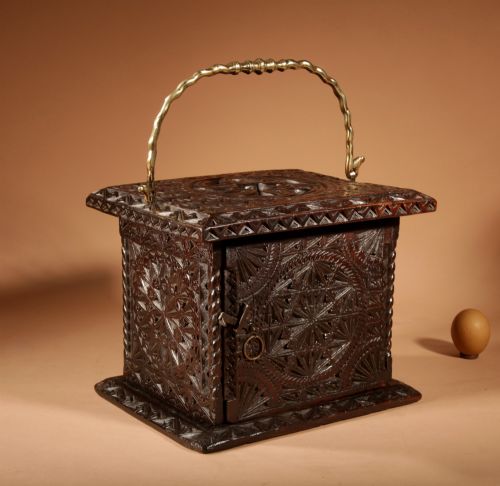
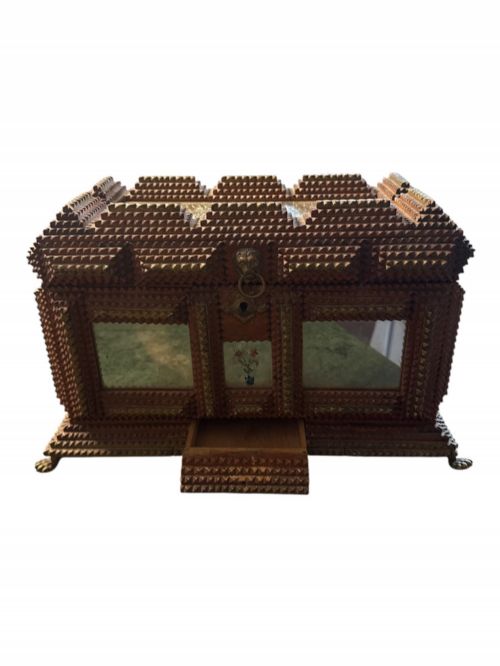
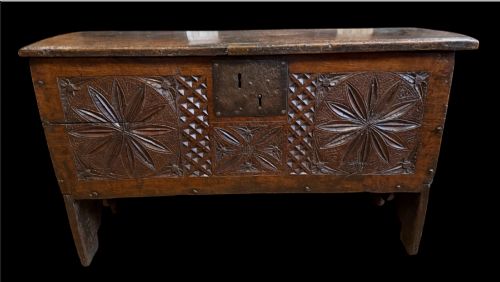
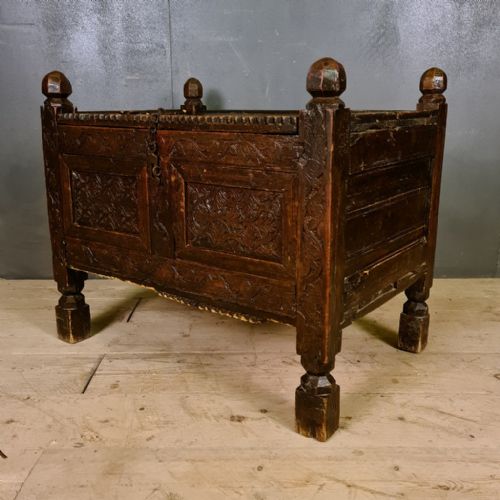
These chip carved wooden box examples combine centuries of vernacular woodworking tradition with intricate surface carving that rewards close inspection in any room.
Chip Carved Wooden Box
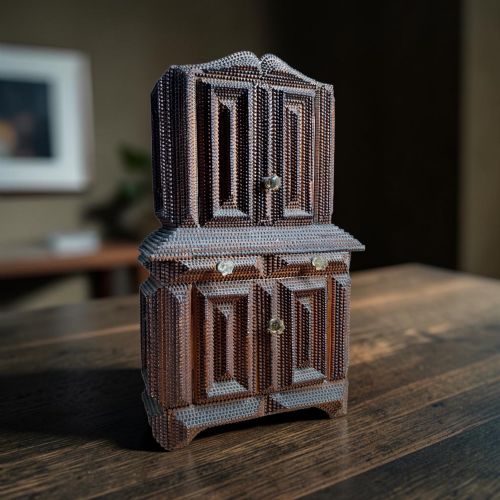
A chip carved wooden box brings together centuries of vernacular skill, ranging from small personal containers to larger coffers across the periods.
The versions most commonly met span the 17th century through the Victorian era, utilising traditional forms shaped by local makers.
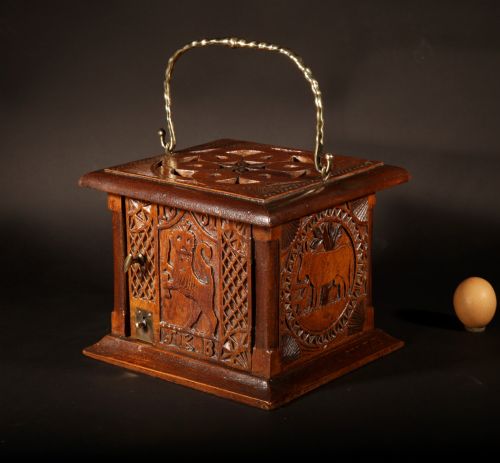
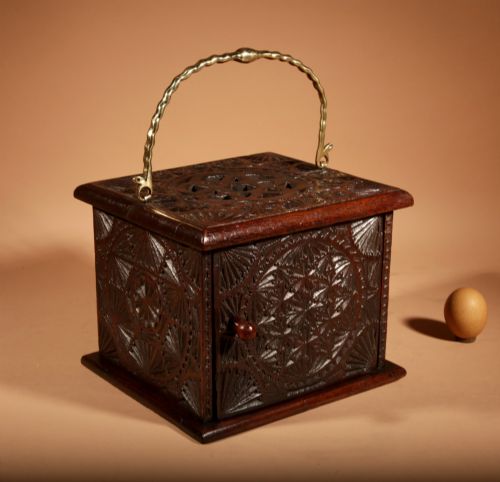
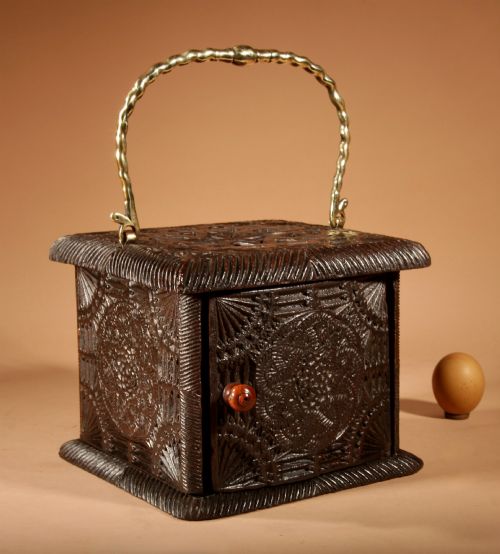
Object types include storage vessels, foot warmers, and snuff boxes, each displaying distinct regional styles such as Frisian or Welsh folk art.
How they were made
Maker techniques rely upon solid oak, pine, and various hardwoods shaped into planks and joined to form robust structures.
Surfaces are embellished using chisel and knife work, occasionally accompanied by brass, iron, or glass details and heart inlay.
What varies in quality
Quality rests upon the precision of the surface decoration and the structural integrity of the timber used by the maker.
Pieces showing deliberate proportion and well-preserved surface detail stand apart from simpler utilitarian items.
The Chip Carved Wooden Box Glossary
- Chip carving
- A style of ornamentation where small chips are removed from a wooden surface with knives or chisels to create geometric patterns.
- Coffer
- A large wooden chest traditionally used for storage, often featuring plank construction and robust hinges.
- Vernacular
- Objects made by local craftsmen following regional traditions rather than high-style academic designs.
- Folk art
- Utilitarian items decorated or shaped within a community tradition by self-taught or local makers.
Chip Carved Wooden Box: Frequently Asked Questions
How old is this box?
Dating relies upon timber species, construction methods, and the style of the surface decoration.
Comparison with documented examples from similar periods helps confirm the likely era of origin.
What wood was used?
Most items utilise local timbers such as oak, pine, or general hardwood suited to the maker's region.
These materials show the natural grain beneath traditional finishes or paint.
Where were they made?
Origins often link to specific regional traditions, including Welsh, Frisian, or general European folk art workshops.
Local design traits and carving motifs provide clues to the geographic source.
How do I clean it?
Dusting gently with a dry, soft cloth preserves the dry surface and historic patina of the wood.
Moisture and harsh polishes should be avoided to protect the carved details and historic finishes.