


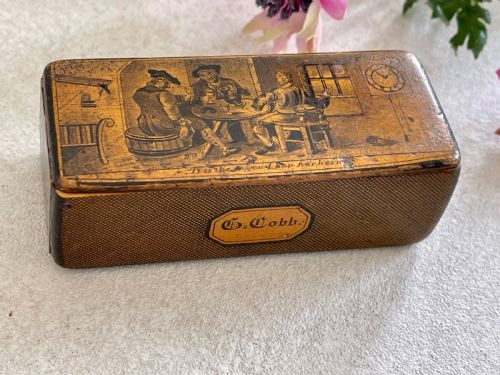


Folk Art Trinket Box
These folk art trinket box pieces are tactile personal containers holding centuries of domestic history, drawing the eye with naive carving and honest handwork.
Folk Art Trinket Box
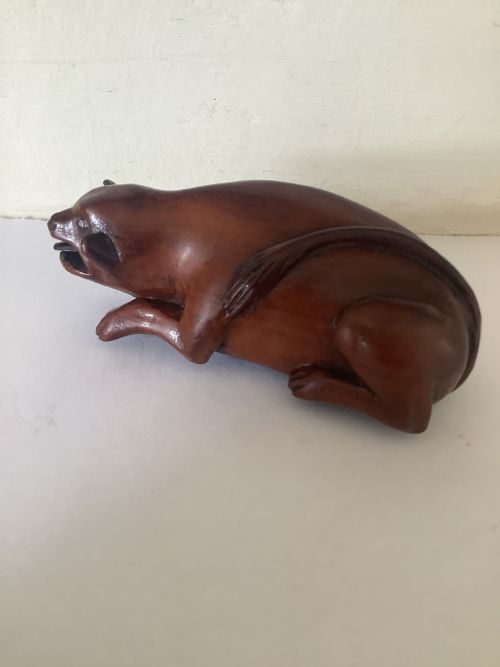
A folk art trinket box encompasses small containers fashioned for personal treasures, snuff, or keepsakes by regional makers rather than commercial factories. The selection here leans heavily towards nineteenth-century examples alongside eighteenth-century marriage chests and interwar novelties.
Forms vary from small treen snuff boxes and chip-carved book boxes to larger painted pine storage containers and domed caskets. Origins span English, Scandinavian, and Welsh traditions, showing the distinct utilitarian roots of each region.
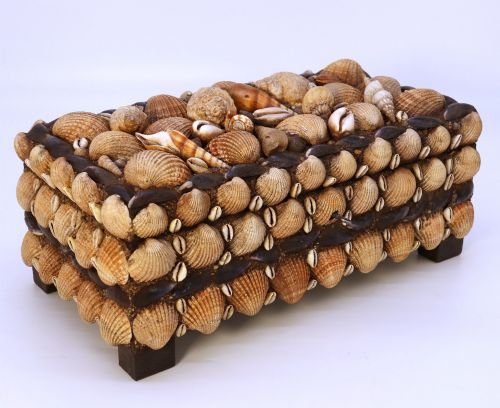
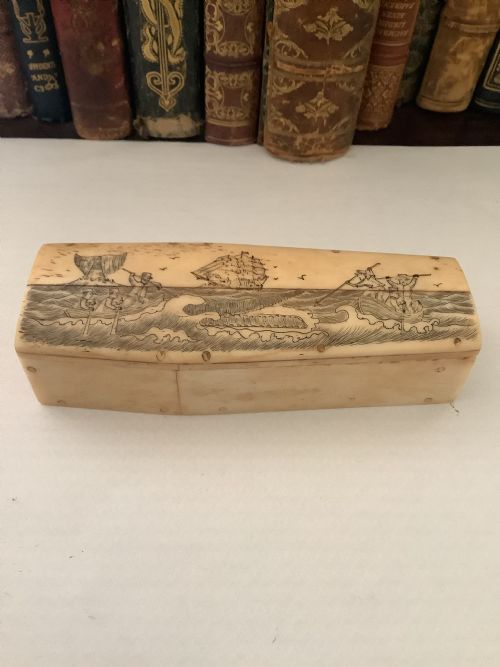
Buyers encounter surfaces decorated with bone inlay, straw work, shellwork, and original paint schemes rather than standardised factory finishes. Each object carries the specific marks of the hands that shaped it.
Materials and construction
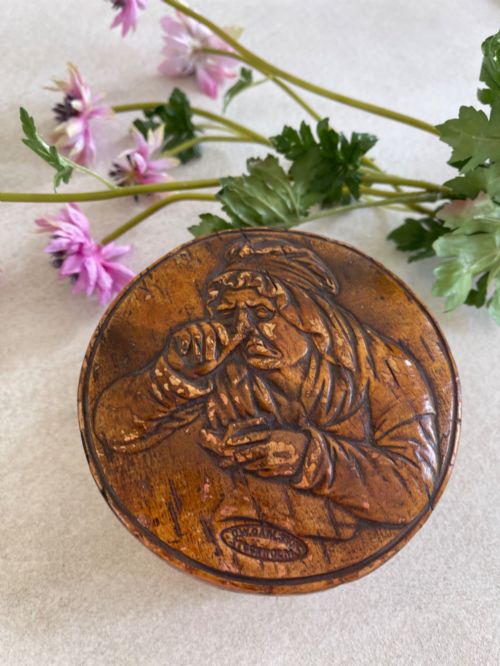
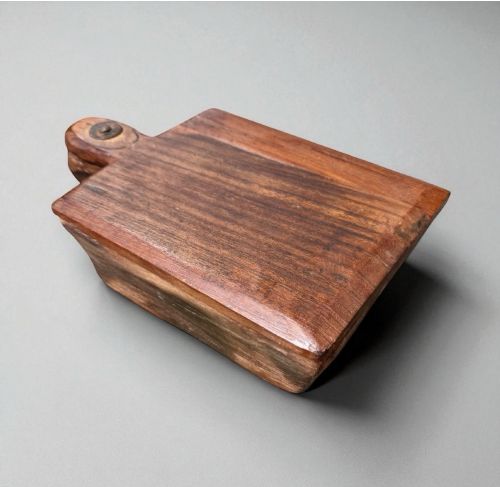
Makers utilised available local timber such as pine, fruitwood, oak, and hardwood, often shaping the bodies with simple hand tools. Surfaces frequently show the texture of naive carving, chip carving, or pen work.
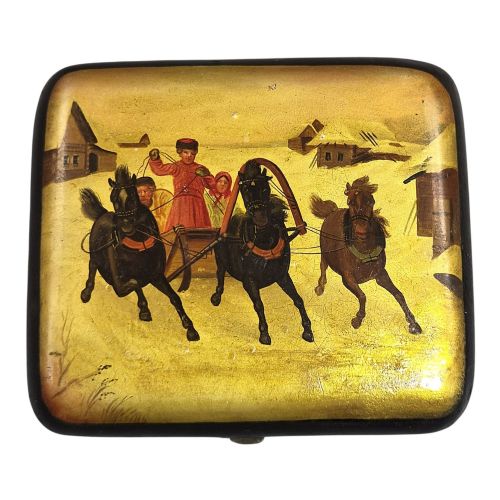
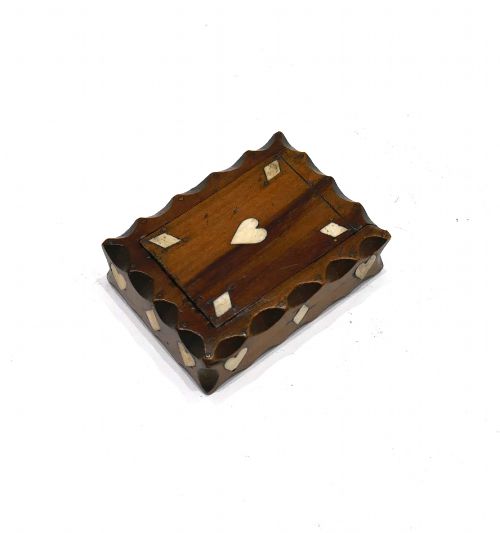
Decoration relied on contrasting materials embedded into the wood, including bone hearts, brass inscriptions, and straw work. Paint, lacquer, and patinated surfaces seal the exterior, preserving the character of the wood underneath.
Materials across these listings include pine, hardwood, bone, brass, lacquer, and iron.
Assessing quality
Quality rests on the integrity of the surface and the confidence of the carving. Original patination and untouched paint elevate an example far above pieces stripped or over-restored by later hands.
The precision of naive detail, such as inlaid bone geometries or intricate chip carving, distinguishes superior work. Form and proportion dictate the presence of the piece, turning simple utility into compelling folk art.
Vishnyakov Workshop·G Cobb
The Folk Art Trinket Box Glossary
- Treen
- Small handmade wooden objects of domestic use. These items display the grain and colour of the timber clearly.
- Chip carving
- A decorative technique where small chips are removed from a wooden surface with a knife. This creates geometric patterns common on folk boxes.
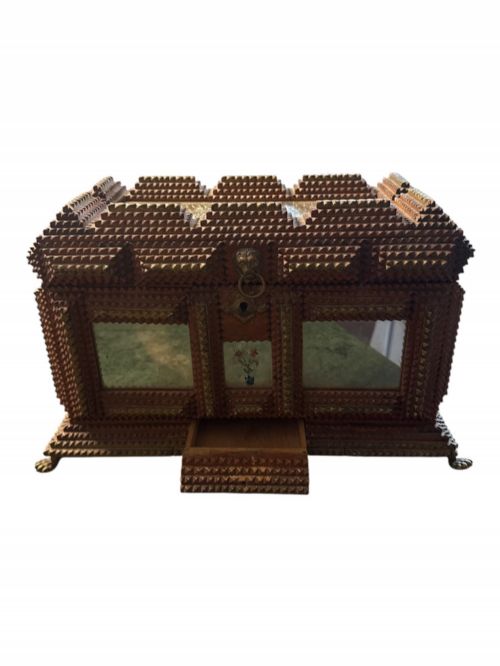
- Tramp art
- A style of woodworking where items are constructed from scrap packaging and cigar boxes. Makers used simple pocket knives to notch and layer the wood.
- Patina
- The surface sheen and colour developed by wood and paint over long periods of handling and age. A rich patina indicates natural wear.
- Straw work
- A technique using flattened pieces of straw glued to a wooden core to form geometric pictures. Prisoners of war often produced these intricate designs.
Folk Art Trinket Box: Frequently Asked Questions
What is a folk art trinket box used for?
These boxes served varied domestic roles, holding small personal valuables, tobacco, snuff, or sewing implements. Their intimate scale made them suitable for tabletops, dressers, and pockets.
Today they function as display pieces or secure holders for modern rings, keys, and small keepsakes.
How do I date an antique wooden box?
Dating relies on timber choice, construction marks inside the seams, and the style of decoration or inscriptions. Eighteenth-century examples often show pegged joints and heavy patination.
Nineteenth-century pieces introduce varied chip carving, bone inlay, and regional painting styles that align with specific folk traditions.
Are painted wooden boxes original?
Many boxes retain their original paint or lacquer surfaces, which show expected craquelure and softening from age. Scandinavian and Swedish pieces frequently display traditional floral or geometric motifs.
Examining the paint under natural light reveals whether the pigment has bonded deeply with the underlying wood over the decades.
What makes tramp art different from standard folk art?
Tramp art relies specifically on notched, layered chip-carving applied to salvaged wood like cigar boxes or packing crates. The technique creates a distinct tiered texture.
Standard folk art uses solid blocks of timber shaped by direct carving or turned on a lathe, rather than built-up geometric layers.